 August 2016 in “Journal of Investigative Dermatology”
 This case report identifies a novel LIPH gene mutation linked to autosomal recessive woolly hair/hypotrichosis in a Japanese boy, expanding the spectrum of known mutations associated with this condition.
 1 citations
,
June 2022 in “Experimental dermatology”
1 citations
,
June 2022 in “Experimental dermatology” This study found that SHJH hr mice, with a Hairless gene mutation, exhibit accelerated skin aging potentially due to poor antioxidative protection, highlighting the Hr gene's role in skin aging.
 1 citations
,
April 2021 in “Han'gug miyong haghoeji/Journal of the Korean society of cosmetology”
1 citations
,
April 2021 in “Han'gug miyong haghoeji/Journal of the Korean society of cosmetology” In this study, researchers found that using 0.75% aspartic acid as an intermediate agent for a permanent wave improved wave formation and retention compared to a control in virgin hair, also reducing cuticle damage and maintaining tensile strength.
1 citations
,
March 2020 in “Hair transplant forum international” This study describes new devices, "HairMeasure" and "Scalp Zone Identifier," which offer an economical method to calculate Hair Mass Index without disposable materials.
This study utilized 3D ultra-high frequency ultrasound to effectively detect different disease phases of alopecia areata by visualizing hair follicle structures and identifying unique pathological signs, offering a promising non-invasive diagnostic tool that surpasses conventional methods.
 December 2022 in “American journal of medical genetics. Part A”
 This case report describes an instance of autosomal recessive uncombable hair syndrome caused by maternal uniparental disomy of chromosome 1.
 4 citations
,
January 2026 in “Cell Discovery”
4 citations
,
January 2026 in “Cell Discovery” This study introduced the concept of spatiotemporal clocks to understand how different phases of mammalian wound healing are coordinated, with a focus on the spatial domains and oscillatory molecular signals involved, while highlighting the potential for regenerative therapeutic strategies.
December 2023 in “Journal of Asia Pacific Aesthetic Sciences” This study found that a novel method of isolating human follicle stem cells from hair follicles via mechanical centrifugation, without culture conditions, promises to improve hair density in patients with Androgenetic Alopecia and some cases of Alopecia Areata.
March 2021 in “Faculty Opinions – Post-Publication Peer Review of the Biomedical Literature” This study found that human dWAT regulates hair growth and pigmentation through HGF secretion, highlighting potential novel targets for treating hair growth and pigmentation disorders.
November 2014 in “International Society of Hair Restoration Surgery” This announcement explains the Fellow designation for hair restoration surgeons meeting specific educational criteria, without reporting new research findings.
In this study, 20% whale oil applied to mice was observed to promote hair growth more effectively than a control or 3% minoxidil, showing increased hair follicles and thicker subcutaneous tissue.
21 citations
,
July 2004 in “British Journal of Dermatology” This study suggests that hair follicles in the genital area may serve as reservoirs for high-risk human papillomaviruses.
 May 2024 in “Food bioscience”
 In this animal study, mice on a high-fat diet experienced weakened hair follicles but regained hair growth after treatment with wood sterol, which improved hair follicle health and altered hormone levels, suggesting its potential as a preventive measure for diet-induced alopecia.
 1 citations
,
September 2023 in “British journal of dermatology/British journal of dermatology, Supplement”
1 citations
,
September 2023 in “British journal of dermatology/British journal of dermatology, Supplement” The researchers reported that WNT10A gene variants are linked to short anagen hair syndrome, which suggests a potential genetic factor contributing to this hair condition.
 1 citations
,
August 2011 in “Dermatology Reports”
1 citations
,
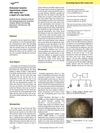
August 2011 in “Dermatology Reports” This case report describes a new family with autosomal recessive hypotrichosis simplex with woolly hair, suggesting the disorder may be underreported due to misdiagnosis.
 3 citations
,
January 2002 in “Hair transplant forum international”
3 citations
,
January 2002 in “Hair transplant forum international” This article discusses the challenges facing the ISHRS as hair restoration evolves but reports no new results.
 February 2023 in “JEADV Clinical Practice”
 This case report describes a girl with uncombable hair syndrome who showed significant improvement in hair combability and growth rate after two cycles of oral biotin supplementation.
 2 citations
,
May 2019 in “Journal of the American Academy of Dermatology”
2 citations
,
May 2019 in “Journal of the American Academy of Dermatology” The correspondence discusses the higher prevalence of acne vulgaris in hidradenitis suppurativa patients, but notes potential overestimation due to unrecognized facial HS.
January 2018 in “bioRxiv (Cold Spring Harbor Laboratory)” This study found that the mutant hairless rhino bald protein in mice interacts with the vitamin D receptor but cannot repress its transactivation and shows abnormal cellular localization.
September 2025 in “Indian Journal of Dermatology” In this case report, researchers detailed a 22-year-old Turkish woman diagnosed with autosomal recessive woolly hair/hypotrichosis (ARWH/H), linked to a mutation in the LIPH gene, resulting in sparse, poorly growing, curly hair, highlighting the need for genetic consideration in similar hair conditions.
11 citations
,
January 2000 in “Journal of cosmetic science” This study found that hydrolyzed wheat proteins extensively penetrated both untreated and chemically treated hair, primarily occupying areas like the endocuticle and cortex.
 February 2026 in “Optics”
 This study demonstrates that polarized second harmonic generation imaging effectively monitors wool fiber stretching, revealing significant structural changes in keratin alignment that improve textile performance.
 5 citations
,
March 2023 in “Archives of dermatological research”
5 citations
,
March 2023 in “Archives of dermatological research” This study found that hidradenitis suppurativa is associated with increased serum levels of hypoxia-inducible factor-1α, suggesting its role in the disease's pathogenesis and as a treatment target.
 6 citations
,
December 2022 in “International Journal of Molecular Sciences”
6 citations
,
December 2022 in “International Journal of Molecular Sciences” This review explores the hormonal factors related to hidradenitis suppurativa, emphasizing insulin resistance and pro-inflammatory adipokines, but reports no new clinical findings and suggests further research is needed.
August 2026 in “The Journal of Dermatology” In this review, the authors summarize recent findings on dermal white adipose tissue (dWAT), highlighting its crucial role in the hair follicle microenvironment by regulating inflammation and immune responses, thus influencing hair regeneration.
97 citations
,
March 2010 in “The American Journal of Human Genetics” A mutation in the KRT74 gene causes tightly curled hair.
 July 2024 in “Journal of Rare Diseases”
 This review describes the genetic and phenotypic diversity of Woodhouse-Sakati syndrome, highlighting new DCAF17 gene variants and their varying clinical implications.
4 citations
,
December 2022 in “Skin Research and Technology” This study found that downregulation of Sonic hedgehog signaling may promote HPV replication and wart formation by inducing cell cycle arrest in keratinocytes.
3 citations
,
September 2024 in “The FASEB Journal” This review discusses the roles of dermal white adipose tissue in skin functions and pathology, underscoring its antibacterial activity and potential anti-fibrotic role, but reports no new experimental results.
1 citations
,
January 2013 in “PubMed” In this study, treating hair with thioglycolic acid was found to alter disulfide bond patterns in keratin-associated proteins, shifting them from an ellipsoidal to a near-spherical shape.