22 citations
,
November 2020 in “International Journal of Environmental Research and Public Health” This study found that hidradenitis suppurativa significantly impacts patients' sexuality, with many experiencing fear of rejection, perceived unattractiveness, and negative effects on relationships and sexual activity.
7 citations
,
January 2013 in “Supportive care in cancer” In this study, cross-section trichometry was found to be a precise method for measuring hair loss in chemotherapy patients, but marking the measurement site on the scalp is not always necessary.
220 citations
,
May 2017 in “JAMA dermatology” This study found that the skin microbiome in patients with hidradenitis suppurativa differs significantly from healthy controls, suggesting a potential link between microbial imbalance and the disease.
 6 citations
,
December 2021 in “Scientific Reports”
6 citations
,
December 2021 in “Scientific Reports” This study found that inhibiting class I histone deacetylases in postnatal mouse dermal cells preserved their ability to induce hair follicles during culture by increasing specific gene expressions and activating the Wnt signaling pathway.
1 citations
,
December 2013 in “BMJ case reports” This case report describes a 27-year-old pregnant woman with Werner9s syndrome and uncontrolled hypertension, resulting in her death during an emergency caesarean section, though her baby survived and tested negative for the condition.
2 citations
,
January 2009 in “Human cell culture”  May 2025 in “Frontiers in Genetics”
 This study reported discovering a novel missense variant in a case of autosomal recessive woolly hair in a 31-year-old Chinese woman, which significantly reduced secretion of the encoded protein, likely leading to disease by impairing its hydrolytic function.
September 2015 in “Turkish Journal of Endocrinology and Metabolism” This case report describes a 27-year-old female with Werner syndrome, highlighting its early onset, severe metabolic disturbances, and congenital deformities, suggesting consideration of WS in early childhood diabetes and hyperlipidemia diagnoses.
2 citations
,
June 2025 in “Molecules” This review highlights that extracts from *Hamamelis virginiana* (witch hazel) exhibit antimicrobial, anti-inflammatory, antioxidant, and wound-healing properties in various studies, showing promise for future therapeutic use in dermatology and cosmetology, particularly for skin treatments.
 3 citations
,
December 2021 in “Frontiers in endocrinology”
3 citations
,
December 2021 in “Frontiers in endocrinology” In this study, a novel DCAF17 gene mutation was identified in a Chinese family, suggesting a potential role in pancreatic β cell dysfunction and diabetes development in Woodhouse-Sakati syndrome.
 45 citations
,
December 2006 in “Biopolymers”
45 citations
,
December 2006 in “Biopolymers” This study found that permanent waving treatment induces structural changes in the cortex proteins of white human hair, significantly reducing its tensile strength without altering the S-S band intensity.
 16 citations
,
February 2014 in “Journal of Investigative Dermatology”
16 citations
,
February 2014 in “Journal of Investigative Dermatology” This study developed a mouse model to monitor hair follicle cycling macroscopically through live bioluminescence imaging, enabling detailed analysis of hair cycle and propagation dynamics influenced by environmental factors.
7 citations
,
June 2018 in “Journal of the American Academy of Dermatology” This article reviews uncombable hair syndrome, highlighting its symptoms, potential diagnosis methods, and the suggestion for biotin supplements, but it reports no new empirical results.
September 2024 in “Genes” This study found significant genetic differences between pigs with and without hair whorls, suggesting potential implications for pig breeding strategies in China.
 February 2025 in “Geriatrics and gerontology international/Geriatrics & gerontology international”
 This study found that cataracts, hair changes, short stature, and low bodyweight are key indicators for diagnosing Werner syndrome in patients under 30, differing from older age group symptoms.
July 2025 in “Frontiers in Medicine” This study identified compound heterozygous mutations, c.1101del and c.736 T > A, in the LIPH gene responsible for causing autosomal recessive woolly hair in a child, with c.1101del being a novel frameshift mutation.
5 citations
,
November 2021 in “The journal of investigative dermatology/Journal of investigative dermatology” This study found that inhibiting Wnt/β-catenin signaling disrupted hemidesmosome organization in keratinocytes, suggesting potential therapeutic targets for HD-defective diseases like epidermolysis bullosa.
 4 citations
,
May 2020 in “Cureus”
4 citations
,
May 2020 in “Cureus” This case report describes an adult male from India with Werner's syndrome due to a novel homozygous mutation in the WRN gene, characterized by several premature aging symptoms.
 187 citations
,
April 2019 in “npj Regenerative Medicine”
187 citations
,
April 2019 in “npj Regenerative Medicine” This study found that hMSC secretomes from umbilical cord Wharton's jelly had the most potent angiogenic effects, whereas those from adipose tissue demonstrated the weakest angiogenic potential.
 1 citations
,
February 2009 in “Journal of Investigative Dermatology”
1 citations
,
February 2009 in “Journal of Investigative Dermatology” This review discusses insights into the role of lipase H in controlling hair form and texture, emphasizing genetic mutations linked to autosomal recessive woolly hair/hypotrichosis, and reports no new experimental results.
 3 citations
,
December 2020 in “International Journal of Women's Dermatology”
3 citations
,
December 2020 in “International Journal of Women's Dermatology” Scalp micro-wounding helps promote hair growth in female pattern hair loss.
1 citations
,
April 2019 in “The journal of investigative dermatology/Journal of investigative dermatology” This study observed significant differences in the skin microbiome between hidradenitis suppurativa patients and healthy individuals, notably with decreased β-diversity and a distinct abundance of certain bacteria in affected skin.
 31 citations
,
November 2000 in “Clinical and Experimental Dermatology”
31 citations
,
November 2000 in “Clinical and Experimental Dermatology” This study developed the Women's Androgenetic Alopecia Quality of Life Questionnaire, which shows high reliability and internal consistency for assessing the impact of AGA on women's quality of life.
 May 2024 in “Frontiers in medicine”
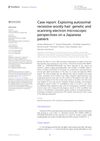
 In this study, a 3-year-old Japanese child with autosomal recessive woolly hair was found to have a distinctive irregular and rough cuticle on the hair shaft, along with a homozygous pathogenic LIPH variant, suggesting a critical role for genetic analysis in understanding rare hair conditions.
 September 2017 in “Journal of Investigative Dermatology”
 This study found that after four weeks of daily use, the roughness of the hair surface significantly decreased, as shown through quantitative image analysis using HIROX.
9 citations
,
September 2012 in “Journal of Cosmetic Dermatology” This study introduced hair capacitance mapping as a promising technique for assessing hair surface moisture dynamics, revealing that weathered hair loses moisture more quickly than intact hair.
January 2023 in “Indian Dermatology Online Journal” This case report describes a novel association between uncombable hair syndrome and Zellweger syndrome due to a homozygous mutation in the PEX12 gene.
 June 2026 in “bioRxiv (Cold Spring Harbor Laboratory)”
 This study found that inhibiting the interaction between HOTAIR and EZH2 can block pro-fibrotic gene expression in fibroblasts and interfere with tissue remodeling in systemic sclerosis patient skin.
 4 citations
,
August 2014 in “Journal of molecular structure”
4 citations
,
August 2014 in “Journal of molecular structure” In this study, the authors concluded that a hydrolyzed eggwhite protein treatment promoted the reconnection of disulfide bonds in excessively bleached hair, after reduction and oxidation processes in permanent waving.
 March 2021 in “Journal of The European Academy of Dermatology and Venereology”
 Low quality of life and high HSS-29 scores increase risk of losing patients during treatment.