December 2015 in “European Journal of Pediatric Dermatology” This study describes synchronous neonatal telogen effluvium as a physiological phenomenon where newborns exhibit a hair band of rarefaction in the occipital region, not caused by sleeping position.
 1 citations
,
June 2020 in “bioRxiv (Cold Spring Harbor Laboratory)”
1 citations
,
June 2020 in “bioRxiv (Cold Spring Harbor Laboratory)” In this study, researchers identified unique prenatal lymphocyte features in human fetal skin, including proliferative naive T cells and memory-like T cells, which may influence antigen and allergen responses in utero and infancy.
1 citations
,
January 2021 in “Brazilian Journal of Medical and Biological Research” In this study, maternal exposure to constant light significantly altered the neonatal skin structure in rabbits, associated with reduced maternal melatonin levels.
 14 citations
,
September 2018 in “Asian-Australasian Journal of Animal Sciences”
14 citations
,
September 2018 in “Asian-Australasian Journal of Animal Sciences” This study found significant changes in gene and protein expression related to hair follicle development in Rex rabbits' skin during the first 8 weeks of life.
 January 2013 in “The Pan African medical journal”
 This report describes two cases of monilethrix in Afghan siblings, detailing the hair disorder's clinical presentation and potential influences on hair growth, such as hormonal changes and iron supplementation.
 January 2022 in “Revista Dermatológica Centro Uraga”
 This article reviews two cases of monilethrix in siblings, detailing their clinical and dermatoscopic characteristics, but reports no new findings.
30 citations
,
January 1994 in “Micron” This study found that the formation of the fibre cuticle surface in Merino sheep is similar to the epidermal stratum corneum process and not from a modified plasma membrane as previously thought.
 33 citations
,
December 2004 in “Differentiation”
33 citations
,
December 2004 in “Differentiation” In this study, mouse amnion epithelium was successfully transformed into skin and hair follicles when associated with hair-forming dermis, revealing the necessity of specific influences for follicle formation.
 January 2021 in “Journal of Entomology and Zoology Studies”
 This case report describes the effective treatment of psoroptic mange in Large White Yorkshire piglets using ivermectin, cefpodoxime, chlorpheniramine, povidone iodine, and Ascabiol lotion, resulting in full recovery and absence of mites.
45 citations
,
August 1992 in “PubMed” In this study, researchers found that changes in the extracellular matrix components, particularly fibronectin, laminin, and type IV collagen, during the rat vibrissa follicle growth cycle, suggest dynamic remodeling related to dermal-epidermal signaling.
17 citations
,
January 2013 in “Journal of Cutaneous Pathology” This study reported that the concept of the onychodermis, defined by CD10 expression, is present in the developing nail organ and may play a role in nail plate formation.
 9 citations
,
February 1981 in “Australian journal of biological sciences”
9 citations
,
February 1981 in “Australian journal of biological sciences” This study found that crossbred lambs fed liquid diets with reconstituted cow's milk initially grew wool without crimp, with crimp resuming two weeks post-weaning.
 103 citations
,
March 2011 in “PLoS Biology”
103 citations
,
March 2011 in “PLoS Biology” This study found that a mutation in the BMP12/GDF7 gene is associated with the Naked neck trait in chickens, reducing neck feathering due to altered signaling pathways.
34 citations
,
January 1983 in “Journal of Investigative Dermatology” 1 citations
,
January 2016 in “Acta histochemica” This study found that Gnαs and Gnα11 proteins were significantly more expressed in the skin of black sheep compared to white sheep, suggesting their role in coat color regulation.
5 citations
,
January 1993 in “PubMed” In this study, retinoic acid treatments induced glandular and feather formation in embryos by altering positional values and activating specific retinoic acid nuclear receptor gene expression.
 14 citations
,
October 2015 in “PLoS ONE”
14 citations
,
October 2015 in “PLoS ONE” This study found that keratins 5, 7, 8, and 19 are expressed in human trophoblast cells while vimentin is solely expressed in stromal-mesenchymal cells, aiding in placental cell type identification.
48 citations
,
July 1993 in “Archives of Dermatological Research” Merkel cells are abundant in facial vellus hair follicles, especially during the anagen phase.
56 citations
,
October 2010 in “Pediatric Clinics of North America” This article discusses various types of epidermal nevi and associated syndromes but presents no new research findings.
 24 citations
,
July 1983 in “Clinical and Experimental Dermatology”
24 citations
,
July 1983 in “Clinical and Experimental Dermatology” Tigason improved hair growth in a boy with monilethrix without side effects.
 October 2023 in “bioRxiv (Cold Spring Harbor Laboratory)”
 This study found that neonatal Regulatory T cells are crucial for maintaining PPARγ signaling in hair follicles, which supports melanocyte stem cell function and skin pigmentation during early postnatal development.
13 citations
,
November 1959 in “Annals of the New York Academy of Sciences” 9 citations
,
February 1984 in “Zentralblatt für Veterinärmedizin Reihe A” This study found that feeding piglets high levels of egg white led to severe biotin deficiency, causing hair loss and brittle claws, highlighting biotin's role in maintaining healthy skin and claws.
 May 2002 in “British Journal of Dermatology”
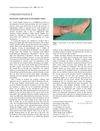
 A pregnant woman's skin condition improved after giving birth, possibly due to high estrogen levels during pregnancy.
June 2007 in “Annales de Dermatologie et de Vénéréologie” 47 citations
,
August 2012 in “Cell Cycle” This study found that multipotent, nestin-expressing stem cells from the upper part of hair follicles can proliferate significantly and differentiate into various cell types, showing potential for nerve and spinal cord repair.
February 2025 in “Pediatric Dermatology” 9 citations
,
September 1977 in “Journal of Small Animal Practice” In this study, gamma benzene hexachloride washes successfully resolved skin disease in guinea pigs affected by Trixacarus caviae, after confirmation via skin scrapings.
4 citations
,
March 2016 in “Small ruminant research” This study examined vicuña skin and hair follicle structures, finding a high density of secondary hairs in fleece areas compared to belly and legs, and identified various types of cutaneous glands potentially important for chemical communication.
April 1987 in “Pediatric Research”