 25 citations
,
May 2020 in “Aesthetic Surgery Journal”
25 citations
,
May 2020 in “Aesthetic Surgery Journal” In this systematic review, tSVF-based therapy demonstrated favorable outcomes for various pathologies, including aged skin and osteoarthritis, with low incidence of adverse events, while highlighting the need for further research into optimal protocols and mechanisms of action.
August 2025 in “International Journal of Molecular Sciences” This study found that arginine vasotocin is evolutionarily conserved across diverse taxa and may play roles in neuroendocrine, immune, and stress signaling, with potential antimicrobial applications.
 January 2026 in “AYUSHDHARA”
 This case study highlights that an Ayurvedic treatment approach involving Basti Chikitsa and Tilmooladi Churna over 3 months may improve menstrual regularity and hormonal profiles in a woman with polycystic ovary syndrome.
 5 citations
,
July 2020 in “Journal of Cosmetic Dermatology”
5 citations
,
July 2020 in “Journal of Cosmetic Dermatology” This study found that using a vibration anesthetic device during scalp mesotherapy significantly reduced pain in patients with androgenetic alopecia and alopecia areata compared to the non-vibration side.
32 citations
,
May 2023 in “Frontiers in Immunology” This review explores the cellular dynamics of graft rejection in vascularized composite allotransplantation and discusses how understanding these processes might lead to innovative treatments for managing rejection.
15 citations
,
May 2006 in “Brain & development” The authors concluded that administering biotin may help prevent alopecia caused by reduced biotinidase activity during valproic acid therapy in rats.
8 citations
,
October 2024 in “Cochrane Database of Systematic Reviews” This review found that Tolvaptan is the only drug shown to slow the progression of autosomal dominant polycystic kidney disease, but it does not affect mortality or kidney failure outcomes.
12 citations
,
May 2005 in “Journal of the American Geriatrics Society” This case report describes successful treatment of valproate-induced hyperammonemia in a 79-year-old man using lactulose, marking the first such documented use for this condition.
 April 2026 in “The Bioscan.”
 In this case report, a 21-year-old male with alopecia areata showed significant hair regrowth and an improved SALT score after receiving Viddhakarma, an Ayurvedic para-surgical procedure done twice weekly for six weeks, along with internal medications, without adverse effects.
 4 citations
,
February 2023 in “Journal of steroid biochemistry and molecular biology/The Journal of steroid biochemistry and molecular biology”
4 citations
,
February 2023 in “Journal of steroid biochemistry and molecular biology/The Journal of steroid biochemistry and molecular biology” In this study, only Vdr-knockout rats showed both abnormal skin formation and alopecia, which may provide insights into vitamin D receptor function and its role in the hair growth cycle.
March 2024 in “International journal of molecular sciences” In a mouse model study, transcutaneous auricular vagus nerve stimulation (taVNS) significantly reduced depigmentation in vitiligo, potentially through mechanisms that regulate oxidative stress and inflammation, indicating taVNS's promise as a therapeutic approach for this skin disorder.
 15 citations
,
January 2019 in “Journal of the Formosan Medical Association”
15 citations
,
January 2019 in “Journal of the Formosan Medical Association” This case study reports that adding adalimumab to a 12-year-old VKH patient's treatment allowed for ocular inflammation remission, vision improvement, and corticosteroid tapering, suggesting escalation of immunosuppression may be critical in pediatric VKH cases.
May 2011 in “Journal of Clinical Neuroscience” This article discusses a case of Vogt-Koyanagi-Harada disease, detailing symptoms, diagnostic features, and treatment with corticosteroids, but it reports no new clinical findings.
 7 citations
,
December 1987 in “Fertility and sterility”
7 citations
,
December 1987 in “Fertility and sterility” The vellus index is a simple, quick, and reliable method to assess and monitor hair growth, especially in hirsutism.
 6 citations
,
April 2013 in “International Journal of Dermatology”
6 citations
,
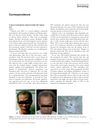
April 2013 in “International Journal of Dermatology” This correspondence article discusses a case of androgenetic alopecia treated with valproic acid but does not present new clinical findings.
 23 citations
,
December 2004 in “Seminars in oncology”
23 citations
,
December 2004 in “Seminars in oncology” This study found that DVd therapy is at least as effective as VAD/VAd for treating multiple myeloma and causes fewer side effects and reduced hospital visits.
7 citations
,
May 2008 in “Journal of Veterinary Internal Medicine” This case report describes a cat suspected of experiencing systemic vasculitis as an idiosyncratic hypersensitivity reaction to fenbendazole, marking it as the first documented case in cats of this rare adverse reaction.
 9 citations
,
July 2013 in “Clinical Neuroradiology”
9 citations
,
July 2013 in “Clinical Neuroradiology” A man developed a rare blood vessel connection on his scalp after hair transplants, which was successfully treated with surgery.
July 2026 in “Pediatric Allergy and Immunology”  17 citations
,
January 2011 in “The Korean Journal of Hepatology”
17 citations
,
January 2011 in “The Korean Journal of Hepatology” This case report details an occurrence of Vogt-Koyanagi-Harada disease during pegylated interferon-α2b and ribavirin therapy for chronic hepatitis C.
4 citations
,
April 2019 in “JAAD Case Reports” This article reviews the clinical features of dermatopathia pigmentosa reticularis, highlighting its characteristic triad of symptoms, but provides no new research results.
1 citations
,
May 2023 in “International Journal of Scientific Research in Science and Technology” This study found that urban development in the Vesu area of Surat has increased average mean temperatures, with simulated results showing a rise from 22.62 ºC to 28.25 ºC over the past decade.

In this case report, a 25-year-old woman with VKHD experienced an unusual occurrence of vellus-like hair growth on her normally hairless palm, observed twice over two years, expanding the known integumentary manifestations of VKHD.
 104 citations
,
May 2003 in “Endocrinology”
104 citations
,
May 2003 in “Endocrinology” This study found that the vitamin D receptor in lampreys, which lack bones and hair, binds 1,25-dihydroxyvitamin D3 and may function to induce enzymes for detoxifying substances.
 6 citations
,
July 2021 in “The anatomical record”
6 citations
,
July 2021 in “The anatomical record” This study described the diverse vibrissal follicle anatomy in fetuses of three cetacean species and observed species-specific differences, supporting further investigation into vibrissal form and function across cetaceans.
 April 2023 in “Neurology”
 This study examined treatments for emesis in young Alexander disease patients, finding that 95% responded positively to valproic acid, which was more effective than anti-reflux medications or cyproheptadine, though some adverse effects require monitoring.
 9 citations
,
April 2024 in “Cureus”
9 citations
,
April 2024 in “Cureus” This study outlines the features and diagnosis of Vogt-Koyanagi-Harada disease, highlighting its association with specific genes, its prevalence among pigmented races, and treatment with systemic steroids and immunosuppressants.
4 citations
,
March 2016 in “Small ruminant research” This study examined vicuña skin and hair follicle structures, finding a high density of secondary hairs in fleece areas compared to belly and legs, and identified various types of cutaneous glands potentially important for chemical communication.
March 2025 in “AYUSHDHARA” In this study, a 50-year-old woman with symptoms of thyroid dysfunction improved after receiving Ayurvedic treatment with Gandharvahastadi Kwath and lifestyle modifications, which alleviated symptoms like fatigue, muscle cramps, and dry skin, and normalized her TSH levels.
1 citations
,
December 2023 in “The Healer” This case report describes Ayurvedic treatment, including Samshodhan Karma and Shaman Chikitsa, that resulted in pregnancy for a 22-year-old woman with PCOS-related infertility after 3 years of trying to conceive.