October 2024 in “Journal of Cutaneous Pathology” In this study of folliculitis decalvans, researchers found that compound follicular structures in scalp biopsies are primarily composed of terminal anagen follicles, surrounded by fibrosis and inflammatory cell infiltrate, which could enhance understanding of this condition.
 8 citations
,
February 2010 in “Journal für Kardiologie (Krause & Pachernegg GmbH)”
8 citations
,
February 2010 in “Journal für Kardiologie (Krause & Pachernegg GmbH)” This study developed a detailed classification system for functional androgenization in females that may enhance diagnosis and personalized treatment by identifying individual dysfunctions.
 March 2026 in “Frontiers in Pharmacology”
 The study concluded that the Exprecell™ device for preparing anticoagulant-free f-PRF increases volume yield and simplifies the process while maintaining biological activity comparable to conventional methods, suggesting potential clinical utility.
October 2021 in “European urology open science” 3 citations
,
April 2020 in “American Journal of Case Reports” This case report describes the first instance of juvenile hemochromatosis type 2A associated with secondary hypothyroidism, linked to a novel mutation in the HJV gene.
 4 citations
,
April 2019 in “Gynecological Endocrinology”
4 citations
,
April 2019 in “Gynecological Endocrinology” This study found that the rs 1570360 polymorphism and the T-G-C haplotype of the VEGF gene may be associated with a protective factor against polycystic ovary syndrome in a Brazilian population.
2 citations
,
January 2012 in “Journal of Clinical & Experimental Dermatology Research” This study found that adding fexofenadine to DPCP treatment in non-atopic Alopecia areata patients did not significantly improve hair regrowth, but it did significantly reduce treatment-related discomfort.
3 citations
,
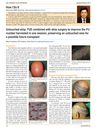
August 2018 in “Medical Journal Armed Forces India/MJAFI” In this study, IPL treatment for six months significantly reduced hair growth in females with faun tail nevus linked to spinal abnormalities.
 4 citations
,
January 2012 in “International Society of Hair Restoration Surgery”
4 citations
,
January 2012 in “International Society of Hair Restoration Surgery” This article discusses the importance of accepting both strip and FUE techniques for hair restoration, without asserting the superiority of one method over the other.
 6 citations
,
November 2017 in “Scientific reports”
6 citations
,
November 2017 in “Scientific reports” This study found that a novel R343H mutation in the vitamin D receptor gene impairs its transcription activity, contributing to hereditary vitamin D-resistant rickets and alopecia in the affected family.
2 citations
,
June 2021 in “Sultan Qaboos University medical journal” This case report presents three sisters with familial frontal fibrosing alopecia, making it the 25th documented familial case, with treatment results observed in one sister.
1 citations
,
November 2018 FUE is a minimally invasive hair transplant method using various donor sites.
 2 citations
,
March 2017 in “Asian Journal of Beauty and Cosmetology”
2 citations
,
March 2017 in “Asian Journal of Beauty and Cosmetology” This study found that caffeic acid reduced UVB-induced damage and oxidative stress in human dermal papilla cells, suggesting its protective efficacy against such cellular damage.
 7 citations
,
December 1987 in “Fertility and sterility”
7 citations
,
December 1987 in “Fertility and sterility” The vellus index is a simple, quick, and reliable method to assess and monitor hair growth, especially in hirsutism.
9 citations
,
March 2017 in “Journal of Visualized Experiments” This study introduced a novel in vitro murine assay using transgenic mice to identify immunomodulatory compounds, which identified 160 potential hits from 4,398 compounds screened.
2 citations
,
August 2002 in “British Journal of Ophthalmology” This article discusses the potential of intralesional cidofovir as a treatment for SCC and reports no systemic toxicity, but highlights surgical excision as the most reliable curative option.
 1 citations
,
January 2018 in “Indian journal of otolaryngology and head and neck surgery”
1 citations
,
January 2018 in “Indian journal of otolaryngology and head and neck surgery” This case study details an elderly patient with multiple nasal vestibular furunculosis leading to severe tissue damage and a nasolabial fistula, which was addressed using an alar advancement flap after allowing for tissue healing.
 September 2023 in “Journal of the American Academy of Dermatology”
 Topical tofacitinib helped a man with severe scalp condition after other treatments failed.
August 2023 in “Journal of Investigative Dermatology” In this meta-analysis, researchers found that oral dutasteride may stabilize or improve frontal fibrosing alopecia in patients, but results varied widely, and further controlled studies are needed to confirm its effectiveness as a treatment option.
172 citations
,
March 2019 in “The EMBO Journal” This study found that in Arabidopsis thaliana, the interaction between extracellular leucine-rich repeat extensins and the receptor-like kinase FERONIA helps control vacuolar expansion, crucial for cellular elongation.
 February 2015 in “Dermatologic Surgery”
 This article discusses various affiliations of the authors with no reference to new research findings.
 9 citations
,
August 2014 in “Journal of The American Academy of Dermatology”
9 citations
,
August 2014 in “Journal of The American Academy of Dermatology” This article discusses the authors' concerns over the misinterpretation of studies linking smoking and frontal fibrosing alopecia, clarifying that neither study suggests smoking is protective against the condition.
 October 2010 in “International journal of radiation oncology, biology, physics”
 In this randomized study, patients with early favorable Hodgkin lymphoma showed similar complete remission and survival rates whether receiving 2 or 4 cycles of ABVD and 20 Gy or 30 Gy IFRT, though reduced toxicity was associated with fewer cycles and lower radiation doses.
3 citations
,
December 2024 in “Journal of Animal Physiology and Animal Nutrition” In this study, researchers found that reducing FGF20 expression in dermal papilla cells of fine-wool sheep impedes the growth and differentiation of hair follicle stem cells, providing insights into wool trait improvement and regenerative medicine applications.
8 citations
,
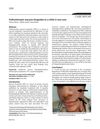
January 2005 in “SKINmed Dermatology for the Clinician” This case report details three patients with follicular mycosis fungoides, highlighting an impressive response to bexarotene in advanced cases, suggesting potential for further research on this treatment's effectiveness.
 1 citations
,
October 2023 in “Journal of the Pakistan Medical Association”
1 citations
,
October 2023 in “Journal of the Pakistan Medical Association” This source describes a case of a 12-year-old male diagnosed with folliculotropic mycosis fungoides, presenting with an asymptomatic, erythematous plaque. Histology and immunohistochemistry confirmed FMF, which is typically rare in children and marked by follicular infiltration by CD4+ lymphocytes.
39 citations
,
May 2006 in “Molecular Plant-Microbe Interactions” This study suggests that fusaric acid at nontoxic concentrations may activate signal transduction in plants which could aid in the plant-defense responses against Fusarium spp.
 12 citations
,
January 2005 in “Pediatric Dermatology”
12 citations
,
January 2005 in “Pediatric Dermatology” Fox Fordyce disease might be more common in prepubertal girls than thought and can be managed with treatment.
4 citations
,
August 2015 in “Journal of Cosmetic Dermatology” This study found that UVA blocker-containing sunscreens instantly reduced follicular fluorescence due to porphyrins in facial skin, with the effect lasting for a few hours, influenced by sunscreen amount and formulation.
 40 citations
,
August 2010 in “Archives of dermatology”
40 citations
,
August 2010 in “Archives of dermatology” This case report describes the youngest known patient with viral-associated trichodysplasia of immunosuppression, where systemic valganciclovir therapy improved facial papule eruptions following cardiac transplantation.