 1 citations
,
October 2022 in “Asian journal of medical sciences”
1 citations
,
October 2022 in “Asian journal of medical sciences” This study found trichoscopy to be a highly sensitive, non-invasive method for diagnosing tinea capitis in children, which could be valuable in resource-limited settings lacking mycological culture facilities.
 June 2023 in “International journal of pharmaceutical quality assurance”
 This study found that videodermoscopy is a promising non-invasive tool for distinguishing between types of non-scarring alopecia on the scalp, highlighting its potential in dermatological practice.
 June 2023 in “Al-Mağallaẗ al-ʻirāqiyyaẗ li-l-ṣaydalaẗ”
 In this study, researchers found that high doses of rosemary extract given to lactating mother rats adversely affected their offspring, causing weight issues and damage to liver, kidney, and testis tissues, suggesting potential teratogenic risks if used during human pregnancy and lactation.

This genetic study identified a potential interval for the Marie Unna hypotrichosis gene but found no mutations in the nearby hr gene, suggesting its involvement remains unconfirmed.
 January 2006 in “The Journal of Korean Medicine Ophthalmology and Otolaryngology and Dermatology”
 This study found that Rubus coreanum extract promotes hair growth in mice, but its effects are not due to inhibition of specific enzymatic activities or growth factor expression.
 197 citations
,
June 2009 in “American journal of human genetics”
197 citations
,
June 2009 in “American journal of human genetics” This study found that previously undescribed WNT10A mutations are a prominent cause of various forms of ectodermal dysplasia, including OODD and Schöpf-Schulz-Passarge syndrome, with gender-specific phenotypic effects noted.
 132 citations
,
January 2017 in “International Journal of Molecular Sciences”
132 citations
,
January 2017 in “International Journal of Molecular Sciences” This review explores how adipose-derived stem cells contribute to skin homeostasis and highlights recent advances in their clinical applications in dermatology, but it reports no new clinical results.
 75 citations
,
October 2010 in “Mammalian genome”
75 citations
,
October 2010 in “Mammalian genome” In this study, specific genetic polymorphisms in the KRT71 gene were associated with hairless and curly phenotypes in Sphynx and Devon Rex cats.
 69 citations
,
August 2014 in “Journal of The American Academy of Dermatology”
69 citations
,
August 2014 in “Journal of The American Academy of Dermatology” This review discusses recent advances in trichoscopy for differentiating types of alopecia and presents a systematic approach for using its diagnostic findings, but reports no new clinical results.
 65 citations
,
March 2016 in “Lasers in Medical Science”
65 citations
,
March 2016 in “Lasers in Medical Science” This review found that many low-level light therapy studies report beneficial effects but often fail to provide adequate measurement details, affecting the reliability and repeatability of the research.
 54 citations
,
December 2014 in “Wound Repair and Regeneration”
54 citations
,
December 2014 in “Wound Repair and Regeneration” This study observed that autologous PRP and PDRN injections improved hair thickness and density in women with pattern hair loss, with combined therapy showing greater improvement in thickness than PDRN alone.
 28 citations
,
August 2018 in “Dermatologic Clinics”
28 citations
,
August 2018 in “Dermatologic Clinics” This article discusses various aspects of trichoscopy for diagnosing hair and scalp disorders and reports no clinical results, offering guidance and highlighting pitfalls for better application of this tool by dermatologists.
 18 citations
,
November 2016 in “Journal of Oral and Maxillofacial Surgery”
18 citations
,
November 2016 in “Journal of Oral and Maxillofacial Surgery” This review discusses platelet-rich plasma for androgenic alopecia and reports beneficial effects on hair density and quality, but suggests more rigorous studies are needed for conclusive evidence.
 16 citations
,
September 2018 in “Journal of Molecular Liquids”
16 citations
,
September 2018 in “Journal of Molecular Liquids” This study investigated a nanostructured system using PS-b-PAA diblock copolymer for incorporating the hydrophobic photosensitizer ClAlPc, finding it effective in causing cellular damage in Caco-2 cells under light while demonstrating no cytotoxicity without light, suggesting its potential use in photodynamic therapy.
 7 citations
,
May 2010 in “Journal of Cutaneous Pathology”
7 citations
,
May 2010 in “Journal of Cutaneous Pathology” This study identified a novel locus for hereditary hypotrichosis simplex on chromosome 13q12.12~12.3 in a four-generation Chinese family.
 4 citations
,
August 2013 in “Expert Review of Dermatology”
4 citations
,
August 2013 in “Expert Review of Dermatology” This review discusses recent advances in the diagnosis and management of female pattern hair loss but reports no new clinical results.
 1 citations
,
May 2016 in “Dermatologic Surgery”
1 citations
,
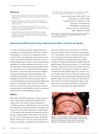
May 2016 in “Dermatologic Surgery” The document concludes that using a phototrichogram with a protractor and tapeline is a reliable and noninvasive way to measure hair loss.
 1 citations
,
November 2014 in “Journal of Biomedical Optics”
1 citations
,
November 2014 in “Journal of Biomedical Optics” This study introduced a noninvasive spectroscopy method to assess hair follicle stages in mice by measuring skin diffuse reflectance and melanin dynamics, offering a potential tool for hair regeneration research.
 February 2024 in “Journal of the American Academy of Dermatology”
 Vascular patterns in dermoscopy help tell apart malignant and benign skin tumors.
 November 2023 in “Research Square (Research Square)”
 This double-blinded randomized clinical trial found that combining topical vitamin D analog (calcipotriol) and intra-lesion PRP led to a greater reduction in hair loss severity in alopecia areata patients compared to either treatment alone, with significant improvements observed across all groups.
 August 2023 in “The Kitakanto Medical Journal”
 Image analysis can effectively identify changes in scalps affected by chemotherapy-induced hair loss.

Online tools are effective and cost-efficient for recruiting dermatology research participants, especially among younger people.

The digital system for measuring melasma shows promise but needs more development for better accuracy and automation.

This study suggests that using cell-free dexamethasone-primed stem cell media may offer a promising alternative treatment for systemic lupus erythematosus, showing immunomodulatory benefits and therapeutic efficacy in reducing various complications.
 140 citations
,
December 2017 in “Journal of Controlled Release”
140 citations
,
December 2017 in “Journal of Controlled Release” This study reviews the evolution and modifications of microneedle drug delivery systems, initially designed for percutaneous use, now expanded for targeting a variety of tissues and organs such as ocular, oral mucosal, and gastrointestinal, suggesting widespread future applicability.
 8 citations
,
March 2014 in “American Journal of Pathology”
8 citations
,
March 2014 in “American Journal of Pathology” This study found that hairless mice with homozygous mutations developed significantly more aggressive basal cell carcinomas and a heightened inflammatory response to UVB exposure compared to their haired littermates.
 December 2024 in “Research Journal of Medical Sciences”
 Injectable Platelet Rich Fibrin effectively improves hair growth in males with hair loss.
27 citations
,
January 2016 in “Indian Dermatology Online Journal” This article discusses the advantages and different techniques of dermoscopy for skin lesion visualization and reviewing no new clinical results; it emphasizes the integration of polarized light and the importance of training.
 1 citations
,
August 2022 in “Chemical engineering journal advances”
1 citations
,
August 2022 in “Chemical engineering journal advances” This study demonstrated that human hair can be coated with Fe3O4 nanoparticles, allowing it to be oriented and moved by a magnetic field, which may enhance drug delivery and hair care applications.
 1 citations
,
January 2023 in “Mycopathologia”
1 citations
,
January 2023 in “Mycopathologia” In this case report, a 34-year-old woman with black dot tinea capitis did not respond to oral Itraconazole but was successfully treated with Terbinafine.