 October 2009 in “Reactions Weekly”
 A woman developed lupus after taking hydroxyurea for two years.
 5 citations
,
May 1983 in “Australian journal of biological sciences”
5 citations
,
May 1983 in “Australian journal of biological sciences” This study found that concurrent administration of cycloleucine with ethionine prevented the weakening of wool fibers in sheep, whereas reduced glutathione did not have the same effect.
4 citations
,
November 2015 in “Research Journal of Medicinal Plant” This study found that ethanolic, aqueous, and hydroethanolic extracts of Tridax procumbens inhibited mitosis and caused mutagenic effects on cell division in Allium cepa root meristematic cells.
 December 2025 in “Indian Journal of Case Reports”
 This case report highlights an unusual instance of azathioprine potentially triggering rapid alopecia areata and bone marrow suppression in a patient with chronic spontaneous urticaria, with improvement seen after stopping the drug.

This study found that four synthesized thiazolidinone derivatives showed potential anticancer activity against MCF7 and HeLa cell lines, suggesting their further investigation for anticancer drug development.
 2 citations
,
January 2024 in “Pakistan Journal of Life and Social Sciences (PJLSS)”
2 citations
,
January 2024 in “Pakistan Journal of Life and Social Sciences (PJLSS)” This study found that hair treatment materials commonly used in Iraq and from international sources had radon, radium, and uranium concentration levels below international safety limits, suggesting they are safe for use.
 7 citations
,
March 2013 in “Tetrahedron Letters”
7 citations
,
March 2013 in “Tetrahedron Letters” This study reports a new one-pot method for synthesizing chromeno-pyrimidine-N-oxides with high yield from 4-chloro-3-formylcoumarin and aromatic carboximide oximes, confirmed by X-ray analysis.
 13 citations
,
July 2019 in “Toxicology research”
13 citations
,
July 2019 in “Toxicology research” In this study, ethanamizuril was found to cause alopecia, biochemical changes, and organ damage at higher doses in rats, with a no-observed-adverse-effect level of 20 mg/kg over 30 days.
 6 citations
,
November 2017 in “Scientific reports”
6 citations
,
November 2017 in “Scientific reports” This study found that a novel R343H mutation in the vitamin D receptor gene impairs its transcription activity, contributing to hereditary vitamin D-resistant rickets and alopecia in the affected family.
5 citations
,
February 1998 in “Polymer” Human hair keratin has a 40% α-helix structure that changes to a random coil in 8 M urea.
 May 2025 in “Proceedings of the National Academy of Sciences”
 In this study, researchers found that the histone demethylase UTX is crucial for regulating skin differentiation through retinoic acid signaling, mainly impacting females, as males compensate with a Y-linked paralog.
3 citations
,
August 1988 in “PubMed” February 2025 in “Chemico-Biological Interactions” In this study, researchers investigated how 5-fluorouracil (5-FU) impacts hair follicle cells, finding that it delays hair growth by inhibiting angiogenesis and β-catenin signaling. This discovery could help develop treatments for chemotherapy-induced alopecia in cancer patients receiving 5-FU.
2 citations
,
October 2021 in “Clinical and experimental dermatology” In this study, Cyperus rotundus essential oil was found to have significantly better depigmenting effects than hydroquinone for treating axillary hyperpigmentation, with additional benefits in reducing inflammation and hair growth, making it a cost-effective and safe treatment option.
August 2026 in “Pakistan Journal of Pharmaceutical Sciences” In rats with cyclophosphamide-induced hair loss, this study found that applying cetirizine HCl-loaded emulgel with microneedling stimulated hair growth, suggesting a potentially safer alternative to minoxidil for treating chemotherapy-induced alopecia.
 19 citations
,
May 2006 in “Clinical and Experimental Dermatology”
19 citations
,
May 2006 in “Clinical and Experimental Dermatology” This study identified a novel insertion mutation in the hairless gene that may contribute to the development of congenital atrichia with papular lesions in a Pakistani family.
 40 citations
,
October 2009 in “Journal of Biomedical Nanotechnology”
40 citations
,
October 2009 in “Journal of Biomedical Nanotechnology” This review discusses pyrene excimer nucleic acid probes for detecting biomolecules and protein-DNA interactions and reports no new experimental findings.
 28 citations
,
May 2020 in “BMC plant biology”
28 citations
,
May 2020 in “BMC plant biology” This study concluded that GLCAT14A-C genes are crucial for the function of glucuronic acid transfer to AGPs in Arabidopsis, affecting various growth and reproductive traits such as seed germination and root hair growth.
 4 citations
,
January 2014 in “RSC Advances”
4 citations
,
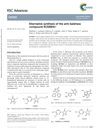
January 2014 in “RSC Advances” A new, less toxic and more efficient method to create the anti-baldness compound RU58841 was developed in 2014.
March 1990 in “Journal of Dermatological Science” 11 citations
,
March 2021 in “Molecular Carcinogenesis” This study found that deleting the transcription factor Twist1 in keratinocytes significantly reduced UVB-induced skin carcinogenesis in mice, suggesting a potential target for preventing cutaneous squamous cell carcinoma.
 5 citations
,
March 2019 in “Journal of lipid research”
5 citations
,
March 2019 in “Journal of lipid research” This study reports new fluorogenic ceramidase substrates and highlights RBM14C24:1 as an efficient substrate for neutral ceramidase, while RBM15C18:1 is the best probe for measuring ACER1 and ACER2 activities, potentially aiding high-throughput screening for ceramidase inhibitors.
March 2026 in “British Journal of Dermatology” This study found that the TYK2 inhibitor deucravacitinib did not significantly improve hair regrowth in patients with alopecia areata compared to placebo, suggesting it may not be effective for this condition. No new safety issues were identified.
1 citations
,
January 2023 in “PubMed” In this study, Urtica dioica extract was found to significantly downregulate 5-alpha-reductase type II gene expression in skin cells, suggesting potential usefulness against androgenic skin diseases.
July 2017 in “Cancer Research” This study found that polyamines participate in DNA double-strand break repair, primarily by enhancing the homologous recombination pathway through RAD51-mediated DNA strand exchange.
20 citations
,
February 1968 in “Journal of Histochemistry & Cytochemistry” This study reports that citrulline, uniquely found in the inner root sheath of hair follicles, can be specifically detected with the carbamido diacetyl reaction, resulting in a bright orange color.
 29 citations
,
December 2017 in “Molecular therapy”
29 citations
,
December 2017 in “Molecular therapy” This study found that enzyme replacement therapy in mice with a severe form of classical homocystinuria improved metabolic patterns and alleviated many clinical symptoms.
20 citations
,
May 2009 in “Health physics” This study developed a model predicting uranium excretion in human hair from drinking water exposure, suggesting it is a viable indicator for assessing internal uranium burden.
15 citations
,
January 1991 in “Mammalian Genome” 23 citations
,
September 2020 in “BMC Cancer” This retrospective cohort study found that patients using 5α-reductase inhibitors had reduced bladder cancer-related mortality compared to nonusers, with no significant effect on bladder cancer recurrence or upper tract urothelial carcinoma mortality.