This case report describes successful treatment of a 21-year-old patient with lichen planopilaris using keratolytic lotions, a combination of corticosteroids, salicylic acid, and tacrolimus cream, which stopped disease progression.
 7 citations
,
March 2013 in “Tetrahedron Letters”
7 citations
,
March 2013 in “Tetrahedron Letters” This study reports a new one-pot method for synthesizing chromeno-pyrimidine-N-oxides with high yield from 4-chloro-3-formylcoumarin and aromatic carboximide oximes, confirmed by X-ray analysis.
May 2005 in “Hair transplant forum international” This case report documents a 28-year-old woman who experienced complete scalp hair loss, which began a year earlier with patchy baldness and progressed to loss of eyebrow, axillary, and pubic hair.
 2 citations
,
November 2014 in “The journal of investigative dermatology/Journal of investigative dermatology”
2 citations
,
November 2014 in “The journal of investigative dermatology/Journal of investigative dermatology” This case report observed that oral tofacitinib treatment resolved both alopecia universalis and plaque psoriasis in a patient, possibly by targeting shared inflammatory pathways.
 8 citations
,
April 2020 in “Facial Plastic Surgery Clinics of North America”
8 citations
,
April 2020 in “Facial Plastic Surgery Clinics of North America” This article discusses the advancements in follicular unit transplantation for hair restoration and reports no clinical results; it emphasizes improved aesthetic outcomes using updated techniques.
April 2020 in “The Egyptian Journal of Plastic and Reconstructive Surgery” In this retrospective study of 29 patients with scalp burn alopecia, researchers utilized a simple method involving tissue expansion to reconstruct the temporal and lateral sideburn areas, resulting in satisfactory, symmetrical, and standardized aesthetic outcomes according to both objective and subjective evaluations.
 11 citations
,
January 2002 in “Dermatologic Surgery”
11 citations
,
January 2002 in “Dermatologic Surgery” This study concluded that topical minoxidil is effective in preventing temporal hair loss following facelift surgery and does not increase the risk of complications such as hematomas or skin necrosis.
 4 citations
,
May 1976 in “Archives of Dermatology”
4 citations
,
May 1976 in “Archives of Dermatology” Starvation diets can cause significant hair loss.
 21 citations
,
January 2013 in “Annals of dermatology/Annals of Dermatology”
21 citations
,
January 2013 in “Annals of dermatology/Annals of Dermatology” In this study, combination therapy with cyclosporine and PUVA for severe alopecia areata resulted in a majority of patients showing only fair to poor responses, though some improvements were noted.
22 citations
,
October 2007 in “JDDG Journal der Deutschen Dermatologischen Gesellschaft” In this case study, combination therapy with dapsone and isotretinoin significantly improved perifolliculitis capitis abscedens et suffodiens, with the patient remaining symptom-free for six months on reduced medication.
 November 2002 in “Dermatologic Surgery”
 This review discusses the surgical methods of hair restoration, highlighting the density benefits of scalp reduction and rotation, but reports no new clinical findings.
 3 citations
,
March 2023 in “JAAD case reports”
3 citations
,
March 2023 in “JAAD case reports” This study describes three cases where patients with recalcitrant alopecia areata achieved complete hair regrowth on the scalp after treatment with upadacitinib, suggesting it may be beneficial for similar cases, especially those with comorbid atopic dermatitis.
 1 citations
,
November 2011 in “Journal of AIDS & Clinical Research”
1 citations
,
November 2011 in “Journal of AIDS & Clinical Research” Raltegravir may cause hair loss in some patients.
June 2023 in “International Journal of Dermatology” January 2025 in “SAGE Open Medical Case Reports” This case report described a patient with erosive pustular dermatosis of the scalp who was resistant to multiple treatments, suggesting that combination therapy may be more effective than monotherapy for managing refractory cases of this condition.
96 citations
,
December 2015 in “JAMA dermatology” This article discusses the potential of topical ruxolitinib as a treatment for alopecia universalis and acknowledges the need for alternatives to systemic JAK inhibitors due to the risk of serious side effects.
 September 2009 in “Hair transplant forum international”
 This article discusses the ongoing debates among hair restoration surgeons on incision methods and presents no new research findings.
1 citations
,
January 1997 in “The American Journal of the Medical Sciences” March 2025 in “Journal of Dermatology Research Reviews & Reports” This case report describes a 30-year-old patient with extensive alopecia areata, successfully treated with a combination of oral dexamethasone, methotrexate, minoxidil hair lotion, and folic acid over 48 weeks, resulting in satisfactory improvement.
September 2021 in “CRC Press eBooks” This review discusses erosive pustular dermatosis of the scalp, including its characteristics, potential triggers, and its classification as a neutrophilic dermatosis, but reports no new clinical findings.
 6 citations
,
August 1989 in “European journal of pediatrics”
6 citations
,
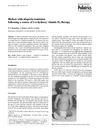
August 1989 in “European journal of pediatrics” This case study describes a child with rickets and alopecia who responded to a small dose of 1-a-hydroxyvitamin D3, but her alopecia remained unchanged despite treatment.
3 citations
,
November 2024 in “Clinical Research” This article discusses the immune mechanisms involved in alopecia areata, focusing on T-cell activity and cytokine-driven JAK signaling, but reports no new clinical results.
June 2026 in “British Journal of Dermatology” This case study documented the first known instance of biopsy-confirmed lichen planopilaris occurring after hairline-lowering surgery in a patient without prior history, highlighting a potential complication where surgical trauma may trigger immune-mediated hair loss.
 April 2023 in “Dermatology practical & conceptual”
 This study observed that a tacrolimus solution (0.1%) applied to the scalp was effective and well-tolerated for treating inflammatory scalp conditions, with 72.7% of patients showing an excellent response after 2 months of treatment, which persisted after 6 months.
 26 citations
,
June 2018 in “Australasian Journal of Dermatology”
26 citations
,
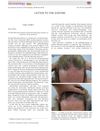
June 2018 in “Australasian Journal of Dermatology” Stopping sunscreen use on the forehead led to hair regrowth in a woman with frontal fibrosing alopecia.
 4 citations
,
December 2016 in “Journal of Pakistan Association of Dermatology”
4 citations
,
December 2016 in “Journal of Pakistan Association of Dermatology” In this study, using a combination of topical minoxidil (2%) and isotretinoin (0.05%) gel led to complete hair regrowth in 83.3% of alopecia areata patients within six months, demonstrating effective and well-tolerated treatment results.
 January 2019 in “Hair transplant forum international”
 This commentary argues that hair transplant surgery can be life-saving, challenging the perception that it is purely cosmetic.
7 citations
,
January 2016 in “Dermatology online journal” This case report describes a 24-year-old woman with traction alopecia, highlighting that if the excessive traction is not addressed, it can progress from reversible to permanent hair loss.
December 2022 in “Zenodo (CERN European Organization for Nuclear Research)” In this report, a 14-year-old female with stubborn alopecia areata was successfully treated with oral tofacitinib, indicating its potential effectiveness for severe cases.
107 citations
,
September 1968 in “Archives of Dermatology” In this study, researchers identified a form of irreversible scalp alopecia in Black women using hot combs, characterized by incomplete hair loss primarily on the crown and follicular scarring.