11 citations
,
August 2021 in “Stem Cell Research & Therapy” This study found that coadministration of pimecrolimus may interfere with the therapeutic efficacy of mesenchymal stem cell therapy in atopic dermatitis.
21 citations
,
August 2002 in “British Journal of Ophthalmology” This report notes that while surgical excision is typically curative for squamous cell carcinoma, the authors suggest considering the intralesional use of cidofovir for its potential success without systemic toxicity.
 26 citations
,
July 2019 in “JAAD Case Reports”
26 citations
,
July 2019 in “JAAD Case Reports” This study reports two cases of hair loss outcomes in patients using dupilumab for atopic dermatitis, with one showing improvement in alopecia universalis and another experiencing worsening of alopecia totalis.
99 citations
,
March 2013 in “Journal of Investigative Dermatology” This study identified ABCB6 as the first gene linked to dyschromatosis universalis hereditaria (DUH) in a large Chinese family, suggesting it plays a role in skin pigmentation.
3 citations
,
February 2001 in “British journal of ophthalmology” This case report presents a 28-year-old woman with alopecia universalis and macular dystrophy, highlighting a potential new linkage between these conditions without previously identified associated genes.
 January 2025 in “Current Trends in Pharmacy and Pharmaceutical Chemistry”
 This review examines recent advancements in analytical techniques used to quantify dutasteride, a medication for enlarged prostate, in various biological samples and its commercial forms, emphasizing methods such as HPTLC, GC-MS, and HPLC.
 97 citations
,
March 2002 in “Molecular and cellular biology”
97 citations
,
March 2002 in “Molecular and cellular biology” This study found that mice with a mutant CDP/Cux protein lacking the homeodomain showed severely impaired growth, high postnatal mortality, and reduced fertility, highlighting CDP/Cux's role in developmental regulation.
January 2025 in “International Journal of Advanced Research” In this case report, a 30-year-old male with alopecia universalis was diagnosed with ulcerative colitis, and despite treatment, he experienced no hair regrowth, highlighting that skin issues like alopecia can accompany inflammatory bowel diseases such as ulcerative colitis.
 12 citations
,
August 2019 in “Dermatitis”
12 citations
,
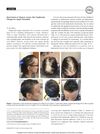
August 2019 in “Dermatitis” This case report describes a 42-year-old woman with atopic dermatitis, whose alopecia areata reactivated rapidly after starting dupilumab, possibly indicating an unrecognized adverse effect in AD patients.
August 2023 in “Zenodo (CERN European Organization for Nuclear Research)” This review paper provides a comprehensive overview of Dutasteride, detailing its pharmacological properties, mechanisms, and therapeutic applications, particularly for androgenetic alopecia and benign prostatic hyperplasia, and discusses its potential use in prostate cancer prevention and transgender medicine.
 October 2024 in “Journal of the Endocrine Society”
 This study examined uncharacterized CYP21A2 gene variants related to non-classic congenital adrenal hyperplasia and found that several mutations reduce enzyme activity, which may help improve diagnostic and treatment strategies.
 21 citations
,
June 2017 in “Journal of The American Academy of Dermatology”
21 citations
,
June 2017 in “Journal of The American Academy of Dermatology” This study reviewed existing articles to assess the efficacy of topical diphenylcyclopropenone immunotherapy for alopecia areata, but it did not report new clinical results.
October 2025 in “Pediatric Dermatology” This report describes how ultraviolet-induced fluorescence dermoscopy helped accurately diagnose scalp disorders, specifically alopecia areata and tinea capitis, in pediatric patients.
10 citations
,
May 1974 in “American journal of diseases of children” This case report details a 4-year-old girl with arginosuccinic-aciduria, showing neurological symptoms and weakened hair, but the mechanisms behind these issues remain uncertain.
63 citations
,
April 1985 in “Journal of the American Academy of Dermatology” This study observed that topical PUVA treatment led to excellent or good hair regrowth in 45.4% of patients with alopecia areata, though many experienced relapse after treatment stopped.
6 citations
,
October 2021 in “Brain Sciences” This study reported that dutasteride, identified through a drug repurposing strategy, showed the potential to reduce neuroinflammation and cognitive impairment in LPS-stimulated models.
 68 citations
,
November 2015 in “The Journal of Allergy and Clinical Immunology”
68 citations
,
November 2015 in “The Journal of Allergy and Clinical Immunology” In this study, three patients with extensive alopecia areata showed varying degrees of hair regrowth after 20 weeks of treatment with ustekinumab, a cytokine-targeting therapy.
1 citations
,
April 2017 in “Journal of Investigative Dermatology” Abatacept may help some people with alopecia areata regrow hair.
 14 citations
,
May 2008 in “Journal of proteome research”
14 citations
,
May 2008 in “Journal of proteome research” This study found that dutasteride reduced β-amyloid plaque load in a cerebral amyloidosis model, seemingly linked to mitochondrial apoptosis and autophagy processes.
March 2013 in “The Journal of Urology” This study found that non-daily use of Dutasteride may be more cost-effective and associated with lower cancer incidence than daily use for patients seeking treatment for lower urinary tract symptoms.
 May 2026 in “BMC Medicine”
 This study found that ACOD1 deficiency in dermal papilla cells promotes mitochondrial dysfunction and contributes to cellular senescence in androgenetic alopecia, suggesting ACOD1 as a potential therapeutic target and 4-octyl itaconate as a promising treatment option for AGA.
11 citations
,
January 2009 in “Indian journal of dermatology, venereology, and leprology” This review discusses the characteristics, geography, and treatment challenges of dermatitis cruris pustulosa et atrophicans in men, emphasizing the need for further research on its etiology and management; it presents no new clinical findings.
17 citations
,
October 2011 in “International Journal of Immunopathology and Pharmacology” This study found that after 24 weeks of DPCP treatment for alopecia areata, there was a significant increase in new capillaries and hair regrowth detectable by videocapillaroscopy.
36 citations
,
March 1989 in “British journal of dermatology/British journal of dermatology, Supplement” In this study, the authors compared topical diphencyprone and tretinoin gel for treating alopecia totalis and universalis, but the abstract does not report any definitive clinical results.
3 citations
,
April 2024 in “JAAD Case Reports” This article reviews DPCP's use as a topical immunotherapy for alopecia areata and discusses its suggested mechanism, but reports no clinical results.
14 citations
,
June 1982 in “Archives of Dermatology” This letter to the editor shares concerns about possible systemic effects from topical dinitrochlorobenzene therapy in a 25-year-old man treating alopecia areata.
August 2024 in “JAAD Case Reports” This article reviews the current FDA-approved treatments for severe pediatric alopecia areata, including the use of Janus kinase inhibitors, but reports no new clinical findings.
 August 2018 in “Journal of Investigative Dermatology”
 This study of alopecia areata patients found that a 10 mg twice-daily dose of oral tofacitinib led to significant hair regrowth, suggesting it may be beneficial for treatment.
1 citations
,
November 2023 in “Journal of Investigative Dermatology” Farudodstat may effectively treat alopecia areata without harming hair follicles.
94 citations
,
July 1991 in “Clinical endocrinology” In this study, cyproterone acetate at 2 mg daily was found to be as effective as higher doses in reducing hair growth for hirsute women over 12 months.