12 citations
,
January 1987 in “Carcinogenesis” This study found that a single application of TCDD on the skin of hairless mice altered epidermal differentiation, changing keratin expression patterns similarly to a known tumor promoter.
 28 citations
,
December 2017 in “Journal of Investigative Dermatology Symposium Proceedings”
28 citations
,
December 2017 in “Journal of Investigative Dermatology Symposium Proceedings” This review summarizes findings on the long-term use of tofacitinib for severe alopecia areata, reporting its potential as a promising treatment option.
2 citations
,
September 2023 in “Journal of the American Academy of Dermatology” CTP-543 effectively promotes hair regrowth in adults with moderate to severe alopecia areata.
January 2017 in “Enlighten: Publications (The University of Glasgow)” This study found that in mice with deregulated β-catenin and PTEN signaling, increased follicular hyperplasia and sebaceous gland changes occur, but typical papillomas do not develop, potentially due to p21 response and reduced stem cell markers.
 9 citations
,
January 2018 in “BioMed Research International”
9 citations
,
January 2018 in “BioMed Research International” This study found that topical application of TSG from Polygonum multiflorum promoted hair regrowth in depilated mice, potentially through the inhibition of apoptosis-related proteins.
 8 citations
,
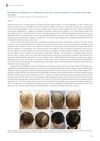
May 2017 in “Singapore Medical Journal”
8 citations
,
May 2017 in “Singapore Medical Journal” A Korean woman with complete hair loss regrew her hair after taking tofacitinib, with no side effects.
 13 citations
,
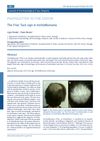
June 2012 in “Journal of Dermatological Case Reports”
13 citations
,
June 2012 in “Journal of Dermatological Case Reports” This report describes an 8-year-old male with trichotillomania, confirmed by trichoscopy showing characteristic hair damage and patterns.
 August 2024 in “Life Science Alliance”
 This study found that topical application of TGF-β mimic promoted enhanced wound healing and tissue regeneration in mice, suggesting its potential as a therapeutic option for improving wound healing.
 2 citations
,
June 2019 in “Boletín médico del Hospital Infantil de México”
2 citations
,
June 2019 in “Boletín médico del Hospital Infantil de México” This study in Mexican adolescents with severe alopecia areata reported that oral tofacitinib treatment resulted in hair growth and reduced alopecia severity without serious adverse effects.
November 2025 in “PROGRESS IN BIOCHEMISTRY AND BIOPHYSICS” This study found that taurine significantly mitigated DHT-induced androgenetic alopecia in male C57BL/6 mice by promoting hair regrowth, enhancing hair follicle cycle progression, reducing apoptosis, and downregulating key androgen-related signaling pathways, highlighting its potential as a therapeutic candidate for hair loss management.
1 citations
,
April 2018 in “Journal of Investigative Dermatology” The Trichodysplasia spinulosa virus protein can cause abnormal hair growth in mice.
 49 citations
,
May 2018 in “Journal of the American Academy of Dermatology”
49 citations
,
May 2018 in “Journal of the American Academy of Dermatology” This letter discusses the limited treatment options for pediatric alopecia areata and the lack of controlled studies for therapies like systemic and off-label immunosuppressive drugs, without reporting new clinical results.
 139 citations
,
November 2016 in “Journal of the American Academy of Dermatology”
139 citations
,
November 2016 in “Journal of the American Academy of Dermatology” In this retrospective review, tofacitinib treatment was associated with clinically significant hair regrowth in most adolescent patients with alopecia areata, though limitations suggest further studies are needed to confirm these findings.
 2 citations
,
April 2019 in “Dermatologic Therapy”
2 citations
,
April 2019 in “Dermatologic Therapy” A patient with alopecia had hair regrowth with tofacitinib but developed a skin reaction, choosing to continue the treatment despite the side effect.
 17 citations
,
January 2019 in “Dermatologic Therapy”
17 citations
,
January 2019 in “Dermatologic Therapy” The article in Dermatologic Therapy discusses clinical experiences with using tofacitinib to treat alopecia areata in 63 patients, but no specific results are reported in the abstract.
 11 citations
,
January 2018 in “Acta dermato-venereologica”
11 citations
,
January 2018 in “Acta dermato-venereologica” In this study, oral tofacitinib showed higher efficacy and tolerability in treating refractory alopecia totalis and universalis compared to traditional treatments, achieving a 50% improvement in severity scores for 44.4% of patients over six months, with fewer adverse effects.
 June 2025 in “International Journal of Science and Research (IJSR)”
 This study found that oral tofacitinib at a 5mg twice daily dosage was effective in treating recalcitrant alopecia areata, showing significant improvement in hair regrowth and a 27% reduction in SALT scores over six months, with minimal side effects among the 19 patients monitored.
November 2015 in “Chemical & engineering news” This study reported that topical drugs regrew hair in mice.
1 citations
,
January 2024 in “Arab Board Medical Journal” This study found that tofacitinib was an effective and well-tolerated treatment for alopecia areata, with significant to moderate hair regrowth in 78% of patients observed.
 March 2025 in “Indian Journal of Dermatology Venereology and Leprology”
 In this study, tofacitinib showed significant efficacy in treating alopecia totalis and universalis over a 6-month period, with notable hair regrowth outcomes, while younger age of onset and shorter treatment duration were linked to less effectiveness.
 77 citations
,
January 1980 in “Carcinogenesis”
77 citations
,
January 1980 in “Carcinogenesis” This study found that TPA was significantly more effective than mezerein in inducing dark basal keratinocytes in mouse skin, which may be important in early tumor promotion stages.
June 2014 in “Dermatology Times E-News” An arthritis drug helped a person with severe hair loss regrow their hair.
 16 citations
,
January 2017 in “Acta dermatovenerologica Alpina, Pannonica et Adriatica (Tiskana izd.)”
16 citations
,
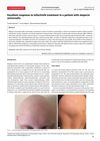
January 2017 in “Acta dermatovenerologica Alpina, Pannonica et Adriatica (Tiskana izd.)” This case study reports that a 23-year-old woman with alopecia universalis experienced complete hair regrowth after six months of treatment with tofacitinib, a JAK-3 inhibitor.
This study found that a polyherbal formulation of Trigonella foenum-graecum seeds and Butea monosperma flowers significantly promoted hair growth and reduced dihydrotestosterone levels in a chemotherapy-induced alopecia model.

This study concluded that oral tofacitinib significantly improved hair growth in patients with alopecia areata, alopecia totalis, and alopecia universalis over a 24-week period, but longer studies are needed to assess long-term safety.
September 2025 in “Journal of Veterinary and Animal Sciences” In this study, researchers identified nine cases of hair follicular tumors among 100 dog biopsy samples in Kerala, India, detailing subtypes like trichoblastoma and pilomatricoma, and analyzed their clinical, gross, and microscopic pathology.
July 2017 in “Cancer Research” This study identified a radio-resistant population of Krt15+ stem cells in the mouse small intestine that can initiate tumors, suggesting potential targets for colon cancer therapy.
July 2025 in “International Journal of Trichology” This study reported that six out of seven pediatric patients with refractory patchy alopecia areata experienced significant hair regrowth after one month of oral tofacitinib treatment, suggesting it may be an effective and safe option, although larger studies are needed to evaluate long-term safety.
 5 citations
,
May 2011 in “Movement Disorders”
5 citations
,
May 2011 in “Movement Disorders” Finasteride may help reduce tic severity in male Tourette syndrome patients.
1 citations
,
July 2025 in “Cancer Medicine” This study observed that colorectal cancer tumoroids adapted to an environment without a matrix by developing disordered self-assembly, but their tumor-specific phenotypes and drug sensitivity remained unchanged.