 September 2023 in “Дерматовенерология, косметология”
 In this study conducted at the Vitebsk Regional Clinical Center, digital video microscopy without biopsy effectively identified diagnostic criteria for non-scarring alopecia in 315 patients, allowing for the prescription of appropriate treatments for alopecia areata and androgenetic alopecia.
 March 2023 in “Journal of clinical review & case reports”
 This study observed that in Mexico, Frontal Fibrosing Alopecia predominantly affects postmenopausal women, with an increased incidence in recent years, and highlights the challenge of early diagnosis to prevent irreversible hair loss.
 December 2022 in “Kristu Jayanti Journal of Core and Applied Biology (KJCAB)”
 This study examined the morphometric features of hair from different regions of India to identify potential regional characteristics.
 December 2020 in “TURKDERM”
 This case report describes a 3-year-old boy diagnosed with temporal triangular alopecia, emphasizing the importance of clinical and dermoscopic examination for correct diagnosis due to the condition's rarity and risk of misdiagnosis.
 June 2019 in “Journal of evolution of medical and dental sciences”
 This study found that yellow dots seen under dermatoscopy are a sensitive and specific indicator of treatment response in alopecia areata, showing significant reduction as early as four weeks.
 January 2019 in “Georg Thieme Verlag eBooks”
 This review suggests that platelet-rich plasma therapy shows promise for androgenetic alopecia and may be effective for some alopecia areata and cicatricial alopecia cases, but more robust trials are needed.
 October 2017 in “Iranian Journal of Dermatology”
 This study found that clinical examination is effective for diagnosing certain non-scarring hair loss types in women, although histopathologic studies are necessary for exact diagnoses, and laboratory tests did not correlate well with clinical findings.
This study suggests that dermoscopy provides additional insights for diagnosing pattern alopecia in short coated dogs, beyond what is visible through standard dermatological examination.
 February 2026 in “Ciencia Latina Revista Científica Multidisciplinar”
 This review found a significant immunological link between diffuse alopecia areata and autoimmune thyroid disorders, particularly Hashimoto's thyroiditis, highlighting the importance of early recognition and thyroid function evaluation to improve clinical management and avoid diagnostic delays.
 February 2025 in “Revista Eletrônica Acervo Saúde”
 This integrative review found that triamcinolone hexacetonide remains the primary treatment for mild to moderate alopecia areata but noted its significant side effects with prolonged use, while emerging therapies like PRP and minoxidil offer promising alternative benefits with fewer risks.
 July 2021 in “British Journal of Dermatology”
 Low testosterone levels may contribute to female pattern hair loss in men.
 April 2021 in “Journal of Cosmetic Dermatology”
 Stem cell treatment improved hair density in female hair loss patient.
 November 2020 in “Skin Research and Technology”
 This study found that videodermoscopy showed higher sensitivity and specificity than clinical examination for diagnosing female pattern hair loss and may serve as an alternative to scalp biopsy in the future.
 60 citations
,
April 2018 in “Clinical, cosmetic and investigational dermatology”
60 citations
,
April 2018 in “Clinical, cosmetic and investigational dermatology” This review discusses the causes and diagnosis of traction alopecia, emphasizing education for high-risk populations as there is currently no cure, and presents no new clinical findings.
 39 citations
,
April 2020 in “Clinical, Cosmetic and Investigational Dermatology”
39 citations
,
April 2020 in “Clinical, Cosmetic and Investigational Dermatology” This review discusses the unique characteristics and disorders of Asian hair, emphasizing the need for more comprehensive studies in this area.
 4 citations
,
January 2022 in “Skin appendage disorders”
4 citations
,
January 2022 in “Skin appendage disorders” In this case report, a 64-year-old patient with chemotherapy-induced alopecia was treated with oral minoxidil and experienced good results, suggesting a potential new therapy for this challenging condition.

This review discusses the potential link between contact allergy and frontal fibrosing alopecia, noting the presence of implicated allergens in current literature, but reports no new clinical findings.
 January 2025 in “Advances in Dermatology and Allergology”
 This literature review conducted a comprehensive analysis of existing studies on micro-needling mesotherapy in dermatology and aims to offer a practical guide for its clinical application, though it provides no new experimental findings.
 70 citations
,
February 2017 in “Dermatologic Surgery”
70 citations
,
February 2017 in “Dermatologic Surgery” This study reports that plasma rich in growth factors appeared to improve hair follicle regeneration and patient satisfaction in individuals with androgenetic alopecia, though further trials are needed.
 66 citations
,
February 2009 in “British Journal of Dermatology”
66 citations
,
February 2009 in “British Journal of Dermatology” This study found that the prevalence of androgenetic alopecia in Chinese men was lower than in Caucasian men, similar to Korean men, and most commonly presented as type III vertex.
 65 citations
,
April 2020 in “International Journal of Molecular Sciences”
65 citations
,
April 2020 in “International Journal of Molecular Sciences” This review indicates that most studies reported positive effects of platelet-rich plasma injections for treating androgenic alopecia, with no major side effects, suggesting it may be a safe alternative to Minoxidil and Finasteride.
 55 citations
,
September 2017 in “Journal of Cosmetic Dermatology”
55 citations
,
September 2017 in “Journal of Cosmetic Dermatology” This review discusses the diverse applications of platelet-rich plasma in aesthetic dermatology and assesses the existing literature on its effectiveness, reporting no new clinical results.
 44 citations
,
November 2011 in “The Journal of Dermatology”
44 citations
,
November 2011 in “The Journal of Dermatology” This review discusses recent advancements in the management and diagnosis of primary cicatricial alopecias but reports no new clinical results; emerging insights suggest sebaceous gland dysfunction may play a role in their etiopathogenesis.
 36 citations
,
December 2017 in “Journal of the American Academy of Dermatology”
36 citations
,
December 2017 in “Journal of the American Academy of Dermatology” This study observed that 70.7% of patients with frontal fibrosing alopecia stabilized with treatment, and patients using 0.3% tacrolimus were more likely to stabilize in 3 months compared to other treatments.
 22 citations
,
January 2013 in “International Journal of Trichology”
22 citations
,
January 2013 in “International Journal of Trichology” Hair loss is often linked to thyroid problems, especially in women and older people, and screening for thyroid issues is advised for those with hair loss.
 21 citations
,
March 2015 in “Journal of The American Academy of Dermatology”
21 citations
,
March 2015 in “Journal of The American Academy of Dermatology” In this study, five out of six patients treated with vemurafenib for metastatic melanoma experienced hair loss, which improved after topical steroid treatment.
 21 citations
,
January 2010 in “International Journal of Trichology”
21 citations
,
January 2010 in “International Journal of Trichology” This study concluded that TrichoScan is error-prone in its current form and overestimates certain hair growth parameters, with results not aligning with clinical severity of alopecia.
 20 citations
,
January 2018 in “Expert Opinion on Drug Safety”
20 citations
,
January 2018 in “Expert Opinion on Drug Safety” This review discusses androgenetic alopecia management with 5α-reductase inhibitors, emphasizing that while dutasteride shows superior efficacy, finasteride is suggested as preferable due to predictable adverse effects and preservation of physiological roles.
 19 citations
,
June 2020 in “International Journal of Dermatology”
19 citations
,
June 2020 in “International Journal of Dermatology” In this systematic review, oral minoxidil was found to be a safe and effective treatment for androgenetic alopecia and alopecia areata, with additional benefits for female pattern hair loss and other types of alopecia, although common side effects included hypertrichosis and postural hypotension.
 18 citations
,
April 2021 in “Experimental Dermatology”
18 citations
,
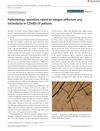
April 2021 in “Experimental Dermatology” This study in Italy observed telogen effluvium and trichodynia as common hair-related complications following COVID-19 infection, raising questions about underlying hair follicle biology and potential receptor involvement.