 December 2024 in “IntechOpen eBooks”
 In this study, trichoscopy was identified as a valuable diagnostic tool for alopecia areata, revealing that specific hair features like yellow dots and short vellus hairs help assess disease activity and phase, with diagnosis relying on multiple combined signs rather than a single indicator.
2 citations
,
January 2002 in “Zhiwu Yanjiu” Capitate trichomes have more endoplasmic reticulum and vacuoles, while peltate trichomes have more plastids and larger subcuticular spaces.
28 citations
,
November 1987 in “Journal of the American Academy of Dermatology” This study developed an in vitro model using human follicular keratinocytes to observe selective cell growth and differentiation, potentially aiding future research on hair biology and growth processes.
47 citations
,
November 1966 in “Archives of Dermatology” This study found that trichorrhexis nodosa, a common cause of unexplained hair loss, is primarily caused by trauma rather than a metabolic defect.
 15 citations
,
May 2010 in “International Journal of Cosmetic Science”
15 citations
,
May 2010 in “International Journal of Cosmetic Science” This review discusses new developments in understanding the structure and properties of keratin fiber cell membrane complexes, without reporting new experimental results.
 November 2023 in “International surgery journal”
 In this case study, a 69-year-old male with a neck swelling was diagnosed with a trichilemmal cyst, highlighting the importance of complete surgical excision for lesions with proliferative or malignant potential.
28 citations
,
April 1988 in “Archives of Dermatological Research”  October 2024 in “Dermatology Practical & Conceptual”
 In this study, the authors evaluated 200 Egyptian children with focal non-cicatricial alopecia, finding that alopecia areata (42%) and tinea capitis (40.5%) were the most prevalent causes. Trichoscopy identified unique features for each condition, enhancing diagnosis and management.
Trichoscopy is a useful tool for monitoring hair and scalp diseases.
 6 citations
,
January 2012 in “Springer eBooks”
6 citations
,
January 2012 in “Springer eBooks” This study found that trichoscopy has limited value for diagnosing telogen effluvium, as common findings are not specific enough to differentiate it from other conditions like androgenetic alopecia.
56 citations
,
January 1970 in “Cell and Tissue Research”  1 citations
,
March 2014 in “Turkderm”
1 citations
,
March 2014 in “Turkderm” Trichoscopy helps tell different hair loss types apart using specific scalp and hair patterns.
5 citations
,
October 2012 in “The Journal of Dermatology” This letter to the editor presents two new cases of traumatic panniculitis with localized hypertrichosis and provides clinical considerations, but it does not report experimental findings.
 July 2014 in “Journal of the Portuguese Society of Dermatology and Venereology”
 This review covers current knowledge of tricoscopy's applications in diagnosing and monitoring scalp and hair disorders but presents no new clinical results.
53 citations
,
March 2006 in “Biopolymers” This study suggests that increased amounts of less stable disulfide conformers in hair shafts may be linked to the brittleness observed in trichothiodystrophy.
June 2022 in “Our Dermatology Online” In this study, researchers found that trichoscopy helps detect early signs of female-pattern hair loss before it is visible, highlighting its importance for monitoring and managing the condition.
 109 citations
,
September 2011 in “Human molecular genetics online/Human molecular genetics”
109 citations
,
September 2011 in “Human molecular genetics online/Human molecular genetics” This review discusses keratin disorders and potential RNA interference therapeutics, reporting no new clinical findings but highlighting the promise of siRNA for future treatments.
 9 citations
,
February 2005 in “The journal of investigative dermatology/Journal of investigative dermatology”
9 citations
,
February 2005 in “The journal of investigative dermatology/Journal of investigative dermatology” This review discusses the complexity and genetic organization of human keratin gene clusters and addresses the ongoing need for an updated unified naming system; it reports no new clinical results.
 January 2022 in “Klinicheskaya dermatologiya i venerologiya”
 This study found that anisotrichia, yellow dots, and increased vellus hairs are key trichoscopic markers of early androgenetic alopecia, while late stages are characterized by anisotrichia, yellow dots, and increased single follicular units.
 15 citations
,
August 2015 in “Scanning”
15 citations
,
August 2015 in “Scanning” This study suggests that corkscrew hairs in tinea capitis result from internal hair damage by Trichophyton violaceum and external resistance from scalp scales.
 4 citations
,
January 2012 in “Springer eBooks”
4 citations
,
January 2012 in “Springer eBooks” This study observed that male and female androgenetic alopecia share similar trichoscopic characteristics, such as hair shaft thickness heterogeneity and increased thin and vellus hairs.
3 citations
,
March 2013 in “American Journal of Dermatopathology” This study found that ossification in trichilemmal cysts may be more common than previously thought, often associated with cyst wall rupture, and reports a novel case of ossifying TC with extramedullary hematopoiesis.
This study reported that Asian patients have few racial differences in trichoscopy compared to Caucasian patients, except for certain features like greater mean hair diameter and masking effects by normal skin color.
28 citations
,
August 2005 in “Journal of Investigative Dermatology” TG5 helps maintain hair follicle health, while TG3 aids in hair shaft development.
 January 2026 in “Forum Dermatologicum”
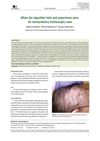
 This case study examined a 72-year-old woman with unique hair shaft constrictions consistent with monilethrix, despite features atypical for this condition, ultimately reaching a diagnosis that led to successful improvement using oral minoxidil and reduced hair trauma.
 2 citations
,
January 2019 in “Dermatology Review”
2 citations
,
January 2019 in “Dermatology Review” This study found that pigmented vellus and upright regrowing hairs are the only predictive trichoscopic markers of hair regrowth in patients with alopecia totalis and universalis.
April 1996 in “Journal of Dermatological Science” January 2015 in “Dermatología Venezolana” This review details the use of trichoscopy for analyzing hair and scalp structures to differentiate between types of alopecia but does not report new clinical results.
11 citations
,
January 2017 in “Skin Appendage Disorders” This study associated ivory-colored areas observed through trichoscopy with steroid deposits in the dermis among patients with steroid-induced atrophy on the scalp.
December 2025 in “Yassawi Journal of Health Sciences” This study found that trichoscopy is highly effective for diagnosing different types of alopecia, showing an average diagnostic accuracy of 90–95%, with specific features aiding in differentiating forms like androgenetic alopecia and alopecia areata. New technologies and AI improve interpretation objectivity, suggesting expanded clinical integration.