
In this case report, researchers diagnosed a 12-year-old girl with a nevus sebaceus of Jadassohn, characterized by a yellowish-pink plaque on the scalp and a genetic variant, following previous misdiagnosis as alopecia areata.

In preclinical studies, topical CUR61414 reduced Hh signaling and shrank BCCs in mice, but this study found no clinical efficacy in human superficial or nodular BCCs.

This study identified a genetic locus associated with rhabdomyosarcoma susceptibility in mice and found that specific differentiation markers are linked to the regression of basal cell carcinoma.
 February 2021 in “IP Indian journal of clinical and experimental dermatology”
 This report presents a rare case of trichoadenoma occurring in the vulva, adding to the limited instances documented in medical literature.
 January 2018 in “bioRxiv (Cold Spring Harbor Laboratory)”
 This study explored how root hairs integrate opposing growth signals but did not report new conclusive findings on the activation of known molecular players in polar growth.
 March 2017 in “bioRxiv (Cold Spring Harbor Laboratory)”
 This study found that auxin regulates reactive oxygen species-mediated root hair growth by activating transcription factors and enzymes that affect cell elongation.
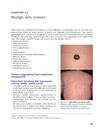
This chapter classifies various benign skin tumors and discusses their characteristics, treatment indications, and potential for recurrence, but reports no new clinical findings.
 December 2016 in “British Journal of Dermatology”
 The meeting highlighted the importance of genetic testing and multidisciplinary approaches in pediatric dermatology.
 July 2016 in “American Journal of Dermatopathology”
 The meeting showcased rare skin disease cases, highlighting the need for accurate diagnosis and treatment.
 April 2016 in “Journal of the American Academy of Dermatology”
 Dermoscopy helped correctly diagnose a skin condition that was previously misidentified as a different hair loss disease.
 May 2015 in “Actas Dermo-Sifiliográficas”
 A young man was unexpectedly diagnosed with basal cell carcinoma after a scalp examination and confocal microscopy.
 March 2013 in “Actas Dermo-Sifiliográficas”
 This review discusses recent advancements in dermatopathology, including molecular biology techniques and diagnostic innovations, and reports no new experimental findings.
 May 2009 in “The American Journal of Dermatopathology”
 This abstract contains only journal subscription and informational content and does not present any research findings.
 June 2008 in “Springer eBooks”
 The document concludes that permanent hair loss conditions are complex, require early specific treatments, and "secondary permanent alopecias" might be a more accurate term than "secondary cicatricial alopecia."
 January 2007 in “Revista del Centro Dermatológico Pascua”
 This case report describes a 2-year-old boy diagnosed with trichothiodystrophy, characterized by fragile hair, intellectual damage, diminished fertility, and short stature.
 16 citations
,
May 2015 in “Tissue Engineering Part C-methods”
16 citations
,
May 2015 in “Tissue Engineering Part C-methods” This study found that expanding hair follicle keratinocytes with a fibroblast feeder followed by short-term coculture with dermal papilla cells could restore their ability to form new hair follicles.
 August 2026 in “Dermatology and Therapy”
 In this study, researchers identified elongated corkscrew hairs as a new trichoscopic pattern in immunosuppressed adults with chronic endothrix tinea capitis, which may help in earlier diagnosis and targeted mycological investigation.
 2 citations
,
February 2009 in “Clinical and Experimental Dermatology”
2 citations
,
February 2009 in “Clinical and Experimental Dermatology” In this case study, a 51-year-old Japanese man was diagnosed with desmoplastic trichoepithelioma after histological examination of surgically excised facial plaques.
 December 2025 in “TURKDERM”
 This article discusses Trikostazis spinuloza (TS), a dermatological condition often misdiagnosed, and reviews its demographic, clinical, and dermoscopic features, but reports no new clinical results.
January 2024 in “Muller Journal of Medical Sciences and Research” This study found that trichoscopy was 73.77% concordant with histopathology in diagnosing patchy alopecia, highlighting its usefulness as a diagnostic tool for conditions like alopecia areata, lichen planus pigmentosus, and discoid lupus erythematosus.
March 2009 in “Chinese Journal of Dermatology” This study observed that melanocytes in the outer root sheath of fetal scalp hair follicles may act as stem cells, showing rapid proliferation but immature function and morphology in culture.
1 citations
,
January 2018 in “International Journal of Trichology” This report discusses the characteristics of circle hairs, a type of body hair growth disorder, and emphasizes the value of trichoscopy for diagnosis.
February 2022 in “Actas Dermo-Sifiliográficas” This abstract presents a clinical case of a woman with traction alopecia and discusses trichoscopic findings without reporting any new research results.
207 citations
,
July 2006 in “Development” This study identified a novel MTS24-positive murine keratinocyte population with increased colony-forming ability, suggesting these cells may serve as a new reservoir of proliferative progenitor or stem cells in hair follicles.
 September 2022 in “Journal of medical sciences and health”
 This case study describes an unusual instance of separate trichoadenoma and melanocytic naevi occurring simultaneously on the face, with the cause of their association remaining uncertain.

In this study, researchers explored the heterogeneity of pigment cells in the human scalp anagen hair follicle bulb and discovered unexpected subpopulations of melanocytes, including immature SOX10-negative cells, highlighting potential non-melanogenic roles or transitional migratory functions that require further investigation.
1010 citations
,
August 2000 in “Cell” In this study, researchers found that hair follicle stem cells in mice can generate both hair follicle and epidermis cells, highlighting their potential bipotency.
5 citations
,
May 2009 in “American Journal of Dermatopathology” This case report describes an unusual trichofolliculoma in a 54-year-old man, notable for its prominent mucinosis, which is typically not as abundant in such tumors.
 74 citations
,
July 2008 in “Journal of Dermatological Case Reports”
74 citations
,
July 2008 in “Journal of Dermatological Case Reports” This study found that trichoscopy can diagnose genetic hair shaft abnormalities without plucking or cutting hair, by visualizing characteristic features in a single session.
May 2024 in “JDDG Journal der Deutschen Dermatologischen Gesellschaft” This case study describes a middle-aged woman diagnosed with a proliferating trichilemmal tumor on her scalp, emphasizing the importance of comprehensive diagnostic approaches and highlighting surgical excision as the primary treatment.