 November 2023 in “Scholars academic journal of biosciences”
 This study highlights a case of trichotillomania with trichophagia in a 7-year-old girl, illustrating the medical complications and need for awareness and collaborative management of this condition, often misdiagnosed due to stigma.
8 citations
,
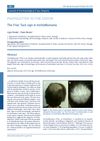
January 2014 in “Indian Dermatology Online Journal” This article presents a case of trichostasis spinulosa, a common but often unrecognized disorder, diagnosed through dermoscopic examination of black macules revealing bundled vellus hairs, with the patient declining treatment.
 13 citations
,
June 2012 in “Journal of Dermatological Case Reports”
13 citations
,
June 2012 in “Journal of Dermatological Case Reports” This report describes an 8-year-old male with trichotillomania, confirmed by trichoscopy showing characteristic hair damage and patterns.
3 citations
,
January 2022 in “Burns & Trauma” This study found that CTHRC1 is crucial for sweat gland function and vascular network integrity in mice, and its administration improved sweat gland performance by reconstructing nearby blood vessels.
 February 2021 in “IP Indian journal of clinical and experimental dermatology”
 This report presents a rare case of trichoadenoma occurring in the vulva, adding to the limited instances documented in medical literature.
17 citations
,
December 1994 in “International Journal of Dermatology” This article reports no new clinical findings but discusses two rare dermatological conditions, trichostasis spinulosa and eruptive vellus hair cysts, and their simultaneous occurrence.
 February 2024 in “BMC genomics”
 This study identified a gene variant in the TRPV3 gene that may explain the suri alpaca phenotype, characterized by longer and less crimped fleece, suggesting this variant's involvement in the development of these hair characteristics compared to the huacaya phenotype.
 July 2014 in “Journal of the Portuguese Society of Dermatology and Venereology”
 This review covers current knowledge of tricoscopy's applications in diagnosing and monitoring scalp and hair disorders but presents no new clinical results.
January 2015 in “Dermatología Venezolana” This review details the use of trichoscopy for analyzing hair and scalp structures to differentiate between types of alopecia but does not report new clinical results.
3 citations
,
September 1973 in “Archives of dermatology” This study reports that daily topical application of a 0.05% tretinoin solution can eliminate the hair plugs and symptoms associated with trichostasis spinulosa.
215 citations
,
November 2000 in “Journal of Investigative Dermatology” This study found that the tetracycline-regulated transcription system effectively controls conditional gene expression in the mouse epidermis, allowing suppression and activation of specific genes with doxycycline.
 January 2022 in “Journal of Cutaneous and Aesthetic Surgery”
 Using truncal anesthesia on the supraorbital nerve reduces pain in hair loss treatments and improves patient comfort.
April 2018 in “Journal of Investigative Dermatology” In this study, TRPV3G568V mice exhibited periodic hair loss and immune cell infiltration in the dermis, without affecting hair follicle stem cell fate, suggesting a focus on dermal immune cells for future research.
April 2019 in “Journal of Investigative Dermatology” This study found that, in mice, different precursor populations give rise to Merkel cells in hairy versus glabrous skin, but their formation is controlled by a common genetic program involving FGFR2 signaling.
This article reviews the characteristics and diagnostic criteria of tricholemmoma and tricholemmal carcinoma, detailing their clinical presentations and associations but reports no new clinical findings.
 4 citations
,
October 2008 in “International Journal of Dermatology”
4 citations
,
October 2008 in “International Journal of Dermatology” This case report highlights a rare presentation of hair-thread tourniquet syndrome in a two-year-old child, emphasizing that prompt identification and removal of the constricting fiber is crucial for successful treatment and prevention of tissue damage.
 4 citations
,
January 2015 in “Case reports in urology”
4 citations
,
January 2015 in “Case reports in urology” This paper presents a case of penile tourniquet syndrome in an 8-year-old boy caused by his mother's hair coil, highlighting its rarity beyond infancy.
This article describes an improved trichophytic closure technique for hair restoration surgery, achieving nearly invisible donor scars in over 95% of patients, but emphasizes tailoring the method to individual patient characteristics.
 8 citations
,
August 2018 in “Turkish journal of urology”
8 citations
,
August 2018 in “Turkish journal of urology” This case report describes a 4-year-old boy with Penile Hair Tourniquet Syndrome caused by a hair coil, highlighting the importance of early diagnosis in circumcised boys to prevent severe complications.
 24 citations
,
January 2019 in “Theranostics”
24 citations
,
January 2019 in “Theranostics” This study found that loss of the Pten gene in Lgr5+ hair follicle stem cells promoted squamous cell carcinoma formation through the Akt/β-catenin signaling pathway.
4 citations
,
January 2005 in “Indian Journal of Animal Research” This study describes the structural composition of the skin's dermis in experimental animals, highlighting the arrangement of collagen, elastic, and reticular fibers as well as associated glands and muscles.
September 2021 in “The journal of investigative dermatology/Journal of investigative dermatology” This study identified a germline variant in PLCD1 as a major risk allele for familial trichilemmal cysts, requiring a subsequent somatic mutation in the same allele for cyst formation.
December 2005 in “Belarusian State Pedagogical University repository (Belarusian State Pedagogical University)” This article discusses hair tourniquet syndrome, a form of penile strangulation caused by human hair often occurring postpartum, and emphasizes considering both accidental causes and the possibility of child abuse in each case.
123 citations
,
November 2003 in “Neuroscience Letters” In this study, TRPV4 channels were found in specific mechanosensory endings in mice skin, suggesting a role in pressure sensation transmitted through A- and C-fibers.
3 citations
,
December 2024 in “Journal of Animal Science” In this study, researchers identified the lncRNA MSTRG.14227.1 in cashmere goats and found it inhibits the morphogenesis of secondary hair follicles by interacting with the chi-miR-433/ADAMTS3 signaling axis, affecting cashmere yield and quality.
 January 2026 in “Indian Journal of Dermatopathology and Diagnostic Dermatology”
 This report highlights a case where dermoscopic observation of corkscrew hairs in a young woman led to the diagnosis of trichotillomania, emphasizing its role in distinguishing this psychiatric disorder from other forms of non-scarring alopecia and highlighting the importance of timely intervention.
122 citations
,
June 1998 in “PubMed” This study found that sensory and sympathetic innervation in the mystacial pads of mice is governed by a balance of neurotrophin signaling, highlighting the roles of NGF/trkA and NT-3/trkC pathways.
September 2023 in “Ukraïnsʹkij žurnal Perinatologìâ ì pedìatrìâ” This study highlights the importance of recognizing tourniquet syndrome in children, particularly caused by hair or threads, as it can lead to serious complications like necrosis if not swiftly addressed.
 December 2017 in “Journal of the Portuguese Society of Dermatology and Venereology”
 This article outlines the benefits and applications of the trichophytic closure technique in hair transplant surgery, noting its role in improving cosmetic outcomes for donor area scars.
 9 citations
,
January 2013 in “Acta dermato-venereologica”
9 citations
,
January 2013 in “Acta dermato-venereologica” The conclusion is that "trichoknesis" should be recognized as a separate condition from trichodynia, characterized by itching instead of pain.