January 2013 in “Journal of Chengdu Medical College” In this study, Tolterodine Tartrate significantly improved symptoms of overactive bladder and showed fewer adverse reactions compared to the control group treatment.
May 2011 in “Psychiatric News” This article provides regulatory updates, legal briefs, and industry news, reporting no new clinical findings.
May 2025 in “International Journal of Trichology” In this case report, a 7-year-old boy with alopecia totalis experienced significant hair regrowth after adding topical tofacitinib and mometasone to his treatment regimen, suggesting potential benefits of topical Janus kinase inhibitors for pediatric patients with this condition.
 January 2024 in “Wiadomości Lekarskie”
 In this study, researchers examined a patient with ZMYM2::FGFR1 fusion-positive leukemia, finding that Pemigatinib showed efficacy, while Ponatinib resistance was linked to a specific FGFR1 mutation. Other FGFR inhibitors demonstrated high effectiveness in ex vivo assays.
35 citations
,
February 2022 in “Frontiers in Pediatrics” This study found that tofacitinib may be effective in treating various pediatric rheumatic diseases, particularly juvenile idiopathic arthritis, although some patients did not respond, and side effects were observed.
April 2025 in “The Journal of Dermatology” This study provides initial insights into the use of JAK inhibitors for CTCL, reporting some cases of symptom improvement, but highlights the need for further research on their association with CTCL development and safety.
 October 2004 in “Australian Prescriber”
 This review discusses the lack of long-term clinical studies on metformin's cardiovascular benefits in women with polycystic ovary syndrome, highlighting lifestyle changes as a crucial management strategy for reducing associated risks.
 3 citations
,
August 2020 in “Case Reports in Dermatology”
3 citations
,
August 2020 in “Case Reports in Dermatology” This case report suggests that JAK inhibitors like tofacitinib may effectively treat alopecia in patients with complex cases involving both rheumatological and dermatological conditions.
This study found that inhibiting mTORC2 in glioblastoma cells reduced DNA repair and increased apoptosis, highlighting its potential role in cancer cell survival and DNA damage response.

JAK inhibitors, like baricitinib and ritlecitinib, show promise in treating alopecia areata effectively and safely.
1 citations
,
November 2024 in “Neuro-Oncology” This case report highlights the rare occurrence of life-threatening aplastic anemia in a 65-year-old woman treated with temozolomide for glioblastoma multiforme, emphasizing the need for more frequent blood monitoring to detect severe bone marrow suppression early.
This study found that a short-term treatment with all-trans retinoic acid may effectively stabilize platelet counts in idiopathic thrombocytopenic purpura patients experiencing fluctuations during thrombopoietin receptor agonist therapy.
 July 2023 in “World Journal of Biology Pharmacy and Health Sciences”
 This research suggests that the drugs trazodone and chlorpromazine, which have effects on specific receptors, may help restore libido synaptic circuits and potentially treat sexual dysfunction associated with post-SSRI and post-finasteride syndromes.
June 2014 in “Dermatology Times E-News” An arthritis drug helped a person with severe hair loss regrow their hair.
February 2023 in “Reactions Weekly”  May 2026 in “Nature Communications”
 In this study, a self-adaptive nanozyme embedded in a madecassoside-enriched hydrogel demonstrated strong antibacterial efficacy and accelerated healing in wounds infected with drug-resistant bacteria, as evidenced by improved repair and regeneration in MRSA-infected mice and preclinical pig models.
January 2018 in “Figshare” This study found that both ruxolitinib and tofacitinib were effective in promoting hair regrowth for patients with severe alopecia areata, with no significant difference in efficacy and relapse rate between them, and both were well tolerated throughout the treatment.
July 2025 in “SKIN The Journal of Cutaneous Medicine” This study describes characteristics and outcomes for adults initiating ritlecitinib for severe alopecia areata, highlighting increased hair regrowth and physician satisfaction with longer treatment durations, despite ongoing psychosocial impacts like embarrassment and anxiety among patients.
 51 citations
,
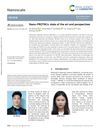
January 2024 in “Nanoscale”
51 citations
,
January 2024 in “Nanoscale” This review highlights recent advancements in using nanotechnology to improve the function and delivery of PROTAC drugs, despite existing challenges like low solubility and poor permeability, aiming to enhance their potential in disease treatment.
 June 2026 in “Indian Dermatology Online Journal”
 In this pilot study, both tofacitinib and methotrexate improved alopecia areata outcomes, but tofacitinib showed greater efficacy in achieving significant SALT score improvement after 6 months, although the difference was not statistically significant.
 August 2025 in “Frontiers in Pharmacology”
 This study identified three Ayurvedic compounds that may serve as potential treatments against the macrolide-resistant enzyme murE of *Tropheryma whipplei*, addressing challenges in treating Whipple disease.
September 2020 in “Scientific periodicals of Ukraine” This study found that the combination therapy of Flosin and Prostamol Uno over nine years was well tolerated and equally effective in managing benign prostatic hyperplasia symptoms as the combination of doxazosin and finasteride, with fewer adverse events reported.
 42 citations
,
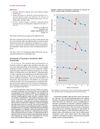
December 2007 in “American Journal of Psychiatry”
42 citations
,
December 2007 in “American Journal of Psychiatry” This study examined finasteride, a 5-alpha-reductase inhibitor, for treating a Tourette’s syndrome patient unresponsive to traditional therapy, noting its limited side effects.
 12 citations
,
February 2014 in “PLoS ONE”
12 citations
,
February 2014 in “PLoS ONE” This study observed high expression of mTOR pathway effectors in fibrous papules and TSC-associated angiofibromas, suggesting that topical rapamycin might be an effective treatment for fibrous papules.
227 citations
,
April 2023 in “The Lancet” Ritlecitinib effectively treats alopecia areata and is well-tolerated.
28 citations
,
August 2013 in “Hypertension” The authors concluded that diazoxide reduces undesirable side effects compared to minoxidil while increasing elastic fiber content and decreasing cell number in the aorta, suggesting potential suitability for treating vascular conditions with low arterial elastin and hypertension.
 16 citations
,
January 2017 in “Acta dermatovenerologica Alpina, Pannonica et Adriatica (Tiskana izd.)”
16 citations
,
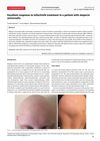
January 2017 in “Acta dermatovenerologica Alpina, Pannonica et Adriatica (Tiskana izd.)” This case study reports that a 23-year-old woman with alopecia universalis experienced complete hair regrowth after six months of treatment with tofacitinib, a JAK-3 inhibitor.
10 citations
,
June 2022 in “Biomedicine & Pharmacotherapy” This review examines the molecular mechanisms by which the proapoptotic protein ARTS inhibits tumorigenesis and discusses prospects for developing drugs that mimic its function, with no new experimental results reported.
 January 2024 in “Dermatologic therapy”
 In this study, pediatric patients with alopecia areata treated with systemic tofacitinib showed significant improvement at 12 months, but the small sample size and retrospective design limit conclusions about its effectiveness.
 June 2025 in “Mağallaẗ ʻulūm al-rāfidayn”
 This study found that certain pyrazole derivatives may serve as effective 5α-reductase inhibitors with potential use in the treatment of androgenetic alopecia, based on molecular docking analyses.