 30 citations
,
August 2015 in “JAAD case reports”
30 citations
,
August 2015 in “JAAD case reports” This case report describes a patient with corticosteroid-resistant ophiasis alopecia areata who experienced prompt hair regrowth after receiving platelet-rich plasma injections.
 30 citations
,
September 2005 in “Best Practice & Research Clinical Rheumatology”
30 citations
,
September 2005 in “Best Practice & Research Clinical Rheumatology” This review discusses therapies for skin lesions in lupus erythematosus and reports no new clinical results, focusing on defining and managing refractory disease.
 8 citations
,
November 2019 in “Dermatologic Clinics”
8 citations
,
November 2019 in “Dermatologic Clinics” This study highlights the importance of clinicians understanding the effects of gender-affirming hormones like testosterone, estrogen, and antiandrogens on hair growth, to effectively diagnose and treat androgenetic alopecia in gender minority patients.
 3 citations
,
February 2012 in “The American Journal of Dermatopathology”
3 citations
,
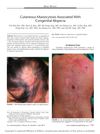
February 2012 in “The American Journal of Dermatopathology” This report documents the first known case of cutaneous mastocytosis associated with congenital alopecia areata in a young Korean girl, confirmed through histopathological examination.
 3 citations
,
January 2012 in “Elsevier eBooks”
3 citations
,
January 2012 in “Elsevier eBooks” The document says that there are treatments for hair and nail diseases.
1 citations
,
November 2021 in “International Journal of Dermatology and Venereology” This paper highlights a case where a 2-year-old boy with temporal triangular alopecia was initially misdiagnosed with alopecia areata, emphasizing the importance of dermoscopy for accurate early diagnosis to avoid unnecessary treatments.
1 citations
,
August 2021 in “Cosmoderma” This study reviewed literature on low-dose oral minoxidil as a treatment for hair loss, finding good compliance and tolerability, with mild adverse effects like hypertrichosis, which increase with higher doses.
 1 citations
,
July 2018 in “Elsevier eBooks”
1 citations
,
July 2018 in “Elsevier eBooks” This research focuses on alopecia areata, highlighting the psychological impact, especially of its variant alopecia areata incognita, and provides diagnostic and treatment tips, but does not report specific results.
1 citations
,
November 2009 in “Nurse prescribing” This study reports that a 6–12-week course of oral griseofulvin can achieve mycological cures in 70% to 100% of tinea capitis cases.
 May 2026 in “Zenodo (CERN European Organization for Nuclear Research)”
 This review article examines recent advances in understanding and managing various types of alopecia, highlighting modern therapeutic strategies such as individualized treatment plans, combination therapies, and regenerative approaches aimed at improving hair regrowth and minimizing adverse effects.
 May 2026 in “Zenodo (CERN European Organization for Nuclear Research)”
 This review article reports on the latest therapeutic strategies for alopecia, highlighting advancements in personalized treatment plans, combination therapies, and regenerative approaches, with a focus on improving hair regrowth and minimizing side effects through modern treatments like stem cell therapy and Janus kinase inhibitors.
June 2025 in “Revista Foco” This review assessed randomised clinical trials on the efficacy and safety of topical and systemic JAK inhibitors for alopecia areata, finding significant hair coverage improvement with ritlecitinibe and baricitinibe, though prolonged treatment is often needed to maintain results.

This case report highlights that tumid lupus erythematosus should be considered in the differential diagnosis of annular scalp lesions with non-scarring alopecia, emphasizing histopathological examination for accurate diagnosis.
This review discusses the unique characteristics and possible pathophysiology of spiny keratoderma, reporting no new clinical results, but suggests that some therapies might alleviate symptoms.
February 2006 in “DOAJ (DOAJ: Directory of Open Access Journals)” This review examines existing and potential treatments for alopecia areata but does not report new clinical results, emphasizing the need for future therapies that target immune pathways or protect hair follicles from inflammation.
 129 citations
,
October 2007 in “The New England Journal of Medicine”
129 citations
,
October 2007 in “The New England Journal of Medicine” This article discusses the evaluation and management of a 45-year-old woman with diffuse scalp-hair loss and reports no new clinical findings.
 48 citations
,
January 2014 in “Dermatology Online Journal”
48 citations
,
January 2014 in “Dermatology Online Journal” This review examines various treatments for dissecting cellulitis, noting isotretinoin may offer the best chance for remission despite limited long-term data and calls for more clinical studies.
 24 citations
,
September 2015 in “JAAD case reports”
24 citations
,
September 2015 in “JAAD case reports” This case report describes a patient with frontal fibrosing alopecia experiencing significant hair regrowth and reversal of cutaneous atrophy after treatment with the 5α-reductase inhibitor finasteride.
19 citations
,
August 2019 in “Dermatologic therapy” This review discusses the use of Janus kinase inhibitors for alopecia areata and reports promising short-term efficacy but low-quality evidence, highlighting the need for further research to confirm long-term safety and effectiveness.
 8 citations
,
January 2020 in “Skin Pharmacology and Physiology”
8 citations
,
January 2020 in “Skin Pharmacology and Physiology” This article discusses the potential for topical caffeine as a natural alternative for treating androgenetic alopecia due to its ability to penetrate skin, but it reports no new clinical findings.
 8 citations
,
January 2015 in “International journal of trichology”
8 citations
,
January 2015 in “International journal of trichology” In this case report, the authors describe complete recovery from acute diffuse and total alopecia linked to Borrelia infection after treatment with intravenous ceftriaxone and topical clobetasol foam.
 3 citations
,
November 2020 in “Journal of Drugs in Dermatology”
3 citations
,
November 2020 in “Journal of Drugs in Dermatology” This study found that indirect treatment with cold atmospheric plasma showed promise for improving androgenetic alopecia in patients, laying the groundwork for longer trials to assess its efficacy.
2 citations
,
March 2019 in “PubMed” This case report describes successful treatment of folliculitis decalvans in a 41-year-old woman using oral fusidic acid, leading to clinical improvement and no recurrences after six months.
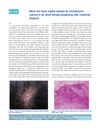 1 citations
,
January 2015 in “Indian journal of dermatology, venereology, and leprology”
1 citations
,
January 2015 in “Indian journal of dermatology, venereology, and leprology” A woman's scalp infection caused by a fungus led to permanent hair loss and was hard to treat but responded to a specific antifungal.
 1 citations
,
July 1996 in “Clinical and Experimental Dermatology”
1 citations
,
July 1996 in “Clinical and Experimental Dermatology” This article discusses the extent of investigation needed for diffuse alopecia in women but reports no new findings.
 September 2025 in “Ukrainian Journal of Dermatology Venerology Cosmetology”
 In this case study, a patient with pseudopelades of Brocq was treated with a peripheral vasodilator, B vitamins, and corticosteroid lotion, leading to halted hair loss and improved clinical symptoms over seven weeks.
 June 2023 in “British journal of dermatology/British journal of dermatology, Supplement”
 In this study, two cases of cutis verticis gyrata were associated with chronic traction alopecia due to tight hairstyles, highlighting the need to consider hairstyling history in diagnosis and management.
February 2022 in “Authorea (Authorea)” This report presents a case of a seven-year-old girl with porokeratotic adnexal ostial nevus manifesting as hyperkeratotic verrucous papules on her left foot.
 March 2021 in “Uludağ Üniversitesi Tıp Fakültesi dergisi”
 This review discusses current treatment methods for managing androgenetic alopecia in men and women, but reports no new clinical results, highlighting the lack of a standard treatment guide.
This case report highlights the clinical and trichoscopic diagnosis of congenital triangular alopecia in a 9-month-old boy and notes the condition's typical unresponsiveness to traditional treatments.