1 citations
,
September 2025 in “Pediatric Dermatology” This systematic review reported that habit reversal training showed the most consistent benefit for treating pediatric trichotillomania, while evidence for pharmacological treatments and alternative therapies like N-acetylcysteine remains insufficient, highlighting the need for early behavioral intervention and further research into standardized treatment protocols.
19 citations
,
June 2020 in “BMC Cancer” This study reported that genetic changes in trichilemmal carcinoma resemble those in other skin cancers, with TP53 mutations associated with aggressive clinical outcomes.
 1 citations
,
February 2022 in “Clinical, Cosmetic and Investigational Dermatology”
1 citations
,
February 2022 in “Clinical, Cosmetic and Investigational Dermatology” In this study, researchers found that the thyroxine receptor agonist TDM10842 accelerated the onset of anagen, a hair growth phase, in C3H mice, potentially through activation of the Wnt/beta-catenin and Hedgehog pathways, with Pclaf playing a key role in this process.
February 2024 in “Neurophotonics” This review highlights the potential of transcranial photobiomodulation (tPBM) as a non-invasive and affordable treatment for brain diseases, summarizing recent advances and successful protocols based on over two decades of research.
In this study, Sox13 was identified as a novel marker for early hair follicle development and differentiation in mice, though it appears to be dispensable for overall epidermal and adnexal development.
 32 citations
,
July 2017 in “Wiley Interdisciplinary Reviews-Developmental Biology”
32 citations
,
July 2017 in “Wiley Interdisciplinary Reviews-Developmental Biology” This review discusses the emerging roles of transit-amplifying cells in tissue regeneration and cancer formation, highlighting their significance beyond a mere transitional state in hair follicles and the hematopoietic system.
 11 citations
,
March 2024 in “Cell and Tissue Research”
11 citations
,
March 2024 in “Cell and Tissue Research” In this review, researchers summarize the methods for characterizing telocytes, outline their physiological roles and implications in diseases, and discuss potential future studies including precise markers and targeted therapies.
3 citations
,
February 2023 in “BMJ Case Reports” This case report describes a woman with trichotillomania who experienced marked improvement and hair regrowth after off-label onabotulinumtoxinA treatment.
October 2025 in “Diagnostics” In this case study, an 18-year-old woman's triangular alopecic patch diagnosed as temporal triangular alopecia was considered non-progressive and had no impact on her quality of life, so no treatment was initiated.
33 citations
,
May 2017 in “Journal of Clinical Oncology” This phase I study reported that ETC-159, targeting Wnt signalling, showed tolerable safety profiles at doses that inhibit its pathway, though bone turnover markers increased, warranting early and regular monitoring. No tumor responses were observed, but two patients achieved stable disease for several cycles.
 29 citations
,
January 2021 in “Translational Psychiatry”
29 citations
,
January 2021 in “Translational Psychiatry” This study found that certain gene sets, including those involved in ligand-gated ion channel signaling and cell adhesion, are associated with Tourette syndrome, suggesting a potential neurobiological basis for the disorder.
 1 citations
,
September 2024 in “Indian Journal of Postgraduate Dermatology”
1 citations
,
September 2024 in “Indian Journal of Postgraduate Dermatology” In this report, trichoscopy was highlighted as a valuable tool for diagnosing temporal triangular alopecia in children due to its ability to reveal distinctive patterns that differentiate it from similar conditions like alopecia areata, eliminating the need for invasive biopsy.
This article lists the clinically important interactions and skin reactions of several drugs and substances, including THA, FK506, tamoxifen, tamsulosin, tartrazine, tea tree oil, temazepam, and temozolomide, but provides no new clinical results.
17 citations
,
September 2022 in “Biomaterials Research” This study found that the film-trigger applicator system enhanced drug delivery efficiency and skin penetration of dissolving microneedles compared to traditional patch systems in both lab and animal models.

This case report details a 28-year-old male who developed trichotillomania following a traumatic brain injury, highlighting diagnostic challenges in distinguishing overlapping psychiatric and compulsive behaviors, and underscores the importance of a comprehensive, multidisciplinary treatment approach.
January 2023 in “Indian Dermatology Online Journal” This case report identifies a 23-year-old man with congenital triangular alopecia, a non-scarring alopecia characterized by preserved follicles and vellus hair, for which unnecessary interventions should be avoided.
 4 citations
,
August 2023 in “Varna Medical Forum”
4 citations
,
August 2023 in “Varna Medical Forum” This article explores the therapeutic potential of TECAR therapy for physiotherapy, highlighting its non-invasive nature and ability to provide analgesic, anti-inflammatory, and tissue healing effects across various conditions with minimal side effects when applied correctly.
 November 2025 in “International Journal Of Ayurvedic And Herbal Medicine”
 In this case study, a 22-year-old female with trichotillomania showed significant improvement through an integrated approach combining Growth Factor Concentrate therapy, Ayurvedic medications, counseling, and yogic practices, highlighting the importance of addressing both dermatological and psychological aspects for long-term recovery.
32 citations
,
August 2016 in “Journal of the American Academy of Dermatology” This letter discusses congenital triangular alopecia (TTA), a non-scarring hair loss condition often seen in children, without reporting new clinical findings.
July 2024 in “Skin Appendage Disorders” This study reviews literature showing that trichotillomania significantly reduces quality of life and emphasizes that effective treatment requires an interdisciplinary approach involving dermatology and psychiatry to address its psychiatric component.
March 2022 in “Oncology Times” In this study, tebentafusp-tebn improved overall survival in patients with metastatic uveal melanoma compared to standard therapies, despite higher rates of significant adverse events.
79 citations
,
October 2003 in “PubMed” In this study, PKCepsilon transgenic mice showed increased TNFalpha shedding during skin tumor promotion, which may contribute to the development of metastatic squamous cell carcinoma.
April 2021 in “Journal of Investigative Dermatology” A deep learning model was developed to help diagnose trichothiodystrophy by analyzing hair patterns.
In this study, introducing the rat OTC gene into spf-ash mice led to increased OTC activity and normalized hair growth and biochemical markers like urinary orotic acid and serum citrulline, partially correcting the symptoms of OTC deficiency.
14 citations
,
February 2022 in “The Journal of clinical investigation/The journal of clinical investigation” This study found that the development of Merkel cell carcinoma from hair follicles in mice can be driven by in vivo reprogramming with ATOH1 and relies on p53 loss for progression.
5 citations
,
January 2024 in “Science Advances” In this study, researchers identified Tenascin-C as a marker for touch dome keratinocytes, which maintain themselves and can develop into Merkel cells following injury, showing they share molecular traits with various epidermal keratinocytes.
 1 citations
,
August 2023 in “Frontiers in immunology”
1 citations
,
August 2023 in “Frontiers in immunology” This review highlights the potential of TCM medicinal foods for managing post-COVID disorders and suggests they could provide a safe and efficient long-term therapy due to their milder nature.
 6 citations
,
October 2012 in “Journal of Heredity”
6 citations
,
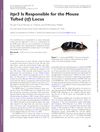
October 2012 in “Journal of Heredity” This study identified the Itpr3 gene as responsible for the tufted hair loss phenotype in the BTBR mouse strain.
 77 citations
,
January 1980 in “Carcinogenesis”
77 citations
,
January 1980 in “Carcinogenesis” This study found that TPA was significantly more effective than mezerein in inducing dark basal keratinocytes in mouse skin, which may be important in early tumor promotion stages.
 September 2024 in “Quality in Sport”
 This study provides a comprehensive review of trichotillomania, focusing on its clinical symptoms, etiology, diagnostics, and treatment methods, while also addressing serious complications like trichobezoars and Rapunzel Syndrome.