 4 citations
,
December 1962 in “European journal of endocrinology”
4 citations
,
December 1962 in “European journal of endocrinology” Alloxan diabetes, methylthiouracil, cortisone, and adrenaline affect how white mice hair follicles use glucose and cystine and their cell division.
 25 citations
,
April 2007 in “Journal of The American Academy of Dermatology”
25 citations
,
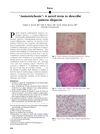
April 2007 in “Journal of The American Academy of Dermatology” This article introduces the term "anisotrichosis" to describe the significant variation in hair shaft diameters observed in pattern alopecia, drawing a parallel to anisocytosis seen in blood smears, but reports no new research findings.
20 citations
,
May 2023 in “Cancer Nanotechnology” The researchers reported that their novel formulation of pterostilbene-loaded ethoniosomes with folic acid coating effectively targeted lung cancer cells in vitro and demonstrated promising results in animal models, indicating potential for future targeted chemotherapy applications.
 3 citations
,
January 2022 in “Precision medicine and clinical omics”
3 citations
,
January 2022 in “Precision medicine and clinical omics” This study reports that using molecular docking methods, beta-sitosterol and stigmasterol from Serenoa repens were identified as potential natural inhibitors of the 5AR1 enzyme, which could serve as novel treatments for androgenetic alopecia based on their inhibitory action observed in a laboratory setting.
14 citations
,
June 2022 in “Neuroscience”  25 citations
,
June 2019 in “Endocrine Related Cancer”
25 citations
,
June 2019 in “Endocrine Related Cancer” This review discusses the structure and function of steroid nuclear receptors, particularly focusing on androgen receptor dysregulation in prostate cancer and androgen insensitivity syndromes, without reporting new experimental results.
12 citations
,
March 2000 in “Clinical Chemistry” This study found that a daily dose of 50 mg DHEA only slightly increased the urinary testosterone/epitestosterone ratio for a short period, without exceeding the IOC's acceptable limit.
 1 citations
,
January 2009 in “X-ray Structure Analysis Online”
1 citations
,
January 2009 in “X-ray Structure Analysis Online” A new compound was made that might help treat diseases related to male hormones.
8 citations
,
November 2024 in “Journal of Neuroendocrinology” This review discusses the role of gut steroids in communicating with the gut microbiota and their potential implications in treating gastrointestinal disorders and related brain conditions, suggesting new perspectives on steroid molecules as therapeutic agents.
 December 2023 in “International Journal of Medical Sciences And Clinical Research”
 This article discusses trichoscopy as a tool for differential diagnosis in female-type androgenetic alopecia and reports on three patient cases without providing new clinical results.
December 2025 in “Current Issues in Molecular Biology” This study evaluated novel steroids' potential as future hormonal therapies for neuroprotection in glucose disorders, but emphasized that further research is needed to optimize androgen antagonist use in the context of COVID-19 progression.
 69 citations
,
December 2005 in “Nature Clinical Practice Endocrinology & Metabolism”
69 citations
,
December 2005 in “Nature Clinical Practice Endocrinology & Metabolism” Blocking the enzyme 11β-HSD1 might help treat obesity and metabolic issues.
10 citations
,
August 2024 in “Neuroscience & Biobehavioral Reviews” This review discusses the role of neuro(active)steroids, particularly those in the 5α reductase pathway, in modulating dopamine signaling and their impact on neuropsychiatric disorders characterized by dopamine imbalances, including addiction, schizophrenia, and Parkinson's Disease.
14 citations
,
April 1978 in “International Journal of Dermatology” This article reviews the effects of antiandrogens on the skin and suggests their potential in treating conditions like acne and hirsutism, but reports no new clinical results.
 December 2016 in “University of Birmingham Institutional Research Archive (University of Birmingham)”
 This study suggests that the adrenal gland may contribute to prostate cancer treatment resistance and indicates potential steroid production or dependency in ovarian cancer.
 June 2025 in “International Journal of Applied Pharmaceutics”
 This study developed a testosterone-induced androgenetic alopecia model in BALB/c mice, finding that a 0.075 ml testosterone injection best replicated the dermal and hair follicle conditions of AGA patients, providing a promising tool for future drug testing and research into AGA therapies.
2 citations
,
September 1971 in “Metabolism, clinical and experimental” In this study, patients with testicular feminization syndrome showed limited anabolic responsiveness to dihydrotestosterone, potentially due to reduced affinity of nuclear receptor sites for androgenic steroids rather than defective testosterone conversion.
10 citations
,
January 1997 in “Dermatology” This case report details two siblings with trichothiodystrophy, identifying reduced hair sulfur content as essential for diagnosis despite varied symptoms complicating recognition.
 10 citations
,
June 2011 in “Movement Disorders”
10 citations
,
June 2011 in “Movement Disorders” THAP1 gene changes do not affect DYT1 dystonia; finasteride may help reduce tics and OCD in Tourette syndrome.
This review discusses the potential of using sustained release systems to increase the effectiveness and reduce side effects of 17-alpha-estradiol in alopecia treatment and reports no clinical results.
20 citations
,
March 1975 in “Clinics in Endocrinology and Metabolism” April 2025 in “Sabuncuoglu Serefeddin Health Sciences” This study highlights the public health significance of androgenic-anabolic steroid use disorder, emphasizing health risks, societal effects, and the need for routine AAS analyses in forensic autopsies, especially in athlete deaths.
50 citations
,
December 2006 in “Bone” This study found that the steroidal aromatase inhibitor exemestane stimulated proliferation of human osteoblast cells, suggesting both androgen receptor-dependent and independent pathways are involved.
21 citations
,
March 2002 in “PubMed” This study found that monthly high-dose steroid pulse therapy for approximately six months was effective and well-tolerated in Taiwanese patients with severe multifocal alopecia areata.
In this study, Diane treatment in women with androgenetic alopecia led to normalization of hormone levels and improved hair condition, including less greasiness and reduced hair loss.
September 2021 in “Fertility and sterility” In this study, daily administration of 100mg DHEA for 16 weeks in women with adequate ovarian reserve did not modify metabolic or reproductive variables, apart from increased antral follicular count and anti-Müllerian hormone levels.
60 citations
,
April 1998 in “Baillière s Clinical Endocrinology and Metabolism” This article reviews the genetic mutations causing male pseudohermaphroditism from 17 beta-HSD-3 and 5 alpha-RD-2 deficiencies and reports no new clinical findings.