 10 citations
,
September 2023 in “Cureus”
10 citations
,
September 2023 in “Cureus” This review of TMJ disorders discusses the promising potential of using a combination of platelet-rich plasma and hyaluronic acid in TMJ arthrocentesis, noting significant pain reduction and improved mobility, but calls for more extensive trials to confirm long-term efficacy and safety.
1 citations
,
July 2021 in “Dermatologic Therapy” 1 citations
,
November 2019 in “Dermatologic Therapy” January 2021 in “Dermatologic Therapy” November 2020 in “Dermatologic Therapy” May 2020 in “Dermatologic Therapy” March 2020 in “Dermatologic Therapy” January 2020 in “Dermatologic Therapy” 31 citations
,
February 2007 in “Molecular Carcinogenesis” This study found that transgenic mice overexpressing human ATF3 showed hyperplastic and dysplastic changes in epithelial tissues, with a high incidence of oral cancer, suggesting potential oncogenic properties of ATF3.
1 citations
,
January 2008 in “SKINmed Dermatology for the Clinician” This case report describes a patient with mucous membrane pemphigoid who experienced recurrent blisters and cicatricial alopecia, showing improvement with prednisolone and dapsone treatment.
January 2008 in “Infoscience (Ecole Polytechnique Fédérale de Lausanne)” In this study, rat primary thymic epithelial cells demonstrated a clonogenic growth pattern in vitro and were able to integrate into functional thymus or differentiate into skin derivatives, similar to skin multipotent stem cells.
22 citations
,
June 2010 in “Experimental Dermatology” This study reported that patients with alopecia areata have reduced expression of the melanocortin receptor MC2R in their scalp tissues compared to normal scalp, indicating potential involvement in the condition's pathophysiology.
June 2025 in “Journal of Face Aesthetics” In this review designed for continuing education, the authors highlight the importance for clinicians to differentiate facial disorders clinically, as some can be life-threatening, and critically assess laboratory methods for diagnosing pemphigus diseases.
74 citations
,
September 2003 in “The Journal of Immunology” This study found that PKCα activation in transgenic mice induces keratinocyte apoptosis and mediates neutrophilic skin inflammation via different pathways, suggesting potential mechanisms for cutaneous inflammatory diseases.
 January 2024 in “Diagnostic cytopathology”
 In this case report, the authors observed that understanding the cytological features of trichilemmal carcinoma is crucial for accurate FNAC diagnosis of its metastases in head and neck regions.
 437 citations
,
August 2014 in “Cell metabolism”
437 citations
,
August 2014 in “Cell metabolism” This perspective suggests that browning agents may not directly enhance UCP1 expression in white adipose tissue but instead induce browning through increased heat loss, prompting thermogenesis to compensate.
28 citations
,
January 2021 in “Burns & Trauma” This study found that wound healing after scald burns in mice was slower in deeper burns, but the healing quality in second-degree deep scalds was similar to normal healing.
23 citations
,
June 1992 in “PubMed” This study found that RAR-gamma 1 mRNA is present in multiple skin layers and structures, suggesting a role in maintaining and differentiating normal epidermis and skin appendages.
 April 2023 in “Journal of Investigative Dermatology”
 This study found variation in erythema induction across skin types, suggesting different SSR dose responses and highlighting a potential model for tailoring anti-inflammatory treatments.
13 citations
,
July 2020 in “Anais brasileiros de dermatologia/Anais Brasileiros de Dermatologia” This article discusses the use of trichoscopy as a helpful tool for early diagnosis and monitoring of dissecting cellulitis, but it reports no new clinical results.
1 citations
,
January 1984 1 citations
,
August 2025 in “Bioengineering” In this study, the combination of full-thickness skin column grafts and the TSN6 peptide improved wound healing quality in pigs by enhancing epidermal maturation compared to other treatments.
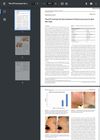 October 2023 in “Skin research and technology”
 This study evaluated the effectiveness of a 675 nm laser device on facial acne scars in patients with darker skin types, finding that 67% reported excellent improvement and 33% reported good improvement, with significant enhancements in skin texture and appearance after five treatments.
 June 2023 in “NILES Journal forGeriatric and Gerontology/NILES Journal for Geriatric and Gerontology”
 In this study, oral tranexamic acid significantly improved melasma in 40 female patients over three months, with no adverse effects like post-inflammatory hyperpigmentation or bleeding, demonstrating its potential as a safe and effective treatment option.
12 citations
,
January 2001 in “Der Hautarzt” This report on a 37-year-old patient found that trichorhinophalangeal syndrome type I is associated with hair abnormalities, including fine and brittle hair with altered biomechanical properties, but no treatment exists for the hair defects.
 50 citations
,
December 2010 in “Dermatologic Surgery”
50 citations
,
December 2010 in “Dermatologic Surgery” This study suggests that a 1,550-nm fractional erbium-glass laser may stimulate hair growth in both an alopecia mouse model and human subjects with male pattern hair loss, though further research is needed to determine its clinical applications.
 31 citations
,
November 2016 in “Cell Reports”
31 citations
,
November 2016 in “Cell Reports” This study reveals that somatosensory neurons in mouse skin exhibit structural plasticity during hair-follicle regeneration, which may temporarily impair the reliability of encoding gentle touch.
2 citations
,
August 2023 in “Molecules” This study found that a quinazoline derivative, SH-340, increased skin barrier-associated factors and inhibited TSLP expression and STAT6 phosphorylation in human primary keratinocytes, suggesting potential benefits for alleviating inflammation and improving skin barrier function in atopic dermatitis.
May 2017 in “Journal of the American Academy of Dermatology” August 2024 in “Skin Research and Technology” This report describes the diagnosis and treatment of traumatic anserine folliculosis in children, highlighting its distinct skin features and suggesting tretinoin cream as an effective remedy.