 April 2026 in “Diagnostics”
 This review outlines the use of quantitative imaging techniques in monitoring tendon response to platelet-rich plasma treatment for chronic tendinopathy and reports that these methods may aid in tailoring PRP protocols.
 98 citations
,
June 2008 in “Human mutation”
98 citations
,
June 2008 in “Human mutation” This study found that a genetic variant in the EDAR gene leads to typical East Asian hair characteristics by increasing signaling output, as shown in transgenic mice experiments.
 17 citations
,
December 2015 in “International Journal of Cosmetic Science”
17 citations
,
December 2015 in “International Journal of Cosmetic Science” This review discusses the effectiveness of non-thermal, non-ablative devices like light-emitting diodes in treating various skin and hair conditions but reports no new clinical findings.
 12 citations
,
February 2010 in “Journal of The American Academy of Dermatology”
12 citations
,
February 2010 in “Journal of The American Academy of Dermatology” This article discusses the use of cetuximab for recurrent squamous cell skin cancer in palliative care, noting good responses but frequent cutaneous side effects; it presents no new findings.
 11 citations
,
September 2012 in “The journal of investigative dermatology/Journal of investigative dermatology”
11 citations
,
September 2012 in “The journal of investigative dermatology/Journal of investigative dermatology” This study identified a missense mutation in the keratin 71 gene as the cause of autosomal dominant woolly hair/hypotrichosis in a Japanese family, marking the first human mutation in KRT71 linked to a hair disorder.
5 citations
,
January 2016 in “International Journal of Trichology” This case report describes two patients who experienced loose anagen hairs and pili torti, resulting in nonscarring alopecia, potentially linked to erlotinib treatment for solid tumors.
 June 2026 in “Zenodo (CERN European Organization for Nuclear Research)”
 This study evaluated a herbal hair mask formulated with natural ingredients like flaxseed and aloe vera and found it to be stable, non-irritant, and effective for conditioning and moisturizing hair, offering a safe alternative to synthetic products.
 June 2026 in “Zenodo (CERN European Organization for Nuclear Research)”
 This study evaluated a herbal hair mask made from natural ingredients, reporting it as stable, non-irritating, and effective for conditioning, moisturizing, and hair strengthening, positioning it as a safe natural alternative to synthetic hair products.
June 2025 in “Journal of Cosmetic Dermatology” This study reports that autologous micrografting may effectively treat stretch marks by promoting extracellular matrix remodeling and enhancing fibroblast activity, potentially expanding therapeutic options for this condition.
January 2025 in “RGUHS Journal of Ayush Sciences” This case report details the treatment of a 20-year-old woman with telogen effluvium using Ayurvedic methods, including a 21-day Nasya karma regimen with Bhringaraja Taila and Narasimha Rasayana for six months, and highlights the improvement in her symptoms, suggesting efficacy in managing hair loss.
 May 2023 in “Acta Universitatis Agriculturae et Silviculturae Mendelianae Brunensis”
 This study found that royal jelly extract, popular for surgical wound healing, contains stable levels of flavonoids and phenols for up to 28 days.
 April 2023 in “Journal of Investigative Dermatology”
 In this study, Nd:YAG picosecond lasers using fractional micro-lens array were found to have a comparable effect to ablative fractional Er:YAG lasers in treating atrophic acne scars, with better safety profiles but slightly less patient satisfaction.
 February 2022 in “International journal of research in dermatology”
 This case series describes seven distinct hair shaft disorders, highlighting the importance of accurate diagnosis since these conditions are often treated incorrectly as alopecias without improvement.
October 2018 in “Oncology Times” This commentary discusses the cultural and biological significance of hair, intertwined with humorous and poignant anecdotes from cancer care, and reports no new research findings.
 January 2015 in “International Journal of Trichology”
 Lithium can treat bipolar disorder but may cause hair loss and other hair problems.
 2 citations
,
June 2005 in “Clinical Oncology”
2 citations
,
June 2005 in “Clinical Oncology” This case report documents new hair growth in a 57-year-old man with androgenic alopecia after receiving gefitinib treatment for non-small-cell lung cancer.
 6 citations
,
August 1993 in “Archives of Dermatology”
6 citations
,
August 1993 in “Archives of Dermatology” This article describes the first documented case of acquired uncombable hair syndrome in a 39-year-old woman, contributing to the understanding of this rare condition.
 38 citations
,
December 2011 in “British Journal of Dermatology”
38 citations
,
December 2011 in “British Journal of Dermatology” This review discusses the influence of menopausal status on hair parameters in women without alopecia, finding significant differences in hair growth rate, percentage anagen, and hair diameter distributions, particularly in the frontal scalp.
 20 citations
,
December 2017 in “Journal of Investigative Dermatology Symposium Proceedings”
20 citations
,
December 2017 in “Journal of Investigative Dermatology Symposium Proceedings” This article presents a computer imaging algorithm that may automate and enhance the Severity of Alopecia Tool scoring for alopecia areata through texture analysis of pediatric images.
 47 citations
,
July 1967 in “Science”
47 citations
,
July 1967 in “Science” This study observed morphological changes in scalp hair follicles of humans deprived of protein for 15 days, which suggests potential use in diagnosing protein-calorie malnutrition.
 6 citations
,
March 2011 in “Experimental Dermatology”
6 citations
,
March 2011 in “Experimental Dermatology” This study found that an imbalance of selenium in a C57BL/6 mouse model led to hair loss with color change and was linked with changes in hair follicle apoptosis markers.
 April 2023 in “Acta Poloniae Pharmaceutica”
 This study found that using Urtica cannabina extract shampoo led to increased levels of copper, zinc, and iodine in the scalp hair of Mongolian women, along with improvements in hair growth, diameter, and density compared to a regular shampoo.
 3 citations
,
December 2013 in “Journal of Dermatology”
3 citations
,
December 2013 in “Journal of Dermatology” This study found that scanning electron microscopy can identify four specific hair morphology patterns in alopecia areata patients, offering a less invasive diagnostic option compared to punch biopsy.
 December 2015 in “Biomedical and biopharmaceutical research”
 This study found that hair care formulations containing argan oil were stable and demonstrated better spreadability and texture profiles compared to those without argan oil.
 14 citations
,
December 2020 in “Journal of Investigative Dermatology”
14 citations
,
December 2020 in “Journal of Investigative Dermatology” This study observed that aging leads to significant structural and biological changes in the scalp's hair follicle environment in women, which may affect hair growth.
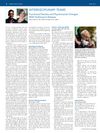
The interdisciplinary approach improved the quality of life for a Parkinson's patient and eased staff workload.
 October 1890 in “Science”
 Pilocarpin can cause hair regrowth and color change in some cases but not in others, and it may have side effects in animals.
 24 citations
,
November 2013 in “British Journal of Dermatology”
24 citations
,
November 2013 in “British Journal of Dermatology” This study found that chemotherapy in female breast cancer patients caused significant early hair loss, which began to recover three months after completion, whereas tamoxifen did not affect hair growth.
 4 citations
,
August 2007 in “Journal of The American Academy of Dermatology”
4 citations
,
August 2007 in “Journal of The American Academy of Dermatology” This article discusses various aspects of rhinophyma, including its pathogenesis, differential diagnosis, and treatment options, without presenting new clinical research results.
 1 citations
,
May 2017 in “Asian journal of medical sciences”
1 citations
,
May 2017 in “Asian journal of medical sciences” This study found that dietary supplementation with collagen, chondroitin sulfate, low-molecular weight hyaluronic acid, Pycnogenol®, and coenzyme Q10 significantly improved skin hydration, elasticity, nail hardness, and hair condition in patients with age-related dermatological changes after 12 weeks.