 5 citations
,
January 2017 in “Skin appendage disorders”
5 citations
,
January 2017 in “Skin appendage disorders” In this case report, the authors linked acute psoriasiform contact dermatitis of the forehead and scalp to a low-laser light cap, identifying DMDE in the fabric as a likely cause.
 4 citations
,
November 2017 in “Journal of Cosmetic Dermatology”
4 citations
,
November 2017 in “Journal of Cosmetic Dermatology” This study found that polyquaternium-68 at pH 9 achieved the greatest hair deposition, while polyquaternium-44 demonstrated the best wash resistance at pH 6.
 June 2024 in “Bangladesh Journal of Medicine”
 This study offers a comprehensive overview of alopecia, detailing its various types, diagnostic approaches, and treatment options, including updated medical and procedural interventions such as Tofacitinib, PRP therapy, and microneedling, among others.
 118 citations
,
February 2009 in “Fertility and Sterility”
118 citations
,
February 2009 in “Fertility and Sterility” This study found that approximately 75% of women with PCOS exhibited hyperandrogenemia, with free testosterone being the most frequently elevated marker.
 16 citations
,
August 2007 in “Histopathology”
16 citations
,
August 2007 in “Histopathology” This case report describes a functional adrenocortical oncocytoma that co-secreted testosterone and cortisol.
14 citations
,
February 2015 in “Journal of the American Animal Hospital Association” This study reports that transdermal exposure to owners' topical hormone replacement therapy caused alopecia in six dogs, but the condition resolved after the therapy was discontinued.
 6 citations
,
April 2016 in “Journal of the Formosan Medical Association”
6 citations
,
April 2016 in “Journal of the Formosan Medical Association” This study found that metformin treatment improved clinical outcomes in Taiwanese women with polycystic ovary syndrome, notably in overweight and insulin-resistant patients.
 6 citations
,
October 2012 in “BMJ”
6 citations
,
October 2012 in “BMJ” This case report describes a 37-year-old woman whose recurrent hair shedding was associated with low iron stores and a miscarriage, with improvements seen after increased iron intake.
5 citations
,
August 2002 in “Veterinary Dermatology” In this study, a combination of terbinafine and mitotane was used to treat a dog with pituitary-dependent hyperadrenocorticism and dermatophytosis, showing regrowth of hair and negative fungal cultures without detectable adverse effects.
 4 citations
,
December 2012 in “Arquivos Brasileiros De Endocrinologia E Metabologia”
4 citations
,
December 2012 in “Arquivos Brasileiros De Endocrinologia E Metabologia” A postmenopausal woman's masculine symptoms improved after surgery for a hormone-producing ovarian tumor.
 4 citations
,
August 2011 in “Aktuelle Dermatologie”
4 citations
,
August 2011 in “Aktuelle Dermatologie” This study found that topical melatonin significantly improved hair density and reduced the severity of androgenetic alopecia in men and women.
 1 citations
,
January 2022 in “Health”
1 citations
,
January 2022 in “Health” This article discusses the impact of COVID-19 on various sectors and reports no new clinical findings.
 1 citations
,
January 2017 in “Journal of Clinical Trials & Patenting”
1 citations
,
January 2017 in “Journal of Clinical Trials & Patenting” This study assessed the safety and efficacy of Romantaque lotion for unwanted hair growth and found statistically significant hair growth inhibition with no adverse effects in 30 volunteers after repeated applications over one year.
 1 citations
,
October 2012 in “Gynäkologische Endokrinologie”
1 citations
,
October 2012 in “Gynäkologische Endokrinologie” This review discusses androgenization symptoms like hirsutism, alopecia, and acne in reproductive-age women, focusing on diagnostic and therapeutic approaches, and highlights postmenopausal considerations, but presents no new clinical findings.
 July 2026 in “Bratislavské lekárske listy/Bratislava medical journal”
 This study found that patients with telogen effluvium who delayed hair washing or collected shed hair were more likely to have higher clinical severity and increased disease-related economic burdens, suggesting these behaviors can aid clinical assessments.
 December 2024 in “Journal of Clinical Research in Pediatric Endocrinology”
 This study explains that congenital adrenal hyperplasia due to 21-hydroxylase deficiency presents as a continuous phenotype and involves symptoms ranging from virilization to accelerated growth in children, with diagnosis relying on clinical, biochemical, and genetic evaluation.

This review supports iron deficiency anemia as a valid cause of chronic generalized pruritus and suggests potential mechanisms by which iron deficiency may lead to pruritus, but reports no new clinical results.
 April 2023 in “Dermatology practical & conceptual”
 This study concluded that lenalidomide significantly induces the proliferation and migration of melanocyte stem cells, enhancing their differentiation into functional melanocytes in a mouse model.
 April 2016 in “Journal of Investigative Dermatology”
 This study found that administering botulinum toxin A via Flex-PADs to mouse footpads inhibited sweating similarly to traditional injections, suggesting a promising patient-friendly delivery method for hyperhidrosis treatment.
August 2014 in “DOAJ (DOAJ: Directory of Open Access Journals)” This study reported that administering a supraphysiological dose of testosterone for one year resulted in minor cognitive benefits and decreased depressive symptoms in older hypogonadal men, but major cognitive improvements were not observed.
This study found that supplementing dog food with zinc methionyl glycinate at 160 ppm improved hair growth rate, zinc levels in plasma and hair, and hair condition more than lower doses or sulfate form.
January 2006 in “Trace Elements Science” This study observed that Wistar rats on a zinc-deficient diet had a higher incidence of stomach cancer when exposed to MNNG, suggesting zinc deficiency may increase cancer risk.
 2 citations
,
May 2014 in “Journal of The American Academy of Dermatology”
2 citations
,
May 2014 in “Journal of The American Academy of Dermatology” Melanoma thickness at diagnosis is linked to access to dermatologists and preventive services, not to socioeconomic status.
 May 2021 in “Journal of the Endocrine Society”
 This case study reports a patient with ACTH-driven cortisol secretion 14 years after adrenalectomy, suggesting possible residual adrenal tissue or extra-adrenal steroid synthesis, challenging the need for lifelong steroid replacement.
 60 citations
,
April 2003 in “Human Reproduction”
60 citations
,
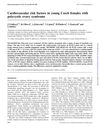
April 2003 in “Human Reproduction” This study found that Czech women with polycystic ovary syndrome in their thirties had a significantly worse cardiovascular risk profile compared to a control group, independent of obesity.
 35 citations
,
March 2012 in “Experimental and Clinical Endocrinology & Diabetes”
35 citations
,
March 2012 in “Experimental and Clinical Endocrinology & Diabetes” This article discusses various causes of hyperandrogenism in women and highlights diagnostic considerations for conditions such as PCOS, NCCAH, Cushing's disease, and androgen-secreting tumors, without reporting new clinical results.
 19 citations
,
June 2019 in “Clinical Drug Investigation”
19 citations
,
June 2019 in “Clinical Drug Investigation” This study concluded that platelet-rich plasma injections significantly improved hair density, thickness, and scalp inflammation in both male and female pattern hair loss, with better outcomes in lower-grade cases.
 19 citations
,
August 1999 in “European journal of endocrinology”
19 citations
,
August 1999 in “European journal of endocrinology” This study concluded that neither basal nor ACTH-stimulated 17-OHP concentrations effectively indicate carrier status for 21-hydroxylase deficiency among Slovenian hyperandrogenic women, recommending molecular analysis of the CYP21 gene for reliable screening.
 4 citations
,
November 1996 in “European journal of endocrinology”
4 citations
,
November 1996 in “European journal of endocrinology” This study found that spironolactone therapy may reduce hair width in prepubertal girls with simple hypertrichosis, though its long-term efficacy and safety remain uncertain.
1 citations
,
May 2013 in “Hair transplant forum international” Non-classical 21 hydroxylase deficiency is an underdiagnosed cause of female hair loss and polycystic ovarian syndrome.