 September 2020 in “Journal of the turkish academy of dermatology”
 In this study, 13.3% of dermatology patients reported using traditional and complementary medicine, with herbal remedies being the most common method, especially among middle-aged university graduates.

This review summarizes methods for creating alopecia areata animal models and reports no new results, emphasizing that improved evaluation and combined disease models are needed for future research.
 July 2016 in “Indiana Magazine of History (Indiana University)”
 A combination of dietary changes, lifestyle adjustments, acupuncture, and herbal treatment improved hair growth by 70%.
This paper discusses traditional Chinese and Western medicine approaches to treating androgenic alopecia, highlighting potential benefits and limitations but reports no new clinical results.
January 2012 in “Journal of Chengdu University of Traditional Chinese Medicine” This paper discusses Professor WEI Yue-gang's approach to treating androgenetic alopecia with Traditional Chinese Medicine and reports no new clinical results.
January 2005 in “한방재활의학과학회지” In this study, the most common types of alopecia observed in patients visiting an oriental medicine clinic were androgenetic alopecia, alopecia areata, and telogen effluvium.
This study found that adding the Liangxue Zhituo prescription to a 5% minoxidil treatment resulted in a significantly higher improvement rate for patients with androgenic alopecia compared to minoxidil alone, with no significant adverse reactions reported.
January 2015 in “Traditional Chinese Medicine” This review discusses recent advances in Traditional Chinese Medicine treatments for androgenic alopecia, highlighting approaches such as syndrome differentiation, specialized formulas, and acupuncture, but reports no new clinical results.
January 2012 in “Journal of Liaoning University of Traditional Chinese Medicine” This study found that more frequent shampoo use, high fat consumption, work pressure, and mental labor were associated with an increased risk of androgenic alopecia.
January 2004 in “Journal of Guangzhou University of Traditional Chinese Medicine” This study found that the expression of androgen receptors is higher in the scalp area affected by androgenetic alopecia, and its expression varies based on different traditional Chinese medicine syndromes.
1 citations
,
June 2008 in “中医杂志:英文版” This essay introduces Dr. Qiu's approach to treating consumptive syndromes with TCM after radio-chemotherapy, discussing how modern cancer treatments cause these symptoms and his unique perspective on their management.
4 citations
,
November 2015 in “Hanbang an'i'bi'in'hu pibu'gwa haghoeji” This review analyzes recent research trends on alopecia and reports no new results, highlighting findings in Western medicine and TCM related to combination therapies, patients' characteristics, and treatment approaches.
January 2011 in “Journal of Liaoning University of Traditional Chinese Medicine” This article reviews the Traditional Chinese Medicine approach to treating androgenetic alopecia and reports no clinical results, suggesting a conceptual imbalance of Yin and Yang as the underlying issue.
November 2025 in “Frontiers in Pharmacology” This review discusses the use of Traditional Chinese Medicine in burn treatment and details various herbs with potential therapeutic benefits, but reports no new clinical findings.
 January 2024 in “Research Square (Research Square)”
 This study identified key genes related to ischemic stroke through the ferroptosis pathway and highlighted the potential role of specific traditional Chinese medicines in regulating associated biological processes.
March 2022 in “Evidence-based Complementary and Alternative Medicine” This study found that critically ill pulmonary patients with deficiency syndrome were at a higher risk of developing type 2 myocardial infarction than those with phlegm syndrome.
July 2021 in “Belarusian State Pedagogical University repository (Belarusian State Pedagogical University)” In this study, PMC was identified as a promising plant for nourishing hair, with effective hair growth promotion and 5α-reductase inhibition observed in both laboratory and animal studies for androgenetic alopecia treatment.
20 citations
,
February 2021 in “Frontiers in Pharmacology” This study identified key natural medicinal materials used in traditional Chinese medicine across Taiwan for inducing lactation, highlighting Angelica sinensis as a primary core component in galactogenous prescriptions.
 3 citations
,
May 2021 in “Evidence-based Complementary and Alternative Medicine”
3 citations
,
May 2021 in “Evidence-based Complementary and Alternative Medicine” This review discusses the potential antiaging effects of Chinese herbal medicines and suggests their role in regulating aging-related genes through various signaling pathways; it reports no new clinical results.
2 citations
,
October 2017 in “PubMed” This study found that serum bone metabolic markers with mild changes are interdependently related to traditional Chinese medicine syndromes in patients with chronic kidney disease-related bone disorders.
1 citations
,
August 2025 in “Frontiers in Pharmacology” This review discusses advancements in using dissolving microneedle systems for transdermal delivery of traditional Chinese medicine, highlighting potential benefits for simplifying application, enhancing safety, and increasing efficacy, and underscores its possible impact on modernizing traditional medicine practices.
 September 2025 in “Frontiers in Cell and Developmental Biology”
 This review highlights that exosome-like nanovesicles derived from traditional Chinese medicinal herbs show potential in enhancing wound healing processes such as inflammation resolution and angiogenesis, suggesting promising applications in skin regeneration and therapeutic development.
January 2025 in “MEDS Chinese Medicine” This article reviews the pathogenesis and treatments for Androgenetic Alopecia, examining both Western medical approaches and Traditional Chinese Medicine, including herbal remedies and acupuncture, to offer insights that may aid in clinical decision-making for managing this condition.
 125 citations
,
December 2016 in “Molecules”
125 citations
,
December 2016 in “Molecules” This review discusses the extraction, purification, modification, and biological activity of polysaccharides from Traditional Chinese Medicine and reports no new research findings.
 30 citations
,
October 2015 in “Journal of Ethnopharmacology”
30 citations
,
October 2015 in “Journal of Ethnopharmacology” This study identified several compounds from traditional Chinese medicines that may inhibit prostaglandin D2 synthase, potentially providing promising candidates for treating androgenic alopecia with minimal adverse skin reactions.
 1 citations
,
February 2018 in “Orthopedics and rheumatology”
1 citations
,
February 2018 in “Orthopedics and rheumatology” This study found that combining intra-arterial chemotherapy with Traditional Chinese Medicine may improve response rates in malignant bone and soft tissue tumor treatment while also managing specific side effects.
January 2013 in “Victoria University Research Repository (Victoria University)” This article proposes a strategy for identifying bioactive, small molecule, metallo-species in Traditional Chinese Medicine to explore their potential for drug development, but reports no new results.
 11 citations
,
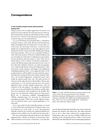
July 2008 in “International Journal of Dermatology”
11 citations
,
July 2008 in “International Journal of Dermatology” This article discusses a case of patchy alopecia areata that spares greying hairs but reports no new findings; it refers to existing literature for context.
9 citations
,
June 2022 in “Microorganisms” This review outlines the urgent need for effective therapeutic interventions against coronaviruses, as current vaccines are challenged by virus mutations, and emphasizes developing safe, affordable, and broad-spectrum antivirals for both human and porcine coronaviruses.
 August 2022 in “Journal of Contemporary medical practice”
 This review discusses the current advancements in diagnosing and treating polycystic ovary syndrome with both traditional Chinese and Western medicine, and it reports no new results.