 4 citations
,
January 2022 in “Dermatologic Therapy”
4 citations
,
January 2022 in “Dermatologic Therapy” In this retrospective analysis, the authors reported that off-label tofacitinib treatment in 35 alopecia areata patients demonstrated safety, with no serious adverse events, and effectiveness, with 83.9% showing significant scalp regrowth and 32.3% achieving near total or total regrowth.
 June 2024 in “Australasian Journal of Dermatology”
 This study found that tofacitinib was a safe and effective treatment for patients with moderate-to-severe alopecia areata, with a significant percentage achieving notable reductions in their Severity of Alopecia Tool scores after 18 months.
 19 citations
,
October 2013 in “Headache: The Journal of Head and Face Pain”
19 citations
,
October 2013 in “Headache: The Journal of Head and Face Pain” This review discusses conventional and alternative treatments for trigeminal autonomic cephalalgias, including cluster headache, paroxysmal hemicrania, and SUNCT, and recommends specific medications without reporting new clinical findings.
 May 2026 in “Indian Journal of Dermatology”
 In this study, oral tofacitinib was associated with significant hair regrowth in patients with alopecia areata, achieving over 50% reduction in Severity of Alopecia Tool scores, with mild side effects.
1 citations
,
June 1999 in “American Journal of Contact Dermatitis” In this study, tazarotene 0.1% gel showed greater efficacy than tretinoin 0.025% gel in reducing acne lesions and demonstrated similar efficacy to adapalene 0.1% gel when used less frequently.
 April 2024 in “Indian Journal of Paediatric Dermatology”
 This case report highlights a rare association between congenital triangular alopecia and vitiligo, noting that treatment with tofacitinib improved the patient's vitiligo but not the alopecia.
2 citations
,
May 2017 in “Journal of the American Academy of Dermatology” Tofacitinib helped a 19-year-old regrow hair after other treatments failed.
June 2025 in “British Journal of Dermatology” This study compared oral tofacitinib and methotrexate in treating moderate-to-severe alopecia areata, finding that tofacitinib was more effective at reducing SALT scores and improving scalp hair assessment PRO scores, though both treatments reduced psychological distress similarly without serious adverse effects.
 November 2025 in “Turkish Journal of Dermatology”
 In this study, retrospective analysis of patients with severe alopecia areata showed that oral JAK inhibitors, tofacitinib and baricitinib, reduced hair loss significantly, with comparable effectiveness; longer tofacitinib use was linked to greater improvement, while baricitinib achieved substantial outcomes quickly.
 June 2026 in “Current Oncology Reports”
 This review highlights the potential of Sacituzumab Tirumotecan, an antibody-drug conjugate, in treating gynecologic cancers, with ongoing Phase III trials indicating a manageable safety profile and future results expected to shed light on its effectiveness in improving survival and response rates.
 March 2022 in “International Journal of Trichology”
 In this case report, a young female Indian patient with alopecia areata saw hair regrowth within 2 months of treatment with oral tofacitinib, with continued improvements over a 5-month period and no reported side effects.
 March 2025 in “Indian Journal of Dermatology Venereology and Leprology”
 In this study, tofacitinib showed significant efficacy in treating alopecia totalis and universalis over a 6-month period, with notable hair regrowth outcomes, while younger age of onset and shorter treatment duration were linked to less effectiveness.
8 citations
,
July 2020 in “Dermatologic Therapy” Tofacitinib may effectively treat folliculitis decalvans.
 11 citations
,
January 2020 in “Dermatologica Sinica”
11 citations
,
January 2020 in “Dermatologica Sinica” This study found that tofacitinib effectively promoted hair regrowth in Asian patients with severe alopecia areata, with 74.3% showing a clinical response.
 55 citations
,
June 2014 in “Nature Communications”
55 citations
,
June 2014 in “Nature Communications” This study found that overexpression of the transcription factor Tcf3 accelerates keratinocyte migration and skin wound healing in mice, highlighting its potential as a therapeutic target for wound repair.
 13 citations
,
March 2002 in “Pediatric Dermatology”
13 citations
,
March 2002 in “Pediatric Dermatology” This article discusses temporal triangular alopecia, emphasizing the need for increased awareness to prevent misdiagnosis and ineffective treatment, but reports no new clinical results.
 28 citations
,
July 2007 in “Development”
28 citations
,
July 2007 in “Development” In this study, inactivating the TAF4 subunit of transcription factor TFIID in mouse epidermis disrupted gene expression linked to skin and hair function, and increased tumor risk.
 September 2024 in “Skin Appendage Disorders”
 This case report describes a 21-year-old woman with circumscribed alopecia areata incognita, who experienced a sustained positive response to treatment with oral tofacitinib after conventional treatments frequently failed to provide lasting effects.
1 citations
,
January 2024 in “International Journal of Epidemiology” This study describes the ongoing HABIT study in Taicang, China, which aims to identify risk factors and the relationship between cardiovascular and neurodegenerative diseases among 10,357 adults, by collecting and analyzing long-term data on health, lifestyle, and biological specimens. Results are not yet available.
 56 citations
,
March 2010 in “Journal of Dermatology”
56 citations
,
March 2010 in “Journal of Dermatology” This review provides a synopsis of 53 cases of temporal triangular alopecia, noting its frequent detection in early childhood and potential association with congenital diseases, but it reports no new clinical findings.
 1 citations
,
September 2022 in “International Journal of Trichology”
1 citations
,
September 2022 in “International Journal of Trichology” In this case report, a young adult male with resistant alopecia areata showed nearly 90% hair regrowth after 3 months of treatment with tofacitinib, alongside biotin supplementation, without any side effects observed.
The authors concluded that capecitabine and high-dose toremifene may be an effective treatment option for patients unable to undergo anthracycline or taxane therapies, based on one woman's cancer management.
 7 citations
,
April 2021 in “British Journal of Dermatology”
7 citations
,
April 2021 in “British Journal of Dermatology” In this research letter from the British Journal of Dermatology, the authors explore the use of topical tofacitinib to treat alopecia areata affecting facial hair, but specific results are not reported in the abstract.
 March 2026 in “Journal of Pakistan Association of Dermatologists”
 In this quasi-experimental study, 24-week tofacitinib treatment significantly improved hair regrowth in South Asian patients with alopecia areata, but a high relapse rate post-withdrawal signals the need for continuous treatment strategies.
 January 2025 in “International Journal of Dermatology Venereology and Leprosy Sciences”
 This study found that oral tofacitinib significantly reduced alopecia severity and improved quality of life over 12 months for children with moderate to severe alopecia areata, though the authors recommend more research due to the small sample size and absence of a control group.
 41 citations
,
December 2015 in “JAMA Dermatology”
41 citations
,
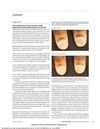
December 2015 in “JAMA Dermatology” Tofacitinib citrate improved nail dystrophy and pain in patients with alopecia universalis without causing side effects.
 2 citations
,
June 2019 in “Boletín médico del Hospital Infantil de México”
2 citations
,
June 2019 in “Boletín médico del Hospital Infantil de México” This study in Mexican adolescents with severe alopecia areata reported that oral tofacitinib treatment resulted in hair growth and reduced alopecia severity without serious adverse effects.
 1 citations
,
July 2022 in “The journal of investigative dermatology/Journal of investigative dermatology”
1 citations
,
July 2022 in “The journal of investigative dermatology/Journal of investigative dermatology” In this open-label trial, Tofacitinib was well tolerated and improved IFN and cytokine scores, as well as overall skin pathology, in individuals with Down syndrome and immune skin conditions.
 11 citations
,
November 2019 in “Journal of the American Academy of Dermatology”
11 citations
,
November 2019 in “Journal of the American Academy of Dermatology” This study suggests that oral tofacitinib may be an effective treatment for beard regrowth in men with alopecia areata of the beard, with a strong correlation observed between beard and scalp hair regrowth.
 October 2024 in “International Journal of Research in Dermatology”
 In this retrospective study, tofacitinib showed promise as a treatment for alopecia areata, with 46.5% of patients experiencing a very good response and minimal adverse effects, suggesting it could be a primary option for moderate to severe cases.