 8 citations
,
April 2017 in “Experimental Dermatology”
8 citations
,
April 2017 in “Experimental Dermatology” This study found that men with androgenetic alopecia had significantly higher plasma leptin levels, which were associated with an increased risk of developing the condition.
89 citations
,
August 2018 in “JAMA Dermatology” This study found that the level of expected therapeutic regrowth significantly affected hair regrowth outcomes in contact immunotherapy for alopecia areata, suggesting implications for patient education and adherence.
 9 citations
,
December 2023 in “Journal of Neuroimmune Pharmacology”
9 citations
,
December 2023 in “Journal of Neuroimmune Pharmacology” This study found that systemic administration of NDP-MSH, a melanocortin receptor agonist, provided neuroprotective effects on dopaminergic nigrostriatal neurons in a mouse model of Parkinson's disease, reducing neuroinflammation and suggesting a role for regulatory T cells in these neuroprotective effects.
 3 citations
,
April 2015 in “Cleveland Clinic Journal of Medicine”
3 citations
,
April 2015 in “Cleveland Clinic Journal of Medicine” This case report describes a 22-year-old woman with systemic lupus erythematosus who developed scurvy due to low serum ascorbic acid, despite a diet of white meat and processed foods.
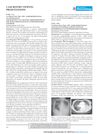 May 2025 in “The Journal of Rheumatology”
 This case report describes a patient with systemic lupus erythematosus whose unusual nephrological presentation led to a diagnosis of C3 glomerulopathy, highlighting the importance of considering atypical findings to broaden diagnostic approaches.
 April 2016 in “Journal of The American Academy of Dermatology”
 This study found that dermatology consultations in a tertiary care center led to treatment changes in most cases, especially for complex conditions potentially linked to systemic disease.
 April 2016 in “Journal of The American Academy of Dermatology”
 This study found that dermatology consultations in a tertiary care center often led to treatment changes, particularly for complex dermatologic conditions potentially linked to systemic disease.
October 2021 in “QJM: An International Journal of Medicine” This study suggests that altered levels of NRF2 may be important in the development of androgenetic alopecia in men.
93 citations
,
January 2009 in “PubMed” This study found that women with serum ferritin levels below or equal to 30 ng/mL have a strong association with an increased risk of diffuse telogen hair loss.
37 citations
,
January 2015 in “Journal of Clinical and Experimental Dentistry” This animal study found that both systemic and topical forms of Zizyphus jujuba extract were associated with reduced severity of oral mucositis in golden hamsters treated with 5-fluorouracil.
3 citations
,
February 2017 in “The American journal of dermatopathology/American journal of dermatopathology” This case report details a 73-year-old woman with systemic sarcoidosis, whose scalp biopsy revealed features consistent with both sarcoidosis and frontal fibrosing alopecia, emphasizing the necessity of biopsy in complex alopecia diagnoses.
October 2021 in “QJM: An International Journal of Medicine” This study found that altered Nrf2 levels may play a significant role in the development of androgenetic alopecia in men.
9 citations
,
April 2018 in “Biology of reproduction” This study concluded that dietary changes alter serum progesterone and estradiol levels in late gestation ewes, likely due to metabolism rather than changes in placental steroid synthesis.
 August 2013 in “Fertility and Sterility”
 This study found that women with PCOS have higher follicular fluid levels of testosterone and IL-6, despite similar NEFA levels to non-PCOS women, suggesting increased lipotoxicity impact on androgenesis in PCOS.
 99 citations
,
December 2010 in “Journal of The European Academy of Dermatology and Venereology”
99 citations
,
December 2010 in “Journal of The European Academy of Dermatology and Venereology” This article discusses the association of acne with various systemic diseases, emphasizing the role of androgen steroids, insulin resistance, and inflammation in acne pathogenesis, but it reports no new clinical results.
6 citations
,
March 2009 in “BMC Public Health” In this study, higher levels of the sulfur-containing gas CH3SCH3, associated with oral malodor, were linked to MPB in elderly Japanese males, particularly when gastrointestinal and metabolic disorders were present.
2 citations
,
January 2020 in “Enlighten: Theses (The University of Glasgow)” This study found that alopecia areata is associated with distinct systemic and tissue immune signatures, with macrophages implicated as contributors to hair loss, suggesting potential therapeutic targeting of macrophage activity.
 April 2026 in “International Journal of Research and Review”
 This article reviews current literature and suggests that managing gout with early urate-lowering therapy, within a 'treat-to-target' strategy, can help prevent systemic complications and address the rising prevalence of hyperuricemia-related diseases.
 26 citations
,
February 2016 in “Respiratory Medicine”
26 citations
,
February 2016 in “Respiratory Medicine” This article reviews strategies for serological testing in diagnosing ILD linked to systemic rheumatic diseases and introduces a potential diagnostic algorithm for pulmonologists, while noting further validation is needed.
January 2009 in “Gynäkologische Endokrinologie” This article reviews the causes and clinical patterns of androgenetic alopecia in women and identifies systemic antiandrogens, estrogens, and topical 2% minoxidil solution as the only effective treatments.
November 2025 in “Fayoum University Medical Journal/Fayoum University Medical Journal ” This study found that intralesional vitamin D3 injections significantly increased serum vitamin D3 levels in patients with localized alopecia areata, although baseline vitamin D3 levels did not predict disease severity or treatment response.
 September 1998 in “Journal of The European Academy of Dermatology and Venereology”
 This review summarizes major surveys on Behcet's disease, highlighting its systemic manifestations, with primary morbidity linked to ocular involvement causing severe vision loss or blindness.
22 citations
,
January 2010 in “Clinical Medicine Insights Endocrinology and Diabetes” In this study, hair from forearms showed higher cortisol levels than hair from lower legs, suggesting a localized cortisol response in hair.
 19 citations
,
January 2018 in “Acta dermato-venereologica”
19 citations
,
January 2018 in “Acta dermato-venereologica” In this study, the researchers observed that subjects with alopecia areata had the highest plasma level of cardiac troponin I, followed by those with androgenetic alopecia, and the lowest levels in individuals without hair loss.
 18 citations
,
June 2019 in “Clinical research in dermatology”
18 citations
,
June 2019 in “Clinical research in dermatology” This review discusses psychological impacts associated with facial acne, noting that high levels of anxiety and depression among these patients are not linked to oxidative stress, and reports no new clinical results.
 11 citations
,
January 1985 in “Archives of Dermatology”
11 citations
,
January 1985 in “Archives of Dermatology” This article discusses the complex interaction between androgens and the skin, highlighting elevated androgen levels in women with hirsutism, female-pattern hair loss, and acne, but reports no new clinical results.
 8 citations
,
January 2022 in “Cureus”
8 citations
,
January 2022 in “Cureus” This case study reports a patient with post-COVID-19 diffuse alopecia who experienced gradual hair recovery to near pre-infection levels within seven months.
 6 citations
,
February 2019 in “Scientific reports”
6 citations
,
February 2019 in “Scientific reports” This study demonstrated that allopregnanolone administration caused significant scratching in atopic dermatitis mice, and ethanol-induced scratching may be linked to increased brain allopregnanolone levels.
 5 citations
,
December 2011 in “Drug Research”
5 citations
,
December 2011 in “Drug Research” This study found that cortexolone 17α-propionate showed strong topical antiandrogenic activity, outperforming progesterone and several known antiandrogens, but lacked systemic antiandrogenic effects in animal models.
3 citations
,
March 2022 in “Chinese Journal of Plastic and Reconstructive Surgery” This review discusses the potential role of androgen-related disorders in keloid pathogenesis and highlights the need for systemic treatments targeting sex hormones, but reports no new clinical results.