 August 2001 in “Journal of Cutaneous Medicine and Surgery”
 Prednisone has risks for lupus patients, isotretinoin is safe for mental health, transplant patients risk skin cancer, and various treatments are effective for specific skin conditions.
4 citations
,
January 2010 in “International journal of trichology” Bexarotene gel shows promise as a new treatment for alopecia areata.
1 citations
,
November 2023 in “Life” Hyaluronic acid injections can improve mouth opening and quality of life in scleroderma patients.
 September 2024 in “Polish Journal of Public Health”
 The researchers reported finding 53 therapeutic and skincare products for hirsutism and hypertrichosis in Polish pharmacies and drugstores, identifying dienogest and cyproterone acetate as common active ingredients for hirsutism. They noted promising new treatments include eflornithine, acyclovir, licorice, and vitamin D.
3 citations
,
July 2025 in “Pharmaceutics” In this study, Levant Storax Cream demonstrated the highest wound healing rates in rats compared to a commercial wound care cream, a complex cream, and placebo.
 October 2024 in “Cochrane library”
 This review examined evidence on non-systemic treatments for acne vulgaris and related skin complications, finding very low-certainty evidence that benzoyl peroxide may reduce lesion counts but may also increase the risk of minor adverse events, highlighting the need for higher-quality research for effective therapies.
 1 citations
,
January 2010 in “Serbian Journal of Dermatology and Venereology”
1 citations
,
January 2010 in “Serbian Journal of Dermatology and Venereology” This article reviews the multifaceted approach required for acne vulgaris treatment, emphasizing individualized combination therapies tailored to clinical severity and patient psychological profiles, but no new results are included.
26 citations
,
January 2005 in “PubMed” This study reports that RU 58841-myristate, a new antiandrogen prodrug formulated with solid lipid nanoparticles, shows potential for targeting hair follicles in preclinical laboratory settings.
 7 citations
,
April 2021 in “Dermatology and Therapy”
7 citations
,
April 2021 in “Dermatology and Therapy” This review identifies several off-label uses of H-1 antihistamines in dermatology beyond itch and urticaria control, though the evidence is weak and further trials are needed.
 14 citations
,
July 2016 in “Pediatric Dermatology”
14 citations
,
July 2016 in “Pediatric Dermatology” In this report, a case of steroid-resistant multifocal alopecia areata was successfully treated with topical bimatoprost, suggesting it may be a promising alternative therapy.
15 citations
,
March 2019 in “Veterinary Dermatology” This study found that three mousse products containing chlorhexidine and varying antifungal components maintained significant antibacterial activity against S. pseudintermedius in vitro for up to 10 days, while other mousses did not show significant differences.
8 citations
,
January 2025 in “Gels” This study developed cilostazol-loaded formulations for nose-to-brain delivery, finding that these formulations improved cilostazol's bioavailability by enhancing solubility, absorption, and permeability, achieving nearly 100% drug release in vitro within 2 hours.
 61 citations
,
April 2014 in “Radiation Research”
61 citations
,
April 2014 in “Radiation Research” This study observed that topically applied RTA 408 reduced the severity of radiation-induced dermatitis in mice, with the highest dose significantly reducing and alleviating skin damage and associated inflammation.
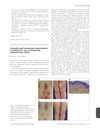
January 2003 in “Journal of Practical Aesthetic and Plastic Surgery” This study found that intralesional Diprospan injections and high-dose intravenous methylprednisolone may be effective for treating longstanding multifocal alopecia areata, with variable hair regrowth observed among patients.
 6 citations
,
February 2016 in “British Journal of Dermatology”
6 citations
,
February 2016 in “British Journal of Dermatology” A woman with a drug allergy to anakinra was successfully desensitized, allowing her to continue treatment without allergic reactions.
11 citations
,
October 2021 in “Journal of The European Academy of Dermatology and Venereology” This study found that topical finasteride significantly increased hair count in men with androgenetic alopecia compared to placebo while maintaining similar efficacy to oral finasteride but with lower systemic exposure and a reduced impact on serum DHT levels, potentially minimizing sexual side effects.
September 2024 in “Journal of the American Academy of Dermatology” Generic topical and transdermal systems usually cause minimal irritation or sensitization.
 7 citations
,
December 2019 in “American Journal of Clinical Dermatology”
7 citations
,
December 2019 in “American Journal of Clinical Dermatology” This review discusses the potential efficacy of topical antiandrogen therapies for treating androgenetic alopecia and acne vulgaris, finding promising results but highlighting the need for more comprehensive studies.
 11 citations
,
August 2007 in “Bioorganic & Medicinal Chemistry Letters”
11 citations
,
August 2007 in “Bioorganic & Medicinal Chemistry Letters” This study found that among the tested analogs, compound 4e was the most effective in inhibiting wax esters in vivo in the Golden Syrian hamster ear model.
 December 2025 in “Dermatology Reports”
 This source describes vitiligo as a chronic condition marked by the loss of skin pigmentation and discusses leukotrichia, a feature affecting 10% to 60% of cases, which arises from melanocyte loss in hair follicles and appears as well-defined white patches on the skin.
 December 2024 in “PubMed”
 This study evaluates the compatibility of six active pharmaceutical ingredients, including finasteride and spironolactone, with TrichoFoam™, a foam vehicle used in personalized treatments for alopecia, though it does not report specific results.
January 2015 in “프로그램북(구 초록집)” This study highlights that the combination of adapalene and benzoyl peroxide (Epiduo®) is an effective first-line treatment for acne, significantly inhibiting antibiotic-susceptible and antibiotic-resistant P. acnes strains.
15 citations
,
June 1961 in “Archives of Dermatology” This report details observations from four patients with alopecia areata who received intralesional triamcinolone injections to assess its effectiveness for promoting hair regrowth in localized areas.
 1 citations
,
April 2018 in “Our Dermatology Online”
1 citations
,
April 2018 in “Our Dermatology Online” Trichoscopy can detect early signs of steroid overuse on the scalp, suggesting a need for non-steroidal treatments.
 March 2024 in “Clinical and experimental dermatology”
 This study suggests that potent topical corticosteroid occlusion may be a safe and effective treatment option for pediatric patients with severe alopecia areata, although further research is needed on its long-term safety and recurrence.
July 2024 in “Journal of Investigative Dermatology” Topical sulforaphane reduces pigmentation and wrinkles from sun damage.
 January 2026 in “RIGGS Journal of Artificial Intelligence and Digital Business”
 This study evaluated formulations of a cream containing turmeric and ginger extracts for inhibiting underarm hair growth, finding that the formulation with 15% stearic acid and 3% triethanolamine had the most optimal physical characteristics and potential for cosmetic development.
 191 citations
,
February 2002 in “Archives of Dermatology”
191 citations
,
February 2002 in “Archives of Dermatology” This review discusses herbal therapies for dermatologic disorders, focusing on those with scientific evidence of efficacy and common interactions, but reports no new clinical results.
 April 2019 in “The journal of investigative dermatology/Journal of investigative dermatology”
 This study evaluated current treatments for pediatric alopecia areata and found that high potency topical steroids had the strongest supporting evidence, with promising results also observed for anthralin ointment and other treatments in lower-grade studies.
 July 2025 in “Pakistan Journal of Intensive Care Medicine”
 In this randomized controlled trial, researchers observed that topical clobetasol propionate 0.05% was significantly more effective than topical tacrolimus 0.1% for treating alopecia areata, with a higher treatment success rate of 74.2% versus 45.2%, suggesting clobetasol as a preferred first-line topical therapy.