September 2022 in “Dermatologic Therapy” This study found that the U.S. stock market responded heterogeneously to the latest presidential elections, with positive reactions in the Energy, Financials, and Industrials sectors but poorer performance among firms with better environmental scores.
January 2005 in “Digest of the World Core Medical Journals” In this case report, three patients with erosive pustulosis of the scalp showed significant improvement after treatment with oral zinc gluconate and topical steroids.
 November 2023 in “Dermatology Research and Reports”
 This study reported that a 1% ivermectin topical cream for rosacea was stable over six months, showing no significant changes in key physical properties or microbial contamination, suggesting it may reduce chronic antibiotic use in rosacea treatment.
April 2026 in “International Journal of Medical Arts”  May 2017 in “Journal of The American Academy of Dermatology”
 An intact skin barrier is crucial to prevent infection in cases of tether-induced tenosynovitis.
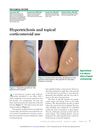 February 2022 in “Cleveland Clinic Journal of Medicine”
 This case report observed hypertrichosis on the left forearm of an 80-year-old woman, possibly linked to her previous use of the topical steroid betamethasone butyrate propionate for dermatitis.
 September 2023 in “Journal of the American Academy of Dermatology”
 Topical tofacitinib helped a man with severe scalp condition after other treatments failed.
14 citations
,
June 2014 in “World Journal of Urology” This study found that the herbal combination PRO 160/120 significantly improved nocturnal voiding frequency in patients with moderate-to-severe LUTS/BPH compared to placebo, with similar effectiveness to tamsulosin and finasteride.
11 citations
,
November 1996 in “Pediatric dermatology” This paper reviews trichostasis spinulosa and presents a case in a 13-year-old girl, providing no new clinical research results.
5 citations
,
February 2017 in “Cochrane library” This review discusses various topical medication instillation techniques for managing glaucoma but reports a lack of evidence on their effectiveness compared to usual care.
 22 citations
,
November 2018 in “Brazilian Journal of Pharmaceutical Sciences”
22 citations
,
November 2018 in “Brazilian Journal of Pharmaceutical Sciences” This review discusses iontophoresis, low-frequency ultrasound, and microneedles for enhancing topical drug delivery in dermatological treatments and reports no clinical results; it emphasizes their mechanisms and potential uses.
 February 2022 in “Scientia Pharmaceutica”
 This study validated that six out of seven tested topical formulations for alopecia are compatible for 6-month use, suggesting they may be practical for compounding pharmacies.
In this study, 1% pimekrolimus cream was found to be more effective than 0.05% clobetasol propionate for treating active plaques in patients with alopecia areata.
August 2020 in “International Journal of Medical Arts (Print)” This study found that topical cetirizine 1% may be effective in treating androgenetic alopecia in men, with some patients experiencing new hair growth compared to none in the placebo group.
 1 citations
,
April 2017 in “Journal of Investigative Dermatology”
1 citations
,
April 2017 in “Journal of Investigative Dermatology” This study evaluated the effects of topical glucocorticoids on human skin using non-invasive imaging methods and observed changes such as alterations in skin layer thickness, keratinocyte size, and collagen and elastin signal intensity.
February 2026 in “Contact Dermatitis” This study reports a case of phytodermatitis in a 58-year-old male due to exposure to Axonopus compressus, commonly known as carpet grass, during open defecation, highlighting an unusual cause of contact dermatitis linked to sanitation practices.
 September 2023 in “Small animal advances”
 This case report from Veterinary Clinical Complex, Kurumbapet, India, described a kitten with superficial dermatophytosis caused by Microsporum spp., which was successfully treated using itraconazole syrup, cetirizine, and a liver-supportive syrup, achieving complete recovery by the third week without adverse effects.
 48 citations
,
November 2017 in “Journal of the American Academy of Dermatology”
48 citations
,
November 2017 in “Journal of the American Academy of Dermatology” Tofacitinib 2% ointment helped hair regrow in 3 out of 10 patients with alopecia areata, but caused side effects like scalp irritation and raised cholesterol in some.
 April 2018 in “The journal of investigative dermatology/Journal of investigative dermatology”
 This phase 2a trial evaluated Samcyprone for common wart treatment and found that while a sensitization reaction is necessary for therapeutic response, its level does not predict wart clearance.
 April 2017 in “Journal of Investigative Dermatology”
 This study found that a single dose of TRP significantly reduced the number of UV-B-induced actinic keratosis lesions in a mouse model and was associated with improved skin histology and minimal side effects.
March 2023 in “Ukrainian Journal of Dermatology Venerology Cosmetology” In this article, the authors detail their experience with AltrenoTM, a new topical retinoid lotion used for treating mild to moderate acne, reporting clinical effectiveness and satisfactory tolerability among patients of various ages, including children as young as 9.
 1 citations
,
June 2023 in “Cureus”
1 citations
,
June 2023 in “Cureus” In a retrospective study, researchers found that topical spironolactone improved tear film quality and reduced inflammation related to meibomian gland dysfunction and evaporative dry eye in patients, demonstrating good tolerability and suggesting it as a potential therapy for managing the condition.
 2 citations
,
January 2020 in “Einstein (São Paulo)”
2 citations
,
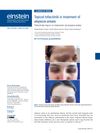
January 2020 in “Einstein (São Paulo)” This review discusses the potential of Janus kinase inhibitors as a promising new treatment for alopecia areata, suggesting they could become a first-line therapy in the future, but reports no new clinical results.
This study found that a 2% spironolactone cream, applied topically for 3 months, did not reduce hair growth in patients with facial hirsutism compared to untreated areas.
 3 citations
,
March 2019 in “Journal of Pigmentary Disorders”
3 citations
,
March 2019 in “Journal of Pigmentary Disorders” This presentation highlighted future directions in acne care, emphasizing the roles of topical and oral antibiotics, as well as skin microbiome studies. It also described how clascoterone targets androgen receptors in hair follicles and sebaceous glands to reduce sebum production.
49 citations
,
November 2013 in “JAMA dermatology” This study found that topical clobetasol propionate cream was more effective than hydrocortisone cream in reducing hair loss surface area in children with patchy alopecia areata over 24 weeks, with no serious adverse effects.
 September 1995 in “American Journal of Contact Dermatitis”
 Antiyeast treatments work better for seborrheic dermatitis than steroids, and other findings include increased skin bacteria under plastic wrap, a nasal cell defect in Staphylococcus aureus carriers, quick resolution of certain skin reactions, high rubber latex allergy in spina bifida patients, and glyceryl monopentadecanoate's effectiveness for male hair loss.
 October 2024 in “Iraqi postgraduate medical journal”
 This study conducted at Baghdad Teaching Hospital found that topical applications of Ciprofloxacin and Clindamycin effectively reduced acne severity indices in patients with mild to moderate acne vulgaris over 12 weeks, with Ciprofloxacin showing a greater reduction in papules and pustules compared to Clindamycin.
 146 citations
,
July 2003 in “Journal of the American Academy of Dermatology”
146 citations
,
July 2003 in “Journal of the American Academy of Dermatology” In this study, clobetasol propionate 0.05% ointment was found to induce hair regrowth in 28.5% of patients with severe alopecia areata under occlusive conditions, though long-term benefit was limited to 17.8%.
January 2014 in “Indian dermatology online journal” This article reviews various treatments for leg ulcers, emphasizing therapies like compression, NPWT, HBOT, and potential future avenues like stem cells, but it does not report new research results.