 October 2000 in “Pediatrics in Review”
 This report describes a case in which poststreptococcal reactive arthritis in a girl was effectively treated with naproxen, and highlights the importance of considering nongroup A Streptococcus in similar presentations.
 105 citations
,
January 2010 in “Mediators of Inflammation”
105 citations
,
January 2010 in “Mediators of Inflammation” This article reviews the role of skin surface lipid in mediating environmental stressors and discusses potential therapeutic interventions, reporting no new experimental findings.
 15 citations
,
June 2019 in “Journal of Neuroendocrinology”
15 citations
,
June 2019 in “Journal of Neuroendocrinology” This study found that isoallopregnanolone reduced stress-induced tic-like behaviors and sensorimotor gating deficits in a mouse model of Tourette syndrome, suggesting potential therapeutic properties comparable to existing treatments like haloperidol and finasteride.
December 2012 in “http://isrctn.org/>”  1 citations
,
July 2022 in “The journal of investigative dermatology/Journal of investigative dermatology”
1 citations
,
July 2022 in “The journal of investigative dermatology/Journal of investigative dermatology” In this open-label trial, Tofacitinib was well tolerated and improved IFN and cytokine scores, as well as overall skin pathology, in individuals with Down syndrome and immune skin conditions.
52 citations
,
February 2012 in “PloS one” This study found that the absence of Ctip2 in epidermal keratinocytes led to impaired wound healing in mice, affecting cell migration, proliferation, and hair follicle stem cell maintenance.
 February 2026 in “BMC Plastic and Reconstructive Surgery”
 This review suggests that induced pluripotent stem cells (iPSCs) hold promise for treating chronic wounds, but further work is needed to address safety, efficacy, and translation from preclinical models to real-world applications.
 40 citations
,
April 2018 in “Endocrine”
40 citations
,
April 2018 in “Endocrine” This review discusses post-SSRI sexual dysfunction and post-finasteride syndrome, highlighting unknowns about their true incidence and underlying causes, and reports no new clinical results.
26 citations
,
June 2024 in “Frontiers in Immunology” The authors discussed that SOCS1 and SOCS3's inhibition of JAKs plays a significant role in the development of JAK inhibitor drugs for skin inflammatory diseases and malignancies.
 September 2018 in “Fertility and Sterility”
 This study observed that inflammatory stimuli significantly altered gene expression in rat theca-interstitial cells, affecting pathways related to growth and androgen production, which are central features of polycystic ovary syndrome.
 March 2022 in “Berkala Ilmu Kesehatan Kulit dan Kelamin/Berkala ilmu kesehatan kulit dan kelamin (Periodical of dermatology and venerology)”
 This study found that nearly half of the tinea capitis patients at a Surabaya hospital had cat contact, with the most common symptoms being crust and hair loss.
 August 2017 in “Journal of Investigative Dermatology”
 Activin increases skin tumor formation, skin Tregs help hair growth, lymph-node removal doesn't improve melanoma survival, cells can revert to stem cells in wound healing, and skin bacteria produce peptides that may treat infections.
February 2016 in “Journal of Allergy and Clinical Immunology” This report highlights a case of disseminated and recurrent infundibulofolliculitis in a 45-year-old African American male and underscores the importance of performing a skin biopsy for diagnosis.
1 citations
,
April 2008 in “Experimental Dermatology” This paper reviews hidradenitis suppurativa, comparing its clinical and histopathological characteristics to acne, questioning the proposed link to terminal hair follicles, and reports no new results.
 1 citations
,
April 2017 in “Journal of Investigative Dermatology”
1 citations
,
April 2017 in “Journal of Investigative Dermatology” This study found that teledermatology significantly reduced wait times and increased appointment availability for uninsured Latino immigrants, effectively triaging 70% of cases without in-person visits.
14 citations
,
May 2017 in “Journal of Investigative Dermatology” This study reports a novel homozygous mutation in the DST gene causing a unique form of epidermolysis bullosa simplex with prurigo papules in a 39-year-old Syrian man.
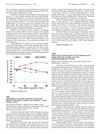 April 2010 in “The Journal of Urology”
 Human prostate cells produce more WISP1/CCN4 when there's not enough oxygen.
179 citations
,
December 1989 in “Medical Entomology and Zoology” This article provides a comprehensive review of ichthyoses, including their classification, biochemistry, associated syndromes, and therapeutic approaches, but reports no new clinical findings.
 June 2020 in “Journal of Dermatological Treatment”
 This source outlines the potential effects of treatments commonly used in trichology on SARS-CoV-2 infection and offers a guide for managing trichological patients during the COVID-19 era, addressing the challenges of safely visiting and treating patients.
3 citations
,
September 2024 in “Experimental Dermatology” This study found elevated levels of IL-18 and free IL-18 in hidradenitis suppurativa patients compared to healthy controls, suggesting these cytokines may serve as novel biomarkers for disease activity, with correlations indicating their involvement in disease severity.
 December 2025 in “International Journal of Innovative Technologies in Social Science”
 This study systematically reviewed dermatological conditions affecting transgender and gender-diverse individuals, highlighting that testosterone therapy can induce acne in 25–88% of transgender men and alopecia after over two years, while dermatologic care must consider both medical and social complexities.
3 citations
,
January 2022 in “Burns & Trauma” This study found that CTHRC1 is crucial for sweat gland function and vascular network integrity in mice, and its administration improved sweat gland performance by reconstructing nearby blood vessels.
 101 citations
,
July 2020 in “Dermatologic therapy”
101 citations
,
July 2020 in “Dermatologic therapy” This systematic review reports that "COVID toes" and other skin manifestations can be initial signs of COVID-19, and advises immunosuppressive therapy adjustments only for infected or at-risk patients.
May 2022 in “Journal of Cutaneous Immunology and Allergy” This case report highlights that asymptomatic domestic cats can transmit Microsporum canis, leading to tinea capitis in humans, as seen in a four-year-old girl in the study.
2 citations
,
December 2023 in “International journal of molecular sciences” This review highlights how wound microbiota, particularly bacteria like Staphylococcus epidermidis and Staphylococcus aureus, significantly influences wound healing dynamics and suggests potential clinical applications through microbiota manipulation.
 November 2023 in “Curēus”
 This study in Saudi Arabia found that psychological stress was strongly linked to skin symptoms, with conditions like psoriasis, eczema, acne, rash, and baldness showing significant associations, highlighting the importance of considering stress levels when diagnosing skin issues.
 April 2016 in “Journal of The American Academy of Dermatology”
 Certain skin diseases are linked to Agent Orange and similar chemicals; veterans should be screened and informed about uncertain risks, and current data doesn't link spironolactone with breast cancer.
This abstract compiles a list of medical syndromes and conditions related to tongue abnormalities and other systemic features but reports no new research findings.
30 citations
,
January 2020 in “Fertility and Sterility” This review discusses the evidence for post-finasteride syndrome as a condition potentially induced by finasteride and dutasteride, associating them with sexual dysfunction, depression, anxiety, and suicidal ideation in a subset of men, and reports no new clinical results.