18 citations
,
October 2009 in “Endocrinology” This study demonstrated that both HR isoforms are expressed in keratinocytes, but HRDelta1072-1126 lacks corepressor activity and may act as a coactivator by inhibiting HDAC recruitment to the VDR transcriptional complex.
 91 citations
,
May 2005 in “The Journal of Clinical Endocrinology & Metabolism”
91 citations
,
May 2005 in “The Journal of Clinical Endocrinology & Metabolism” In this study, a novel mutation in the glucocorticoid receptor gene was identified in a young woman, impairing glucocorticoid signaling and leading to generalized glucocorticoid resistance.
 451 citations
,
March 2005 in “Endocrine Reviews”
451 citations
,
March 2005 in “Endocrine Reviews” This paper discusses the role of steroid sulfatase in hormone-dependent tumors and highlights the development of potent inhibitors, noting the commencement of a phase I trial for one inhibitor in postmenopausal breast cancer patients.
June 2011 in “Portuguese National Funding Agency for Science, Research and Technology (RCAAP Project by FCT)” The researchers reported that both estrogen receptors ERα and ERβ are expressed in human testis, and identified two novel genes, Aven and Regucalcin, linked to estrogen and androgen regulation, which may be crucial for spermatogenesis.
1 citations
,
August 2019 in “Journal of Investigative Dermatology” PRDX5 enzyme may contribute to alopecia areata by affecting oxidative stress and autoimmunity.
 2 citations
,
November 2018 in “Indian Journal of Pharmaceutical Education”
2 citations
,
November 2018 in “Indian Journal of Pharmaceutical Education” This study designed a novel model for 5a-reductase enzyme inhibitors using pharmacophore and 3D QSAR techniques, potentially allowing for improved prediction and development of drug therapies targeting benign prostatic hyperplasia.
January 2026 in “Dermatologic Therapy” This study found that elevated tissue RBP4 levels correlate with disease severity in alopecia areata and decrease after effective baricitinib treatment, while the rs3758539 polymorphism is linked to disease susceptibility but not to treatment response.
 47 citations
,
June 2009 in “Journal of Biological Chemistry”
47 citations
,
June 2009 in “Journal of Biological Chemistry” This study found that finasteride competitively inhibits the enzyme AKR1D1 with low micromolar affinity but does not act as a mechanism-based inactivator.
28 citations
,
February 2010 in “Experimental Dermatology” This study concluded that the frizzy mutation in mice is linked to a T to A transversion in Prss8 and is orthologous to the 'hairless' mutation in rats.
 19 citations
,
September 2011 in “Journal of Dermatological Science”
19 citations
,
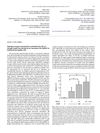
September 2011 in “Journal of Dermatological Science” TGF-β1 increases androgen receptor activity in hair loss, but Hic-5/ARA55 can counter this effect.
23 citations
,
March 2019 in “Gene” In this study, researchers found that the evolutionary and structural features of the oFGF5 gene in sheep may influence hair follicle development and hair growth regulation.
34 citations
,
September 1997 in “Acta Dermato Venereologica” This study found that RXR agonists stimulated human hair follicle growth and survival in vitro, suggesting potential for promoting hair growth in humans.
 1 citations
,
March 2023 in “Frontiers in Cardiovascular Medicine”
1 citations
,
March 2023 in “Frontiers in Cardiovascular Medicine” A specific gene variant is linked to heart disease, increased heart muscle, curly hair, and thick skin on palms and soles.
 20 citations
,
June 1995 in “Tetrahedron Letters”
20 citations
,
June 1995 in “Tetrahedron Letters” This study reported that newly synthesized phenanthridin-3-one derivatives effectively inhibit human steroid 5-α-reductase.
 April 2024 in “bioRxiv (Cold Spring Harbor Laboratory)”
 In this study, researchers identified a gene regulatory network in Arabidopsis that controls root hair growth under low-temperature conditions, revealing specific transcription factors and downstream targets that contribute to this growth response despite overall plant development being halted.
20 citations
,
January 2004 in “PubMed Central” This article reviews the use of 5α-reductase inhibitors for treating benign prostatic hyperplasia, suggesting potential benefits beyond symptom relief, but it reports no new clinical results.
 100 citations
,
May 2003 in “Journal of Neuroscience”
100 citations
,
May 2003 in “Journal of Neuroscience” This study found that neuroactive steroids like DHEA and pregnenolone influence cocaine-induced appetence in mice through their interaction with the ς1 receptor, suggesting a role in individual vulnerability to addiction.
July 2024 in “Journal of Investigative Dermatology” In these two clinical trials, DS-2325a, a KLK5 inhibitor, was found to be generally safe and well tolerated in healthy volunteers, with mild and non-serious adverse events, suggesting its potential for further development as a treatment for Netherton Syndrome.
18 citations
,
December 2005 in “Journal of Medicinal Chemistry” In this study, novel substituted benzoyl benzoic acids and phenylacetic acids were potent and selective inhibitors of human steroid 5alpha-reductase type 2, with one compound showing promising bioavailability in rats for potential clinical evaluation.
57 citations
,
April 2009 in “The Journal of Steroid Biochemistry and Molecular Biology” This study found that despite the presence of steroidogenesis inhibitors, CRPC tumor cells adapt to continue synthesizing androgens, suggesting a need for more effective androgen axis targeting.
36 citations
,
July 2005 in “Journal of Neuroendocrinology” This study suggests that both the central biosynthesis and metabolism of progesterone to 3α,5α‐THP in the ventral tegmental area are crucial for facilitating lordosis in female rats.
23 citations
,
March 2014 in “International Journal of Molecular Sciences” The study observed that testosterone reduced knee range of motion in ovariectomized female rats, potentially by downregulating specific relaxin receptor isoforms, with its effects mediated via dihydro-testosterone.
 29 citations
,
July 2009 in “BJU international”
29 citations
,
July 2009 in “BJU international” This review examines the pharmacological properties and potential clinical benefits of 5α‐reductase inhibition in prostate cancer but reports no new research findings.
October 2024 in “Journal of the Endocrine Society” This case report highlights that a patient with resistance to thyroid hormone was misdiagnosed as having Graves’ disease, leading to unnecessary radioactive iodine treatment.
 48 citations
,
February 2013 in “Molecular and Cellular Endocrinology”
48 citations
,
February 2013 in “Molecular and Cellular Endocrinology” This review discusses the presence of the StAR protein in 17 non-classical steroidogenic tissues, suggesting that advanced detection methods are needed for a complete understanding of its functions in these tissues.
 1 citations
,
September 2021 in “Cureus”
1 citations
,
September 2021 in “Cureus” This study found that the rs1128977 SNP in the RXRG gene may be linked to altered clinical characteristics such as higher HDL-cholesterol levels and increased body mass index in individuals with dyslipidemia.
9 citations
,
May 2002 in “PubMed” This study demonstrated that mice lacking skin-specific RXRalpha expression developed hair follicle degeneration and alopecia, indicating the importance of RXRalpha/VDR heterodimers in maintaining hair follicle homeostasis.
59 citations
,
January 1976 in “Vitamins and hormones” This chapter discusses androgen receptors and protein synthesis in the prostate, reporting that DHT-dependent receptor protein translocation increases protein-synthesizing activity after androgen injection in rat models.
27 citations
,
July 2008 in “The Journal of Steroid Biochemistry and Molecular Biology” The new compounds may be more effective and cheaper than current treatments for conditions like baldness.
 14 citations
,
September 2018 in “The journal of allergy and clinical immunology/Journal of allergy and clinical immunology/The journal of allergy and clinical immunology”
14 citations
,
September 2018 in “The journal of allergy and clinical immunology/Journal of allergy and clinical immunology/The journal of allergy and clinical immunology” In this study, a novel homozygous mutation in the STAT5B gene was identified in a 17-year-old boy with growth hormone-refractory growth failure, severe eczema, and autoimmune disease, suggesting a similarity to known STAT5B deficiency phenotypes.