 78 citations
,
June 2013 in “Science”
78 citations
,
June 2013 in “Science” This study found that mice lacking the Sept4/ARTS gene had more hair follicle stem cells and improved wound healing, suggesting apoptosis regulation as a potential target in regenerative medicine.
April 2018 in “Clinical and Experimental Health Sciences” This study found that a school-based nutritional program improved adolescents' waist measurements, blood counts, and reduced rates of certain skin and mucosal conditions associated with vitamin deficiency.
5 citations
,
January 2009 in “International Journal of Trichology” This case report documents a rare association between atopic eczema and pili annulati in two siblings from north India, an unusual finding not previously reported in the literature.
April 2018 in “The journal of investigative dermatology/Journal of investigative dermatology” This commentary discusses the crucial role of the alternative splicing factor Esrp1 in maintaining skin barrier function and its association with skin diseases like atopic dermatitis and psoriasis, but reports no new clinical results.
 103 citations
,
March 2015 in “Nature Communications”
103 citations
,
March 2015 in “Nature Communications” This study identified a genetic locus associated with idiopathic scoliosis in females, which might influence spinal gene expression and was previously linked to protection from early-onset alopecia.

Trichodysplasia spinulosa can occur after a heart transplant due to immunosuppressive drugs.
This study found that human hair follicle cells suppress immune activity, with somatostatin playing a significant role, suggesting potential applications for treating inflammatory hair loss conditions.
 19 citations
,
December 2006 in “Archives of dermatology”
19 citations
,
December 2006 in “Archives of dermatology” This notice provides information about JAMA Dermatology's website usage policy, and no research findings are reported.
 January 2022 in “Yonsei Medical Journal”
 This study found that oral spironolactone improved certain biomarkers in central serous chorioretinopathy patients, but recurrence, especially in older patients, was relatively common.
 July 2008 in “Journal of Intellectual Property Law & Practice”
 The UK Intellectual Property Office allows granting of supplementary protection certificates with negative terms.
 April 2026 in “Zenodo (CERN European Organization for Nuclear Research)”
 This study examines how conditions like PSSD, Long COVID, and ME/CFS form a "Post-Exposure Syndromes" family, initiated by transient exposures but persisting due to complex state-space dynamics, and suggests improving pharmacovigilance to better address and understand these persistent syndromes.
In this study, Sox13 was identified as a novel marker for early hair follicle development and differentiation in mice, though it appears to be dispensable for overall epidermal and adnexal development.
 1 citations
,
January 2022 in “Baylor University Medical Center Proceedings”
1 citations
,
January 2022 in “Baylor University Medical Center Proceedings” This review discusses the diagnosis and treatment approaches for alopecia syphilitica and reports no new clinical findings.
 February 2026 in “Zenodo (CERN European Organization for Nuclear Research)”
 This study reports that spironolactone, a potassium-sparing diuretic with antiandrogenic activity, effectively improves hair density, reduces shedding, and stabilizes symptoms in female pattern hair loss, though symptoms often recur after discontinuation, suggesting the need for sustained therapy.
 28 citations
,
January 2008 in “Journal of medical investigation”
28 citations
,
January 2008 in “Journal of medical investigation” This study found that Sp6 overproduction in ameloblast-lineage cells increased cell proliferation and ameloblastin expression, suggesting that Sp6 promotes amelogenesis by inhibiting follistatin gene expression.
 3 citations
,
March 2024 in “International Journal of Women’s Dermatology”
3 citations
,
March 2024 in “International Journal of Women’s Dermatology” This study observed that spironolactone improved hidradenitis suppurativa in over 80% of female patients at 3 and 6 months, with no significant differences in response due to menstrual flares or polycystic ovarian syndrome, but mild adverse events were reported.
October 2009 in “Nature Reviews Urology”  April 2017 in “IOSR journal of dental and medical sciences”
 This abstract discusses Netherton Syndrome, a genetic disorder with a characteristic triad of symptoms caused by SPINK5 gene mutation, and reports no new clinical findings or treatment advances.
7 citations
,
October 1992 in “PubMed” This study investigated peptidergic nerve fibers in sinus hair follicles of various mammals and found that CGRP fibers were more densely distributed than SP fibers across different regions of the follicles.
 125 citations
,
September 2001 in “The FASEB Journal”
125 citations
,
September 2001 in “The FASEB Journal” This study demonstrated that stress inhibited hair growth in mice, likely through substance P-dependent activation of immune cells, highlighting a brain-hair follicle connection.
1 citations
,
July 2024 in “Indian Journal of Sexually Transmitted Diseases and AIDS” In this study, a 38-year-old male with syphilis-related mixed pattern alopecia showed marked hair regrowth and resolution of postauricular lymphadenopathy after treatment with benzathine penicillin, suggesting that lymph node and hair examinations, along with trichoscopy, can aid in the diagnosis of alopecia syphilitica.
 July 2016 in “Experimental Dermatology”
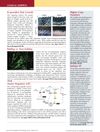
 This article provides clinical snippets from Experimental Dermatology and reports no new research findings.
April 2018 in “Journal of Investigative Dermatology” African spiny mice can regenerate skin and hair after wounds due to specific tissue mechanics.
 6 citations
,
January 2016 in “Evidence-based complementary and alternative medicine”
6 citations
,
January 2016 in “Evidence-based complementary and alternative medicine” In this study, saw palmetto supplements showed varied effects on cell growth in vitro and did not significantly inhibit growth in the hamster flank organ model despite a notable trend.
January 2026 in “British Journal of Clinical Pharmacology” In this study, reports from individuals using Serenoa repens indicated a possible post-Serenoa syndrome characterized by persistent sexual and neuropsychiatric symptoms, with causality assessed as 'probable' in 54% of cases, highlighting an underrecognized safety concern that warrants further investigation.
26 citations
,
April 2007 in “Journal of clinical oncology” 1 citations
,
March 2023 in “Pharmaceutics” This study found that PBMCsec has anti-fibrotic effects on mouse and human skin scars by regulating pro-fibrotic gene expression and inhibiting myofibroblast differentiation and elastic fiber breakdown.
 April 2023 in “Journal of Investigative Dermatology”
 This study found that patients with Stevens-Johnson syndrome and toxic epidermal necrolysis exhibit lower levels and activity of DNase1, impairing NET degradation, and suggests DNase1 administration as a potential treatment.
 9 citations
,
June 2021 in “International Journal of Pharmaceutics”
9 citations
,
June 2021 in “International Journal of Pharmaceutics” This study found that polymeric micelle nanocarriers delivered pharmacologically relevant amounts of spironolactone to the epidermis and upper dermis, with higher delivery to pilosebaceous units, suggesting potential for treating glucocorticoid-induced impaired wound healing and pilosebaceous androgen-related skin diseases.