 13 citations
,
September 2016 in “Cosmetics”
13 citations
,
September 2016 in “Cosmetics” This review discusses the components and effects of various hair cosmetic procedures and explores new techniques like camouflage methods and tattoo scalp, without reporting new clinical results.
 13 citations
,
November 2012 in “International Journal of Dermatology”
13 citations
,
November 2012 in “International Journal of Dermatology” This study of African-American women found that those perceiving greater hair breakage showed lower break stress and higher premature failure rates, linked to grooming practices and hair curvature.
 9 citations
,
April 2019 in “Journal of structural biology”
9 citations
,
April 2019 in “Journal of structural biology” This study found that coconut oil impedes hair hydration more effectively than soybean oil by penetrating deeper, and suggested a new model for intermediate filament assembly in hair.
 5 citations
,
October 1984 in “The BMJ”
5 citations
,
October 1984 in “The BMJ” Up to 50% of scalp hair can be lost before it appears thin, and treatment is only needed for hair loss caused by diseases or deficiencies.
 4 citations
,
February 2025 in “Clinical Cosmetic and Investigational Dermatology”
4 citations
,
February 2025 in “Clinical Cosmetic and Investigational Dermatology” This study observed that hair characteristics significantly impact daily life, self-image, and well-being, varying by gender, ethnicity, and country, suggesting a need for interventions to address these psychological and social effects.
 4 citations
,
February 2020 in “Journal of Cosmetic Dermatology”
4 citations
,
February 2020 in “Journal of Cosmetic Dermatology” This study found that androgenetic alopecia was the most common cause of frontal hairline recession in Egyptian female patients, supporting the use of trichoscopy as a noninvasive diagnostic tool.

This chapter provides an overview of the complex chemical and physical structure of the hair surface, detailing how factors like ethnicity, environmental stress, and cosmetic treatments can alter its properties and influence the adhesion of hair care products.
 July 2026 in “International Research Journal of Modernization in Engineering Technology and Science”
 This study found that a newly formulated herbal shampoo showed acceptable physicochemical characteristics and effective cleansing properties, suggesting it as a promising alternative to synthetic shampoos.
 May 2026 in “International Journal of Pharmacognosy and Life Science”
 This research evaluated a polyherbal powder shampoo using natural ingredients, finding it to be a stable, effective, and safe alternative to chemical-based shampoos, with no irritation and good usability.
 January 2026 in “International journal of research and scientific innovation”
 This study reviewed a traditional siddha hair treatment using quail bone ash and sesame oil, observing reduced hair fall and stimulation of new growth, though it suggests further scientific and clinical validation is needed for these findings.
 December 2025 in “The American Journal of Medical Sciences and Pharmaceutical Research”
 This study outlines how combined ultrasonic and infrared hair treatments may enhance hair restoration and performance by breaking down keratin disulfide bonds for better treatment access and sealing cuticle scales to preserve improvements, with potential applications in salon and home settings.
 November 2025 in “International Journal for Research in Applied Science and Engineering Technology”
 This review discusses the development and benefits of herbal shampoos, highlighting their natural components' safety and effectiveness for hair care, and underlines the importance of scientific validation and regulatory considerations to enhance their global market acceptance.
 October 2025 in “International Journal of Research and Review”
 This study highlights the potential benefits of herbal soaps and shampoo bars as eco-friendly alternatives to conventional cosmetics, noting their antibacterial, antifungal, and antioxidant properties as well as sustainability advantages such as reduced plastic use and avoidance of synthetic chemicals.
 August 2025 in “International Journal of Advanced Research in Science Communication and Technology”
 In this study, researchers aimed to develop a herbal shampoo by replacing harmful synthetic ingredients with natural alternatives to improve safety and effectiveness, targeting issues like hair loss and scalp irritation often associated with traditional shampoos.
In this study, researchers formulated and evaluated herbal hair serums incorporating natural ingredients like flax seed, fenugreek, and castor oil, finding that the best formulation supported hair growth with minimal side effects compared to existing herbal serums.

This study discusses a natural hair care shampoo formulated with ingredients such as Ritha, aloe Vera, and Amla fruit, designed to clean hair, eliminate oil and dandruff, and promote strength, blackness, and growth.
 January 2025 in “INTERANTIONAL JOURNAL OF SCIENTIFIC RESEARCH IN ENGINEERING AND MANAGEMENT”
 This abstract highlights the increasing significance of herbal hair conditioners, which blend traditional plant-based ingredients with modern hair care needs, offering benefits like nourishing and protecting hair without harsh chemicals, and meeting consumer preferences for eco-friendly, organic products in the beauty industry.
 December 2024 in “International Journal on Science and Technology”
 In this study, researchers prepared a poly herbal hair oil using fresh plant leaves, including neem, and reported that these herbal formulations exhibit effective hair growth with fewer side effects compared to synthetic alternatives.
 July 2024 in “International Journal of Dermatology Venereology and Leprosy Sciences”
 This review highlights the increasing use of trichoscopy, a noninvasive and well-tolerated diagnostic tool, to aid in the accurate diagnosis and management of various pediatric hair and scalp conditions, such as alopecia and other abnormalities.
 June 2024 in “International Journal for Research in Applied Science and Engineering Technology”
 This study aimed to formulate and evaluate a herbal hair gel using flax seed and aloe vera for promoting hair development and combating dandruff, finding that one formulation maintained long-term stability and antifungal efficacy.
 June 2024 in “International Journal For Multidisciplinary Research”
 This study aims to develop and evaluate herbal shampoo powder made from natural ingredients, focusing on its efficacy in removing debris and dandruff, enhancing hair development and shine, and strengthening and darkening hair. Results are not reported.
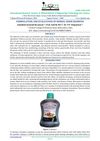 January 2024 in “International Research Journal of Modernization in Engineering Technology and Science”
 This study formulated a poly-herbal shampoo using ingredients like hibiscus, neem, and alo-vera and evaluated its cosmetic properties, reporting positive organoleptic and physico-chemical characteristics, with the potential for safe use as a hair cleansing and conditioning product.
 January 2024 in “International Journal of Clinical Pharmacokinetics and Medical Sciences”
 The researchers in this study suggest that using plant-based hair serums, which combine herbs and botanical phytochemicals, can enhance therapeutic benefits for hair and skin, offering improvements like deep nutrition, skin suppleness, and UV protection compared to individual herb use.
 December 2023 in “International journal of research in dermatology”
 This study found that using 'moha: 5-in-1' hair oil for 8 weeks significantly reduced hair fall, increased hair growth rate and thickness, and decreased scalp dandruff among healthy adults with alopecia, with no adverse effects reported.
 September 2023 in “International journal of Unani and integrative medicine”
 In this study, researchers observed a possible correlation between hair loss patterns and Mizaj (temperament) types, suggesting that hair loss patterns might serve as a diagnostic index for identifying individual temperaments according to the Unani system of medicine.
 July 2023 in “International journal of pharmacognosy and life science”
 This study explores the development of a herbal hair oil formulation using selected herbs to potentially address hair loss and related issues, as an alternative to synthetic medications that may cause serious side effects and offer limited effectiveness.
 November 2017 in “Koubunshi rombunshuu/Kōbunshi ronbunshū”
 In this study, treatments using a shampoo and conditioner with hematin helped repair damaged hair by depositing a cuticle-like structure, straightening hair as observed through electron microscopy.
 May 2017 in “InTech eBooks”
 This article describes various hair and scalp examination techniques, including noninvasive, semi-invasive, and invasive methods, noting that trichoscopy is a simple, well-accepted, noninvasive technique for evaluating hair loss patients and monitoring treatment.
 January 2015 in “Springer eBooks”
 Hair health is influenced by genetics, aging, and environmental factors, with proper care needed to maintain it.
 3 citations
,
September 2002 in “Dermatologic Surgery”
3 citations
,
September 2002 in “Dermatologic Surgery” This study presents an evaluation system that helps hair restoration surgeons better identify candidates for alopecia-reducing procedures, resulting in more consistently good outcomes by excluding poor and borderline candidates.