 June 2026 in “International Journal of Bioprinting”
 This review found that 3D bioprinting significantly advances skin tissue engineering by enabling the creation of complex, patient-specific skin structures, though technological and regulatory challenges persist, particularly in areas like scalability and physiological mimicry.
 June 2026 in “Gümüşhane Üniversitesi Fen Bilimleri Enstitüsü Dergisi”
 This study observed that biodegradable PVA/agar films with incorporated Achillea millefolium L. essential oil, especially at 1% (v/v), demonstrated good mechanical performance and selective antibacterial activity against E. coli, suggesting their potential as wound dressings.
 June 2026 in “Studia Biologica”
 This study found that in semi-coarse wool sheep of the Ukrainian Carpathian Mountain breed, changes in microflora and grease composition are linked to increased felting in wool, due to wetter, more alkaline fleece conditions that promote bacterial and mold growth and alter fatty acid balances.
 May 2026 in “Organoid Research”
 This review discusses recent advancements in hair follicle organoid technology for alopecia treatment but presents no new experimental results, emphasizing the potential for clinical applications and drug screening.
 May 2026 in “Commagene Journal of Biology”
 This review found that anti-aging peptides show promise in cosmeceuticals due to their targeted actions to rejuvenate skin, but challenges like peptide stability, penetration, and limited clinical data limit their current effectiveness.
 May 2026 in “International Journal of Versatile Research and Analysis”
 This study used air wedge interferometry to measure the thickness of human scalp hair from three individuals, finding average thicknesses of 66.482 µm, 59.355 µm, and 59.927 µm respectively, within the typical range for adults.
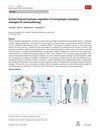
This review highlights that surface mechanical regulation can program macrophage behavior through specific mechanical cues on material surfaces, potentially advancing immunotherapies and regenerative medicine by enabling precise control over macrophage functions.
 April 2026 in “International Journal of Drug Delivery Technology”
 This study discusses advancements in nanotechnology and theranostic dressings, which may significantly improve chronic wound care by effectively targeting biofilms and enabling real-time monitoring, although obstacles to broad applicability and sustainability remain.
 April 2026 in “International Journal of Drug Delivery Technology”
 In this study, phytochemical analysis and molecular docking suggested that bioactive compounds in several Ayurvedic herbs may interact persistently with hair growth and antifungal protein targets, indicating potential as plant-based treatments for dandruff and hair loss.
 April 2026 in “International Journal of Nanomedicine”
 This review explores quercetin's potential in multifunctional theranostic systems, highlighting its bioactivity and the challenges of improving its clinical application through innovative strategies like nanoencapsulation, while noting that research in this area is underdeveloped.
 March 2026 in “Tissue Engineering and Regenerative Medicine”
 In this review, the authors discuss recent advancements in underwater adhesion technologies, specifically highlighting mussel-inspired catechol-based adhesives, which offer strong underwater bonding through various interfacial interactions and the influence of dopamine-modified polymeric tissue adhesives.
 March 2026 in “Trends in Sciences”
 This review suggests that while platelet-rich plasma has the most robust clinical evidence, platelet-rich fibrin and concentrated growth factors are gaining favor due to their ease of use and absence of additives.
 February 2026 in “Frontiers in Materials”
 In this study, researchers developed iron-curcumin-coordinated nanoparticles to enhance curcumin's bioavailability and therapeutic effects, finding that these nanoparticles accelerate wound healing in diabetic mice by reducing inflammation and oxidative stress more effectively than free curcumin.
 February 2026 in “Frontiers in Bioengineering and Biotechnology”
 This review discusses the development of liposome-based delivery systems to enhance skin wound healing, highlighting their advantages and potential applications, but reports no new clinical results.
 February 2026 in “American Scientific Research Journal for Engineering, Technology, and Sciences (Global Society of Scientific Research and Researchers)”
 This study analyzed gray hair, revealing that it differs from pigmented hair in follicular activity, oxidative balance, and structure, impacting coloring processes and necessitating adapted techniques to maintain hair quality.
 January 2026 in “Frontiers in Immunology”
 This review highlights icariin’s potential to regulate macrophages in varying conditions, discussing its effects on macrophage polarization, metabolism, and disease mechanisms, and noting the development of delivery systems to enhance its therapeutic impact.
 January 2026 in “The Eurasian Journal of Life Sciences”
 This review discusses recent advances in the development of electrospun pectin nanofibers for biomedical applications, highlighting strategies to improve their mechanical properties and biological functions and addressing challenges like material variability and regulatory issues.
 January 2026 in “Microsystems & Nanoengineering”
 This study analyzed 853 articles to reveal that research on silica-based nanobiomaterials in regenerative medicine has rapidly increased, with distinct regional differences in impact and emerging focus areas in drug delivery and wound healing.
 January 2026 in “Frontiers in Materials”
 This review discusses the potential of metal organic frameworks for drug delivery in wound treatment, highlighting their unique properties and recent research advancements, but reports no new clinical results.
 December 2025 in “Journal of Pharma Insights and Research.”
 This study explains the formulation and evaluation of a natural polyherbal shampoo, which effectively colors hair and provides conditioning without the dermal and systemic toxicity risks of synthetic dyes, offering an effective alternative to conventional products.
 November 2025 in “Nanoscale Advances”
 This review highlights the potential of inorganic nanoparticle-based scaffolds as innovative tools for advanced wound care, emphasizing their ability to provide antimicrobial action and regenerative support, while also discussing fabrication strategies and challenges in optimizing their clinical application.
 November 2025 in “Frontiers in Immunology”
 This review integrates studies on mouse models and human clinical observations to highlight the role of immune cells in skin development and how their dysregulation leads to skin disorders, suggesting potential therapeutic pathways for skin regeneration.
 October 2025 in “Journal of the Korean Society of Cosmetology”
 This study found that applying a hair mist with dandelion extract before heat perming improved wave efficiency, tensile strength, and hair cuticle condition compared to a base mist or no pretreatment, demonstrating the extract's protective effects against heat damage.
 October 2025 in “Journal of Translational Medicine”
 This literature review discusses the challenges and potential strategies for creating fully functional hair follicles capable of active cycling, emphasizing the molecular mechanisms, signaling pathways, and innovative regenerative techniques, such as hair micropatterning and three-dimensional printing, crucial for optimizing hair follicle regeneration.
 October 2025 in “International Journal of Research and Review”
 This study highlights the potential benefits of herbal soaps and shampoo bars as eco-friendly alternatives to conventional cosmetics, noting their antibacterial, antifungal, and antioxidant properties as well as sustainability advantages such as reduced plastic use and avoidance of synthetic chemicals.
 September 2025 in “Medical Materials Research”
 This review explores the recent developments and diverse applications of microneedles in drug delivery and diagnostic platforms but reports no new clinical results.
 September 2025 in “Frontiers in Medicine”
 This study assessed the effectiveness of various combinations of minoxidil with other agents for androgenetic alopecia, finding that platelet-rich plasma and basic fibroblast growth factor combined with minoxidil significantly increased hair density, while different combinations were optimal depending on gender.
 September 2025 in “International Society of Hair Restoration Surgery”
 This study introduces a new method using printable templates to create standardized and optimized hairlines in male hair transplantation, reportedly improving surgical precision and enabling consistent, aesthetically pleasing outcomes.
 September 2025 in “Drug Design Development and Therapy”
 This study suggests that while platelet-rich products show promise in treating dermatological conditions like chronic wounds and skin aging, there is still a need for standardized methodologies and extensive trials to confirm their long-term clinical benefits.
 July 2025 in “Frontiers in Bioengineering and Biotechnology”
 This study reports that despite advancements in tissue engineering and biomaterials, translating laboratory findings into effective clinical treatments for urethral reconstruction remains inadequate due to lack of standardization and short clinical trial follow-ups.