11 citations
,
October 2002 in “Genetics” This study mapped a spontaneous mouse hair mutation, "hague," to keratin genes on chromosome 15 but found no gene mutations in hague mice.
60 citations
,
December 1988 in “Journal of Biochemical Toxicology” In this study, TCDD administered to male rats down-regulated EGF receptor in liver plasma membranes and increased protein kinase activity, suggesting EGF receptor–mediated toxicological effects.
 December 2023 in “The journal of cell biology/The Journal of cell biology”
 This study developed the mTurquoise2-Col4a1 mouse model and used fluorescent tagging of collagen IV to offer new insights into basement membrane dynamics during hair follicle budding, revealing that basement membranes are flexible and stable structures in developing skin tissue.
November 2025 in “Journal of Investigative Dermatology” 33 citations
,
August 2000 in “Experimental Cell Research” 45 citations
,
March 1997 in “Journal of Investigative Dermatology” TCDD changes skin gene expression and may harm skin health.
 September 1998 in “Hair transplant forum international”
 This article shares personal observations from attending the Japanese Society for Hair Restoration meeting, with no new empirical results reported.
 21 citations
,
January 2005 in “Pediatric Dermatology”
21 citations
,
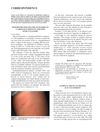
January 2005 in “Pediatric Dermatology” An 8-year-old girl with vitiligo developed extra hair growth on her knee after using tacrolimus ointment.
89 citations
,
March 1996 in “Proceedings of the National Academy of Sciences” This study found that homozygous mutant mice with a hypomorphic CD18 mutation developed a chronic inflammatory skin disease resembling human psoriasis, potentially implicating additional genetic factors in disease susceptibility.
1 citations
,
January 2023 in “eCite Digital Repository (University of Tasmania)” This study suggests that the differences in aluminium tolerance between ET8 and ES8 wheat cultivars are linked to a complex suite of physiological mechanisms, including variations in malate and K+ release, Ca2+ homeostasis, and SV channel properties, rather than solely malate efflux.
2 citations
,
November 2014 in “Pharmaceutical Patent Analyst” This article provides an update on several international patent cases, including a decision that could change Japan's patent term extension practice, but it reports no new research results.
 40 citations
,
December 2012 in “PLoS ONE”
40 citations
,
December 2012 in “PLoS ONE” This study found that selective deletion of Ctip2 in epidermal keratinocytes in adult mice leads to atopic dermatitis-like inflammation and suggests Ctip2 plays a crucial role in skin barrier maintenance and inflammatory regulation.
 13 citations
,
November 2012 in “PLoS ONE”
13 citations
,
November 2012 in “PLoS ONE” This study identified a novel recessive mutation in mice causing lethal congenital lamellar ichthyosis, with skin and hair follicle alterations similar to human congenital ichthyoses, linked to a specific genetic defect affecting Fatp4.
January 2022 in “Mammalian Genome” This study found that the wavy coat trait in Nakano cataract mice is polygenic, involving major and minor genes, and resembles human curly scalp hair associated with the PRSS53 gene alteration.
91 citations
,
July 2004 in “Journal of Biological Chemistry” This study found that overexpression of the enzyme SSAT in a mouse model significantly reduced prostate tumor size and progression, suggesting it could be a promising strategy against prostate cancer.
51 citations
,
December 2006 in “Mammalian Genome”  1 citations
,
April 2019 in “The journal of investigative dermatology/Journal of investigative dermatology”
1 citations
,
April 2019 in “The journal of investigative dermatology/Journal of investigative dermatology” This study found that anagen stage protein homogenates and specific epitopes from melanogenesis proteins activated CD8 T cells, suggesting alopecia areata is an anagen-specific disease.
28 citations
,
November 2013 in “Cell and Tissue Research” 12 citations
,
July 2004 in “Molecular genetics and genomics” This study identifies a new mutation in the Scd1 gene in a strain of Kunming mice, causing skin and hair defects with the mildest impact among similar mutations.
This Phase II trial found that topical GT20029 significantly increased hair count and width at 12 weeks in Chinese men with androgenetic alopecia compared to placebo, with good tolerability and similar adverse event incidence across groups.
1 citations
,
March 2023 in “Medicine” This study found that albumin-bound paclitaxel combined with nedaplatin shows promise as neoadjuvant therapy for esophageal squamous cell carcinoma, achieving a high complete response rate with manageable side effects.
4 citations
,
September 2024 in “Development” This study investigated transcription factors in human trophectoderm cells during development, finding that GATA2 and GATA3 are essential for transforming stem cells into induced trophoblast stem cells, which display characteristics similar to placental progenitor cells, offering new methods for modeling placental-associated diseases.
February 1999 in “PubMed” The document's conclusion cannot be summarized because the content is not available.
48 citations
,
June 2000 in “Japanese Journal of Cancer Research” This study found that dimethylarsinic acid significantly accelerates skin tumor development in hair follicle-targeted K6/ODC transgenic mice.
 February 2010 in “Acta Obstetricia et Gynecologica Scandinavica”
 This collection of articles in AOGS includes findings on tetranectin as a possible prognostic marker for advanced ovarian cancer, and the effectiveness of tension-free vaginal tape for recurrent stress urinary incontinence.
20 citations
,
May 2007 in “JDDG Journal der Deutschen Dermatologischen Gesellschaft” In this case report, etanercept was observed to effectively resolve symptoms of refractory acrodermatitis continua suppurativa Hallopeau after previous treatments had limited success.
4 citations
,
July 2024 in “Skin Research and Technology” 6 citations
,
March 1976 in “Journal of Investigative Dermatology” 11 citations
,
January 1983 in “Educational leadership” This study found that NFIB and STAT5 work together to regulate mammary-specific genetic programs in mice, with their combined absence hindering functional alveoli formation.