5 citations
,
May 2024 in “Current Issues in Molecular Biology” This review highlights advancements in applying single-cell sequencing to cattle, sheep, and goats, noting its potential to elucidate cellular diversity and improve traits affecting livestock health and productivity, despite challenges in cell population annotation and spatial resolution in these species.
 March 2022 in “VNU Journal of Science Medical and Pharmaceutical Sciences”
 This study developed a sensitive method using LC-ESI-MS/MS for accurate and reliable measurement of nine steroid hormones in children's serum.
1 citations
,
June 2019 in “IEEJ Transactions on Sensors and Micromachines” This study reports the development of a MEMS silicon-hair device capable of detecting minute forces and moments, replicating the sensory functions of human hair follicles with high sensitivity.
 1 citations
,
November 2023 in “Research Square (Research Square)”
1 citations
,
November 2023 in “Research Square (Research Square)” In this study, researchers introduced a machine learning approach to discover new nanozymes through the DiZyme platform, enabling the accurate prediction of multiple catalytic activities, and providing a comprehensive database and assistant resources for users.
29 citations
,
August 2011 in “PubMed” This study describes how shotgun proteomics can identify over 300 proteins in hair shafts, potentially allowing for the diagnosis of diseases through noninvasive human proteome sampling.
 April 2026 in “Scientific Reports”
 In this study, the proposed MSF-VMDNet, combining dual encoder networks with a multi-frequency domain mechanism, significantly outperformed existing methods in segmenting skin cancer tissues from histological slide images, achieving high accuracy with an MIoU of 95.37% and a Dice coefficient of 95.11%.
10 citations
,
May 2025 in “Cell Biomaterials” This perspective highlights how advancements in single-cell sequencing and digital pathology can help understand the complex mechanisms of immune responses, fibrosis, and tissue remodeling related to medical implants, aiming to address the challenges of implant-related tissue reactions reported in this study.
2 citations
,
November 2025 in “Comprehensive Reviews in Food Science and Food Safety” This review discusses the growing role of colorimetric sensors in food safety, highlighting their potential to enhance detection accuracy and manageability, while also noting challenges such as environmental interference and the need for further industrial validation.
 4 citations
,
October 2014 in “Journal of Integrative Agriculture”
4 citations
,
October 2014 in “Journal of Integrative Agriculture” This study identified 417 genes with differential expression at varying stages of cashmere growth in goats, highlighting their potential role in tissue remodeling and cashmere regeneration.
 27 citations
,
April 2013 in “Reviews in endocrine and metabolic disorders”
27 citations
,
April 2013 in “Reviews in endocrine and metabolic disorders” The document concludes that using LC-MS/MS for measuring androgens is more accurate than older methods, but it needs careful validation and standardized references to be most effective.
 1 citations
,
November 2025 in “Clinical Chemistry and Laboratory Medicine (CCLM)”
1 citations
,
November 2025 in “Clinical Chemistry and Laboratory Medicine (CCLM)” This study developed a new measurement procedure using isotope dilution-liquid chromatography-tandem mass spectrometry for accurate quantification of DHEAS in human serum or plasma, demonstrating high selectivity, sensitivity, and low measurement uncertainty, making it suitable for routine standardization and clinical evaluation.
September 2002 in “Oncology Times” This study presented at the ASCO Annual Meeting reported that the epidermal growth factor receptor antibody ABX-EGF showed preliminary efficacy in renal cell cancer patients, with tolerable side effects, while bortezomib demonstrated clinical benefit in a significant proportion of multiple myeloma patients.
 1 citations
,
March 2022 in “bioRxiv (Cold Spring Harbor Laboratory)”
1 citations
,
March 2022 in “bioRxiv (Cold Spring Harbor Laboratory)” This study examined wool traits in Angora rabbits using low-coverage whole genome sequencing, identifying six QTLs and a gene, FGF10, linked to fiber growth and diameter, suggesting a cost-effective approach for complex trait analysis in genomic breeding.
March 2019 in “SLAS TECHNOLOGY” This study found that MSN-ceria nanomaterial accelerates cutaneous wound healing in rat models by reducing ROS levels and promoting collagen deposition, leading to improved tissue regeneration without significant scarring.
9 citations
,
November 2022 in “International Journal of Molecular Sciences” This study found that LC-MS/MS assays provided more reliable and precise steroid measurements in human serum compared to traditional immunoassays, particularly at lower concentrations.
This paper offers detailed tables of genotypic and phenotypic data on horses, including markers, variants, and haplotypes, but reports no new research results.
 2 citations
,
May 2018 in “International Society of Hair Restoration Surgery”
2 citations
,
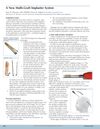
May 2018 in “International Society of Hair Restoration Surgery” The new system makes hair transplants faster and more precise.
This study suggests that the ANE syndrome mutation in yeast Nop4, analogous to human RBM28, disrupts protein folding and protein-protein interactions, contributing to ribosomal dysfunction.
May 2026 in “Microchemical Journal”  January 2023 in “Brazilian Journal of Pharmaceutical Sciences”
 This study concluded that the liquid chromatography-mass spectrometry method developed is viable for accurately quantifying spironolactone and its metabolite canrenone in plasma despite interference from plasma components.
14 citations
,
September 2019 in “Forensic Science International Genetics” This study found that hair shaft keratin proteins can be reliably identified from samples as small as 0.12 cm, suggesting their potential forensic utility with typical casework sample sizes.
 February 2026 in “Chromatographia”
 This study used advanced chromatographic and mass spectrometric techniques to develop a method for reliably detecting 17 hair growth compounds in consumer products, aiming to enhance regulatory compliance and ensure consumer safety against illicit compounds.
 January 2024 in “Biochemical genetics”
 This study investigated the gene and protein expression differences in early and late feathering chickens, identifying several pathways, like JAK-STAT and WNT, potentially involved in non-Mendelian feather growth regulation.
 2 citations
,
January 2019 in “Medizinische Genetik”
2 citations
,
January 2019 in “Medizinische Genetik” Among families with pediatric brain disease, this study identified over 200 novel genetic causes, revealing potential treatment points using drug repurposing or nutritional supplementation.
4 citations
,
January 2017 in “Acta dermato-venereologica” A new EDA gene mutation was found in a Chinese family with a specific skin disorder.
13 citations
,
January 2001 in “Skin pharmacology and physiology” This article discusses a new device for visualizing and quantifying skin distribution of a radioactively labelled compound, but reports no new clinical results.
 April 2018 in “Journal of Investigative Dermatology”
 This paper presents a new methodology combining magnetic tweezers and traction force microscopy to study keratinocyte mechanobiology, but reports no experimental results yet.
April 2019 in “Journal of the Endocrine Society” The researchers reported a case of falsely elevated testosterone in a teen, due to immunoassay interference, demonstrating that liquid chromatography tandem-mass spectrometry provides more accurate testosterone measurement, emphasizing the need for thorough analysis when clinical results are inconsistent.
November 2009 in “한국분석과학회 학술대회” 5 citations
,
August 2023 in “G3 Genes Genomes Genetics” This study developed an improved reference genome for the African spiny mouse using long Nanopore sequencing reads, potentially aiding future research into the species' remarkable tissue regeneration capabilities.