1 citations
,
November 2022 in “Nutrients” This study found that piglets' rapid growth during nursery and lactation was linked to changes in microbiota composition and increased cortisol conversion, highlighting critical early life factors influencing adult microbiota establishment.
December 2025 in “Cosmetics” This research identified unique gut microbiota patterns in alopecia areata patients, with potential as diagnostic biomarkers and suggesting avenues for microbiota-focused therapies.
December 2025 in “International Journal of Cosmetic Science” A new tool helps better assess and treat hair loss in Chinese men.
3 citations
,
March 2023 in “Cell Biology International” In this study, ASC-enriched autologous fat grafting was found to be more effective and satisfying than conventional fat grafting for treating facial contour deformities with hyperpigmentation.
28 citations
,
July 2005 in “Journal of Investigative Dermatology” Sca-1+ cells in newborn mouse skin may become fat cells.
 2 citations
,
April 2023 in “Cutis”
2 citations
,
April 2023 in “Cutis” This systematic review discusses the treatment characteristics and outcomes for frontal fibrosing alopecia specifically in Black patients with skin of color, addressing a gap in clinical evidence due to underrepresentation in studies.
August 2020 in “Research Square (Research Square)” This study reported that 7.80% of systemic lupus erythematosus patients experienced scarring alopecia, with mucocutaneous lesions and certain autoantibodies identified as risk factors, and some organ involvements and immunosuppressants as protective factors.
 April 1999 in “Archives of Facial Plastic Surgery”
 This abstract lists upcoming facial plastic and reconstructive surgery meetings and does not report any new research findings.
 1 citations
,
September 2021 in “CRC Press eBooks”
1 citations
,
September 2021 in “CRC Press eBooks” This chapter reviews trichoscopic-pathologic correlations in Frontal Fibrosing Alopecia and reports no new clinical results; the authors discuss genetics, clinical patterns, and unusual variants associated with this condition.
 July 2015 in “Journal of the Dermatology Nurses’ Association”
 This review covers the clinical presentation and challenges in treating frontal fibrosing alopecia in postmenopausal women and concludes that more research is needed to understand its etiology and develop effective treatments.
June 2025 in “British Journal of Dermatology” This report describes two unusual cases of frontal fibrosing alopecia in men, highlighting potential vaccine-related immune triggers and genetic factors, especially regarding the pronounced facial papular phenotype observed.
22 citations
,
January 1999 in “Dermatology” This case report describes a rare instance of double-lined frontoparietal scleroderma en coup de sabre and suggests a genetic basis involving postzygotic mosaicism.
January 1994 in “Journal of the society of cosmetic chemists”  December 2025 in “Clinical Cosmetic and Investigational Dermatology”
 This case study describes a rare instance of subacute cutaneous lupus erythematosus on the chin, highlighting the effectiveness of using dermoscopy and reflectance confocal microscopy for accurate diagnosis and monitoring, which led to significant lesion improvement with corticosteroid and immunomodulatory treatment over 19 weeks.
 September 2018 in “Journal of the American Academy of Dermatology”
 Elderly patients with CCCA were all African American with low vitamin D, but no iron or zinc deficiencies, and no hormonal imbalances compared to younger patients.
9 citations
,
January 2021 in “Journal of the American Academy of Dermatology”  103 citations
,
June 2018 in “International Journal of Molecular Sciences”
103 citations
,
June 2018 in “International Journal of Molecular Sciences” This review discusses the applications and research on fibroblast growth factors, including their use in wound healing, diabetes, and cancer, but it reports no new clinical results.
 31 citations
,
April 2010 in “British journal of dermatology/British journal of dermatology, Supplement”
31 citations
,
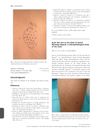
April 2010 in “British journal of dermatology/British journal of dermatology, Supplement” This report describes two patients with frontal fibrosing alopecia who developed acute hair loss on their limbs, revealing that the limb alopecia had similar histological features to scalp alopecia.
 3 citations
,
December 2021 in “Frontiers in endocrinology”
3 citations
,
December 2021 in “Frontiers in endocrinology” In this study, a novel DCAF17 gene mutation was identified in a Chinese family, suggesting a potential role in pancreatic β cell dysfunction and diabetes development in Woodhouse-Sakati syndrome.
 9 citations
,
February 2014 in “Tissue Engineering and Regenerative Medicine”
9 citations
,
February 2014 in “Tissue Engineering and Regenerative Medicine” This study found that conditioned media from human amniotic fluid-derived stem cells may enhance skin regeneration by promoting cell proliferation and migration, and by modulating gene expressions altered by UV irradiation.
 1 citations
,
December 2017 in “Anais Brasileiros de Dermatologia”
1 citations
,
December 2017 in “Anais Brasileiros de Dermatologia” This article discusses the DOAJ, a comprehensive index of international open access journals, and emphasizes its role in providing free quality content online without presenting new research findings.
May 2026 in “Cell Reports Medicine” This study develops FR-1, a topical small molecule, which reduces scarring and avoids skin atrophy in a murine wound model, showing potential for treating fibrosis without the side effects of current therapies.
 1 citations
,
April 2022 in “The Journal of Family Practice”
1 citations
,
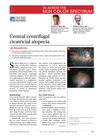
April 2022 in “The Journal of Family Practice” This report describes early and late stages of central centrifugal cicatricial alopecia in two Black women, highlighting progression from a small to a large central patch of hair loss.
April 2011 in “Reactions Weekly” 13 citations
,
November 2005 in “Endocrinology” This study explored the secretion and cellular localization of different forms of follistatin and FST-like-3, revealing variable secretion kinetics and possible intracellular roles, particularly for nuclear FSTL3.
 20 citations
,
January 2016 in “Intractable & Rare Diseases Research”
20 citations
,
January 2016 in “Intractable & Rare Diseases Research” In this clinical experience, treating frontal fibrosing alopecia with oral finasteride, hydroxychloroquine, tacrolimus, and excimer laser was associated with optimal results in patients with active inflammation.
 64 citations
,
June 2014 in “Journal of The American Academy of Dermatology”
64 citations
,
June 2014 in “Journal of The American Academy of Dermatology” This study found that a peripilar white gray halo around hair emergence is a highly specific and sensitive dermatoscopic feature for diagnosing central centrifugal cicatricial alopecia in African American patients with mild central thinning.
January 2022 in “Essentials in ophthalmology” This review discusses risk factors for intraoperative floppy iris syndrome, emphasizing tamsulosin and other α1 blockers, and underscores the importance of preoperative screening to mitigate surgical complications, but it reports no new results.
 January 2020 in “Clinical Case Reports and Reviews”
 This study observed that the coexistence of Frontal Fibrosing Alopecia and lupus erythematosus in a patient may suggest a shared pathogenic background.
 2 citations
,
July 2022 in “Stem cell research & therapy”
2 citations
,
July 2022 in “Stem cell research & therapy” This study found that a large number of pelage hair follicle mesenchymal stem cells can be efficiently isolated using two-step Ficoll Density Gradient Sedimentation, promoting hair growth by secreting exosomes in mice.