2 citations
,
May 2000 in “International Society of Hair Restoration Surgery” This review discusses various causes of hair loss, emphasizing androgenetic alopecia, and reports no new findings; the author highlights the complexity of hair transplantation consultations.
1 citations
,
July 2022 in “Indian Journal of Dermatology” This report describes the first documented case of bullous pyoderma gangrenosum developing on a cesarean section scar, which improved rapidly with oral prednisolone.
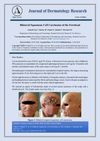
A 70-year-old man with skin cancer on both sides of his forehead was treated with surgery and cryotherapy, highlighting the need for early detection and prevention.
August 2026 in “Frontiers in Pharmacology” This study found that dihydromyricetin may reduce fibrosis features in hypertrophic scars by affecting PI3K/AKT/mTOR signaling, but further research is needed to confirm causality.
48 citations
,
May 2012 in “Journal of cosmetic and laser therapy” This study found that fractional bipolar RF energy significantly reduced acne scar severity and improved skin texture, with high subject satisfaction and limited side effects.
14 citations
,
October 2001 in “British Journal of Ophthalmology” This case report suggests a successful outcome with intralesional cidofovir for SCC, although surgical excision remains the preferred treatment.
3 citations
,
February 2023 in “Journal of Investigative Dermatology” Ch55 may help reduce skin scarring and fibrosis.
66 citations
,
October 2003 in “Dermatologic clinics” Excision and laser techniques can effectively treat acne keloidalis nuchae.
7 citations
,
May 1988 in “International Journal of Dermatology” This case report describes an 18-year-old man with pili annulati, characterized by a "shagreened" appearance of the hair shaft with alternate bright and dark bands and wide holes throughout the cortex.
 July 2025 in “Russian Journal of Transplantology and Artificial Organs”
 This research highlights advancements in reconstructive surgery for managing scars, emphasizing the importance of combined surgical and nonsurgical interventions like platelet-rich plasma and stem cell therapy to prevent and treat thick scar tissue while enhancing functionality and aesthetic outcomes.
 33 citations
,
January 1991 in “The Journal of Dermatologic Surgery and Oncology”
33 citations
,
January 1991 in “The Journal of Dermatologic Surgery and Oncology” This article describes incisional slit grafting as an improved hair transplantation method, using smaller grafts and conserving vascular supply to enhance graft yield and achieve a more natural hairline, but reports no new research results.
 2 citations
,
September 2022 in “Annals of Medicine and Surgery”
2 citations
,
September 2022 in “Annals of Medicine and Surgery” The researchers reported a rare case of invasive cutaneous squamous cell carcinoma of the scalp extending into bone and dura mater, successfully treated with surgery and skin flap repair, without metastasis observed at three months.
 June 2012 in “Springer eBooks”
 Skin changes can indicate starvation and nutritional deficiencies in anorexia nervosa.
 January 1999 in “Journal of the European Academy of Dermatology and Venereology”
 RAPK is a rare skin disorder with pigmented spots, mainly on hands and feet, starting in youth.
January 2021 in “Electronic Theses of LMU Munich (Ludwig-Maximilians-Universität München)” This study found that fibroblasts play a crucial role in scar formation during dermal development and identified N-Cadherin as a key molecule in their response, suggesting new therapeutic avenues for scar prevention.
18 citations
,
January 2022 in “Oxidative Medicine and Cellular Longevity” Fibroblasts are crucial in scar formation and wound healing, with potential therapies aiming for scarless healing.
 7 citations
,
November 2011 in “Skin Research and Technology”
7 citations
,
November 2011 in “Skin Research and Technology” The authors observed that the patterned melanoderma on the hairless scalp of fair-skinned Caucasian men with androgenic alopecia resembled similar patterns seen on facial skin.
 37 citations
,
January 1989 in “British Journal of Plastic Surgery”
37 citations
,
January 1989 in “British Journal of Plastic Surgery” This study found that using a subcuticular non-absorbable suture for six months significantly reduced scar stretching and width compared to shorter-term suturing methods after tattoo removal.
 5 citations
,
September 1994 in “The Journal of Dermatologic Surgery and Oncology”
5 citations
,
September 1994 in “The Journal of Dermatologic Surgery and Oncology” This article discusses extensive scalp lifting for male-pattern alopecia and emphasizes the need for precise surgical techniques and understanding to minimize complications, but reports no new clinical results.
 December 2025 in “Cureus”
 This case report highlights that scarring alopecia with features of dystrophic epidermolysis bullosa and lichen planopilaris can occur in patients with a COL7A1 mutation, emphasizing the need to recognize concurrent inflammatory causes.
 27 citations
,
September 2008 in “British Journal of Dermatology”
27 citations
,
September 2008 in “British Journal of Dermatology” This study describes patients with moderate to severe scarring alopecia of the scalp margin and suggests that traction is not the sole cause for this condition, as half of the patients had no history of harsh hairstyling practices.
32 citations
,
December 2015 in “PloS one” This study found that applying a topical inhibitor of TGF-β1 may enhance scar maturation and improve the appearance of hypertrophic scars in a nude mouse model after two weeks.
 September 2006 in “Plastic and Reconstructive Surgery”
 This study found a 31% decrease in antidepressant use following cosmetic surgery, suggesting that such procedures may influence medication use by improving self-esteem.
41 citations
,
January 2015 in “Burns & Trauma” This review discusses developments in tissue engineering for burn wound coverage and reconstructive surgery, reporting no new results but highlighting the need for further research into clinical effectiveness.
5 citations
,
February 2024 in “Journal of Cosmetic Dermatology” This study found that FUE hair transplantation is effective for treating secondary scarring alopecia from burns, offering natural hair growth, quick recovery, high patient satisfaction, and few complications.
October 1991 in “Archives of Dermatology” This case report describes a 59-year-old woman with cicatricial alopecia and multiple skin lesions, including nodules and plaques, with biopsy results showing a lymphocytic infiltrate and collagen replacement.
 54 citations
,
January 1983 in “Archives of Dermatology”
54 citations
,
January 1983 in “Archives of Dermatology” This article presents two cases of keratosis follicularis spinulosa decalvans and reviews its features, highlighting characteristic progression from keratosis pilaris in infancy to cicatricial alopecia in childhood.
27 citations
,
March 2006 in “Dermatologic surgery” This review discusses the widespread acceptance of micropigmentation for cosmetic purposes and its various medical applications, but reports no new clinical findings.
 2 citations
,
October 2010 in “Springer eBooks”
2 citations
,
October 2010 in “Springer eBooks” Using cheek skin and cartilage grafts for nose reconstruction after skin cancer surgery can maintain shape and function but may require multiple surgeries and hair removal in men.

This case report in the Journal of Drugs in Dermatology discusses dissecting cellulitis of the scalp, emphasizing its disproportionate impact on Black males and the need for early diagnosis and effective management to mitigate scarring and quality of life issues.