 February 2025 in “Plastic and Aesthetic Research”
 In this study, after long-term observation of human scalp hair follicles over 16 years, the researchers found that a topical 5% minoxidil solution could stimulate hair regrowth after a period of dormancy, though with reduced growth rates and hair diameter.
December 2020 in “Han-guk byuti gyeong-yeong hakoeji” This study found that weight control efforts among people in their 20s and 30s were associated with decreased skin moisture, elasticity, and increased hair loss and thinning.
 July 2022 in “Al-Mağallaẗ al-ʻirāqiyyaẗ li-l-ṣaydalaẗ”
 In this study, topical azelaic acid cream 20% was observed to show acceptable efficacy for treating localized alopecia areata of the scalp, offering a potential therapeutic alternative to topical clobetasol ointment 0.05%.
 68 citations
,
May 2012 in “Annals of Oncology”
68 citations
,
May 2012 in “Annals of Oncology” This study reports that permanent and severe alopecia is a newly identified complication of the FEC 100–docetaxel regimen used for adjuvant breast cancer treatment.
 July 2022 in “المجلة العراقية للصيدلة”
 This study reported that topical azelaic acid cream 20% demonstrated statistically significant efficacy in treating localized alopecia areata of the scalp over 12 weeks, comparable to topical clobetasol ointment 0.05%, suggesting it as a potential therapeutic option.
 February 2024 in “Cosmetics”
 The correction fixes an image mistake in the original publication, but the findings on the hair treatment's effectiveness are unchanged.
 August 2016 in “Journal of Investigative Dermatology”
 This study found that Rosebay extract significantly reduced dandruff and sebum production, suggesting it may be an effective anti-dandruff ingredient as a complement or alternative to antifungal treatments.
January 2019 in “Clinical pediatric dermatology” This review discusses the use of follicular unit extraction and scalp micropigmentation in treating male pattern baldness, noting that scalp micropigmentation provides a non-surgical option to emulate natural hair appearance without downtime.
December 2025 in “Journal of the Korean Society of Cosmetology” This study observed that among adults in their 20s and 30s, deteriorating scalp and hair health increased hair loss stress, which in turn prompted more proactive scalp care behaviors, with hair condition being a stronger motivator than scalp condition.
July 2026 in “Journal of Investigative Dermatology” ABS-201 may effectively promote hair growth in men by targeting the prolactin receptor.
 53 citations
,
February 2017 in “Journal of The American Academy of Dermatology”
53 citations
,
February 2017 in “Journal of The American Academy of Dermatology” In this study of 20 patients with erosive pustular dermatosis of the scalp, using trichoscopy improved diagnosis, and treatments with high-potency steroids or topical tacrolimus effectively reduced inflammatory signs, suggesting these as first-line treatments.
7 citations
,
August 2023 in “Skin Research and Technology” This study highlights age and sex as key factors influencing scalp parameters, thereby affecting hair health and suggesting they should be considered in developing hair care strategies.
 November 2022 in “The journal of investigative dermatology/Journal of investigative dermatology”
 This study observes that TYK2 inhibition with BMS-986202 may extend hair follicle growth phases and decrease inflammatory cell markers in alopecia areata, suggesting potential for clinical application.
February 2026 in “Cosmetics”  January 2025 in “SKIN The Journal of Cutaneous Medicine”
 In this analysis of the BRAVE-AA trials, a significant number of patients with severe alopecia areata treated with baricitinib reached complete or nearly complete scalp coverage (SALT score ≤10 or ≤5) over 52 weeks, particularly among those with less severe baseline characteristics.
 1 citations
,
September 2022 in “Journal of The American Academy of Dermatology”
1 citations
,
September 2022 in “Journal of The American Academy of Dermatology” In this analysis of two trials, baricitinib showed eyebrow and eyelash regrowth in severe alopecia areata patients with greater than 20% scalp hair loss at Week 36, compared to placebo.
July 2000 in “International Society of Hair Restoration Surgery” This review highlights the significant impact of finasteride on the approach to androgenetic alopecia and hair transplantation and reports no new clinical results.
 4 citations
,
March 2021 in “JAMA”
4 citations
,
March 2021 in “JAMA” This article discusses the evaluation and management of common nonscarring hair loss conditions and reports no new clinical results.
 September 2020 in “Georg Thieme Verlag eBooks”
 This review outlines the scope of hair restoration in men, covering both surgical and medical approaches, but provides no new clinical results.
 August 2016 in “Journal of Investigative Dermatology”
 This study suggests that differential expression of miRNAs in hair follicles from the frontal and occipital scalp may contribute to the androgen-dependent changes seen in male pattern baldness.
 156 citations
,
September 2014 in “British journal of dermatology/British journal of dermatology, Supplement”
156 citations
,
September 2014 in “British journal of dermatology/British journal of dermatology, Supplement” This guideline review discusses updated evidence-based recommendations for managing tinea capitis, with a focus on accurate diagnosis, effective treatment, and prevention strategies, but reports no new clinical results.
 178 citations
,
December 2011 in “Journal of Dermatological Case Reports”
178 citations
,
December 2011 in “Journal of Dermatological Case Reports” This review discusses the application of trichoscopy in diagnosing various hair and scalp diseases and reports no new clinical results; the authors emphasize its role as a non-invasive diagnostic tool.
 2 citations
,
October 2015 in “The New England Journal of Medicine”
2 citations
,
October 2015 in “The New England Journal of Medicine” This case report describes a 57-year-old woman with hirsutism, hair loss, and vocal changes, who was found to have elevated testosterone levels but normal dehydroepiandrosterone sulfate levels.
1 citations
,
February 2020 in “PubMed” This study found that a topical compounded formulation may improve hair density and general appearance in male patients with androgenetic alopecia after 6 months of use.
This study observed that weight control efforts in people in their 20s and 30s led to decreased moisture, elasticity, and increased hair loss and thinning, impacting skin and scalp health.
 August 2016 in “Journal of Investigative Dermatology”
 This study observed that the osteopontin-derived peptide FOL-005 inhibited hair growth in human scalp skin models, contrary to its hair growth promotion in mice, supporting further clinical testing for excessive hair growth treatment.
 72 citations
,
March 2005 in “British Journal of Dermatology”
72 citations
,
March 2005 in “British Journal of Dermatology” In this case series, researchers observed androgenetic alopecia in 20 prepubertal children with a strong genetic predisposition, despite the condition typically not occurring before puberty.
August 2021 in “Journal of the American Academy of Dermatology” In a randomized controlled trial, King et al. found that oral baricitinib at doses of 2 mg and 4 mg significantly improved hair regrowth in adults with alopecia areata compared to placebo, supporting its efficacy and safety for those with substantial scalp hair loss.
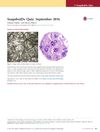 August 2016 in “Journal of Investigative Dermatology”
 This quiz based on a Journal of Investigative Dermatology article reports no new clinical results but serves as an educational tool for diagnosing scalp conditions, including scalp psoriasis and psoriatic alopecia.
 March 2014 in “Journal of clinical microbiology”
 This paper reviews the diagnosis and treatment of inflammatory tinea capitis, highlighting the importance of laboratory confirmation and recommending griseofulvin as the gold standard treatment.