 341 citations
,
November 2009 in “The FASEB Journal”
341 citations
,
November 2009 in “The FASEB Journal” This article reviews the multifunctional roles of calreticulin outside the ER and highlights its impact on wound healing in animal models, but reports no new clinical results.
May 2025 in “Journal of the European Academy of Dermatology and Venereology” This study found that 45.5% of alopecia areata patients treated with ritlecitinib 50 mg daily achieved significant hair regrowth, with most maintaining their response over 24 months.
1 citations
,
November 2023 in “SKIN The Journal of Cutaneous Medicine” October 2025 in “Journal of the Endocrine Society” This case report describes a 35-year-old woman with a Rathke’s cleft cyst presenting with Cushing disease, highlighting the need to evaluate hormonal hypersecretion in atypical pituitary lesions.
9 citations
,
March 2023 in “GeroScience” September 2023 in “Journal of the American Academy of Dermatology” February 2026 in “The Journal of Dermatology” This study reports that ritlecitinib 50 mg, with or without an initial loading dose, demonstrated meaningful and sustained efficacy up to 24 months in the Asian subpopulation with severe alopecia areata, showing significant scalp, eyebrow, and eyelash hair regrowth, along with an acceptable safety profile.
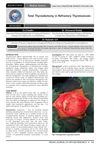 March 2016 in “Indian Journal Of Applied Research”
 This report presents a case of refractory thyrotoxicosis where the patient required a total thyroidectomy after resistance to conventional treatments including antithyroid drugs and radioactive iodine.
 9 citations
,
March 2012 in “Experimental dermatology”
9 citations
,
March 2012 in “Experimental dermatology” This meeting report discusses the first symposium on natural gene therapy for skin, preceding the 41st annual meeting of the European Society for Dermatological Research, and reports no new experimental findings.
91 citations
,
August 2019 in “Frontiers in Microbiology” This study found that the RpoN/RpoS pathway regulates gene expression in Borrelia burgdorferi, influencing its ability to persist in mammals and adapt to different hosts.
 3 citations
,
February 2020 in “The journal of gene medicine”
3 citations
,
February 2020 in “The journal of gene medicine” This study found a recurrent nonsense mutation in the HR gene linked to atrichia with papular lesions in two Kashmiri families, suggesting whole exome sequencing as an efficient method for diagnosis and genetic counseling.
 January 2007 in “Revista del Centro Dermatológico Pascua”
 This case report describes a 2-year-old boy diagnosed with trichothiodystrophy, characterized by fragile hair, intellectual damage, diminished fertility, and short stature.
 April 2016 in “Journal of Investigative Dermatology”
 This study suggests that dsRNA may enhance KRT9 expression in palm and sole skin through β-catenin signaling, potentially linking mechanical damage to specific skin features and certain skin conditions.
 3 citations
,
November 2015 in “Endocrinology, Diabetes & Metabolism Case Reports”
3 citations
,
November 2015 in “Endocrinology, Diabetes & Metabolism Case Reports” This case study reports a rare instance of RC11 associated with precocious puberty, severe hyperandrogenism, insulin resistance, and type 2 diabetes, suggesting a possible link to 11q-syndrome.
 14 citations
,
April 2021 in “Biology”
14 citations
,
April 2021 in “Biology” This study found that ethanol extract of Tubtim Chumphae rice bran downregulates SRD5A gene expression, similarly to finasteride, suggesting potential use as an anti-hair loss product.
2 citations
,
July 2013 in “Journal of Life Sciences” In this case report, researchers described a two-year-old girl with Vitamin D dependent rickets Type II, noting elevated 1,25-dihydroxyvitamin D3 and alopecia, and observed limited treatment response likely due to poor compliance.
4 citations
,
January 2023 in “bioRxiv (Cold Spring Harbor Laboratory)” This study identified the genes for pyochelin siderophore biosynthesis as a novel target regulated by the heme-responsive PrrH sRNA in Pseudomonas aeruginosa.
 June 2026 in “Journal of health economics and outcomes research”
 In this study, researchers found that ritlecitinib 50 mg offered a lower cost per responder than baricitinib 2 or 4 mg at both 24 and 52 weeks for treating severe alopecia areata, suggesting potential implications for reimbursement or formulary decisions.
 1 citations
,
June 2026 in “Dermato”
1 citations
,
June 2026 in “Dermato” This narrative review found that ritlecitinib shows consistent effectiveness and a favorable safety profile for treating alopecia areata in clinical trials and real-world settings, with progressive hair regrowth observed, particularly when treatment is initiated early and maintained appropriately.
July 2025 in “Zenodo (CERN European Organization for Nuclear Research)” Ritlecitinib helps regrow hair in alopecia areata and is safe for long-term use.
 April 2015 in “Plastic and Reconstructive Surgery”
 This article is from the ASPS Education Network and does not report any new research findings.
July 2025 in “Zenodo (CERN European Organization for Nuclear Research)” Ritlecitinib helps regrow hair in alopecia areata and is safe for long-term use.

This review discusses the mechanisms, scientific support, and FDA clearance of photobiomodulation mask devices but reports no new research findings.
21 citations
,
January 2006 in “Hormone Research in Paediatrics” In this case study, a girl with hereditary vitamin D resistant rickets had a novel mutation in the VDR gene that affected hair cycling without causing total alopecia, suggesting ligand-independent VDR function in hair cycling.
November 2024 in “DELOS Desarrollo Local Sostenible” In this study, researchers observed that Thunbergia grandiflora and Russelia equisetiformis exhibited mutual aid by altering their phenotypic characteristics to facilitate intertwining, suggesting a form of solidarity without apparent external threats.
4 citations
,
January 1994 in “Current Opinion in Endocrinology & Diabetes” This review discusses multiple physiological roles of parathyroid hormone-related protein, such as cartilage mineralization and hair follicle regulation, and reports no new experimental results.
 50 citations
,
October 1986 in “European journal of pediatrics”
50 citations
,
October 1986 in “European journal of pediatrics” This case study reported that absence of alopecia does not reliably predict responsiveness to vitamin D treatment in Vitamin D-dependent rickets type II, as demonstrated by a patient with normal hair growth who showed extreme resistance.
8 citations
,
March 2015 in “International Journal of Oncology” This study successfully established Tsc2-deficient embryonic stem cells from Eker rats and found these cells have distinct gene expression compared to non-mutant cells, which could help identify new therapeutic targets for TSC-related pathogenesis.
 November 2022 in “Journal of Investigative Dermatology”
 This study found that short-term treatment with ROCKi significantly increased keratinocyte stem cell proliferation without affecting their stemness, suggesting a potential safe approach for improving in vitro keratinocyte cultures for clinical applications.
September 2025 in “Journal of the American Academy of Dermatology” Ritlecitinib may help treat alopecia areata by protecting hair follicles.