 November 2023 in “The journal of investigative dermatology/Journal of investigative dermatology”
 In this study, exosome-like nanoparticles derived from rose stem cell culture were found to enhance skin quality by increasing collagen production, reducing melanin and inflammation, and promoting cell migration in vitro, suggesting potential aesthetic applications.
 January 1995 in “Hair transplant forum international”
 This article describes the inaugural meeting of the ASHRS, detailing its organization and schedule, but reports no research findings.
 January 1999 in “Journal of the European Academy of Dermatology and Venereology”
 RAPK is a rare skin disorder with pigmented spots, mainly on hands and feet, starting in youth.
 1 citations
,
September 2021 in “Cureus”
1 citations
,
September 2021 in “Cureus” This study found that the rs1128977 SNP in the RXRG gene may be linked to altered clinical characteristics such as higher HDL-cholesterol levels and increased body mass index in individuals with dyslipidemia.
 219 citations
,
September 2009 in “European journal of epidemiology”
219 citations
,
September 2009 in “European journal of epidemiology” This article discusses the rationale, design, major findings, and updated objectives and methods of the ongoing Rotterdam Study on various diseases, without reporting new research results.
December 2024 in “European journal of medical research” This study suggests that the NCSTN knockout mouse could serve as an HS animal model, with tamoxifen potentially used for gene deletion in mice.
This study suggests that the long non-coding RNA Xist is a key factor in sex differences in systemic lupus erythematosus and rheumatoid arthritis, affecting immune cell behavior and inflammatory pathways in women.
 December 2025 in “BMC Medical Genomics”
 This study demonstrated that RNA-seq can effectively expand hair follicle transcriptomic profiling in a multi-center study, offering deeper insights than blood transcriptomics alone.
 March 2021 in “Research Square (Research Square)”
 This study found that strontium ranelate may promote cartilage regeneration by enhancing chondrogenic differentiation and inhibiting the Wnt/β-catenin signaling pathway in rat models of cartilage defects.
 September 2016 in “Hair transplant forum international”
 This article discusses the role of the Global Council within the ISHRS and reports no new research findings.
 1 citations
,
October 2022 in “Rheumatology”
1 citations
,
October 2022 in “Rheumatology” This report describes a case of juvenile Rhupus syndrome in an 11-year-old girl, emphasizing the condition's rarity and the diagnostic challenges due to overlapping symptoms of juvenile idiopathic arthritis and systemic lupus erythematosus.
 April 2023 in “Journal of Investigative Dermatology”
 This study found that single-nucleus RNA sequencing identified more relevant keratinocyte clusters and specific markers than single-cell RNA sequencing, offering a new perspective on skin cell differentiation and function.
41 citations
,
January 2022 in “Clinical Immunology” Females are more prone to lupus and arthritis due to X chromosome factors.
 July 2025 in “SKIN The Journal of Cutaneous Medicine”
 This study reported that ritlecitinib was generally well tolerated over 72 months in patients aged 12 and older with alopecia areata, with adverse events like headache and nasopharyngitis observed, and safety outcomes consistent with previous studies.
 25 citations
,
December 2008 in “Journal of Dermatological Case Reports”
25 citations
,
December 2008 in “Journal of Dermatological Case Reports” In this study, R-CSLM showed promise in evaluating hair shaft diseases by providing high-quality images of hair structures, although further development is necessary for follicle and perifollicular area analysis.
10 citations
,
January 1995 in “Dermatology” This case study suggests that early or significant alopecia in young adults may warrant investigation for underlying congenital conditions like trichorhinophalangeal syndrome.
 January 2024 in “Hair transplant forum international”
 This source describes the American Board of Hair Restoration Surgery's mission to set standards and evaluate skills in hair restoration surgery, but does not report any specific study results.
7 citations
,
October 2023 in “BMC Genomics” In this study, researchers used transcriptome sequencing to identify various noncoding RNAs in the skin tissues of Jiangnan cashmere goats and found that certain long noncoding RNAs may play a role in regulating cashmere fiber fineness, offering new insights for breeding programs.
 May 2014 in “Hair transplant forum international”
 This report announces that the International Society of Hair Restoration Surgery received Accreditation with Commendation.
September 2017 in “International Society of Hair Restoration Surgery” This listing describes job openings at a hair restoration clinic that emphasizes quality, ethics, and natural results; no research findings are reported.
March 2018 in “International Society of Hair Restoration Surgery” This announcement outlines job opportunities at the Anderson Center for Hair and provides no clinical research findings.
 July 2023 in “Hair transplant forum international”
 This abstract provides information about the American Board of Hair Restoration Surgery as the only internationally accepted certifying body for hair restoration surgeons, but it reports no new research results.
January 2010 in “China Animal Husbandry & Veterinary Medicine” This study suggests that RORα, RORβ, and RORγ mRNA expression in cashmere goat skin is related to different stages of hair follicle development, indicating a possible role in cycled cashmere growth.
June 2026 in “British Journal of Dermatology” This audit of ritlecitinib prescribing for severe alopecia areata found that regional practices largely followed national guidelines but highlighted the need for better psychological assessments and more consistent use of SALT scoring to inform treatment continuation decisions after 36 weeks.
 May 1997 in “Hair transplant forum international”
 This is an acknowledgment of coverage for the American Society of Hair Restoration Surgery's third annual conference, with no new research findings reported.
 December 2022 in “Research Square (Research Square)”
 In this study, the researchers developed a quantum algorithm, QuantAnts machines, which identified complexes of CD9, CD34, and CD74 as potential targets for certain cancers involving the RAS pathway.
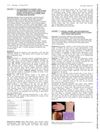
This case report details a child with a specific TNFAIP3 mutation manifesting as a severe SLE/SS phenotype, expanding the known phenotype for this genetic variant.
June 2013 in “Annals of the Rheumatic Diseases” This article highlights the crucial role of lupus specialist nurses in supporting patients with systemic lupus erythematosus by providing advice, education, and facilitating self-management to improve outcomes, without reporting new clinical findings.
114 citations
,
July 2003 in “PubMed” This study found that KSR1 is necessary for v-Ha-ras-mediated skin tumor formation but not for MT-driven mammary cancer, indicating its potential as a therapeutic target in Ras/MAPK signaling-related tumors.
 April 2018 in “Journal of Investigative Dermatology”
 In laboratory models of human skin, this study found that treating with resveratrol significantly increased glutathione levels, potentially enhancing the skin's antioxidant defenses.