July 2023 in “Annals of African Medicine” This case report describes a 24-year-old female with systemic lupus erythematosus and aggressive periodontitis, showing satisfactory outcomes after treatment with nonsurgical periodontal therapy and xenograft over an 8-year follow-up.
10 citations
,
June 2019 in “Cosmetics” This study observed that individuals with mixed ethnicity had hair that varied widely in shape and showed significant surface damage near the root, differing from monoracial hair characteristics.
 August 2026 in “World Journal of Pharmaceutical Research”
 This study explored the development and evaluation of a tablet-form herbal shampoo formulated with natural ingredients like Shikakai, Reetha, and Amla, which reportedly enhance hair shine, growth, and root strength without side effects, offering an environmentally friendly alternative to conventional shampoos.
August 2026 in “International Journal of Allied Medical Sciences and Clinical Research” In this study, a hair serum containing guava leaf, chia seeds, peppermint oil, and alkanet root showed potential benefits for hair care, including antioxidant, anti-microbial, and conditioning properties.
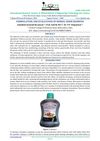 January 2024 in “International Research Journal of Modernization in Engineering Technology and Science”
 This study formulated a poly-herbal shampoo using ingredients like hibiscus, neem, and alo-vera and evaluated its cosmetic properties, reporting positive organoleptic and physico-chemical characteristics, with the potential for safe use as a hair cleansing and conditioning product.
2 citations
,
August 2019 in “Journal of drug delivery and therapeutics” This study reports the formulation and evaluation of an herbal shampoo, "Herbello", aimed at improving antidandruff activity using various natural ingredients.
 June 2026 in “Zenodo (CERN European Organization for Nuclear Research)”
 This study evaluated a herbal shampoo containing plant ingredients like Reetha and Aloe vera, finding it offers good cleansing, stable foam, and a scalp-friendly pH, making it a safe and effective alternative to synthetic shampoos.
 June 2026 in “Zenodo (CERN European Organization for Nuclear Research)”
 This study evaluated a herbal shampoo formulated from selected medicinal plants like Reetha, Aloe vera, and Neem, concluding that it is a safe and effective alternative to synthetic shampoos, offering good cleansing ability and scalp-friendly pH without adverse effects.
 10 citations
,
June 2001 in “International Journal of Cosmetic Science”
10 citations
,
June 2001 in “International Journal of Cosmetic Science” This study found that laboratory-formulated natural shampoos condition hair better than commercial herbal shampoos, as shown by SEM micrograph analysis of hair microstructure.
 60 citations
,
April 2018 in “Clinical, cosmetic and investigational dermatology”
60 citations
,
April 2018 in “Clinical, cosmetic and investigational dermatology” This review discusses the causes and diagnosis of traction alopecia, emphasizing education for high-risk populations as there is currently no cure, and presents no new clinical findings.
 434 citations
,
October 2003 in “PTR. Phytotherapy research/Phytotherapy research”
434 citations
,
October 2003 in “PTR. Phytotherapy research/Phytotherapy research” This review discusses the use of natural products in cosmetic preparations for skin and hair care, but reports no new research results.
 4 citations
,
March 2021 in “Journal of Surfactants and Detergents”
4 citations
,
March 2021 in “Journal of Surfactants and Detergents” This study found that hair treated with shampoo containing water-soluble silicone demonstrated smoother sliding and better detangling, compared to shampoo with water-insoluble silicone, due to differences in conditioning film formation.

This study reports that a polyherbal hair mask made from ingredients like strawberry, amla, and fenugreek demonstrates effectiveness as a non-toxic alternative to chemical hair products, promoting hair growth and scalp nourishment while offering ease of use and stability.
 2 citations
,
July 2023 in “Agronomy”
2 citations
,
July 2023 in “Agronomy” This study found that treating wheat with 100 µM melatonin under drought conditions significantly improved root and shoot growth, increased melatonin levels, and enhanced drought resistance, potentially clarifying the mechanisms of melatonin's protective effects in plants facing water scarcity.
10 citations
,
August 2021 in “Cosmetics” This study identified an optimal sulfate-free and silicone-free conditioning shampoo formulation using 1% hyaluronic acid at 800 kDa, 10% acidic sophorolipid, and 1% sodium chloride, which maintains essential conditioning and cleansing properties without compromising on performance.
 99 citations
,
June 2005 in “Journal of Cosmetic Dermatology”
99 citations
,
June 2005 in “Journal of Cosmetic Dermatology” This article reviews factors influencing hair aging and available treatments like minoxidil and finasteride for androgenetic alopecia but reports no new clinical results.
 57 citations
,
March 2011 in “The American Journal of Dermatopathology”
57 citations
,
March 2011 in “The American Journal of Dermatopathology” This study found that permanent alopecia can occur after certain chemotherapy treatments and presents as nonscarring hair loss similar to androgenetic alopecia, with specific histological features that could be misdiagnosed without proper clinicopathological correlation.
 8 citations
,
August 2016 in “Journal of pathology and translational medicine”
8 citations
,
August 2016 in “Journal of pathology and translational medicine” This study found that CD99 is strongly expressed in the basal cells and hair follicles of normal adult and developing fetal skin, with expression patterns becoming similar after 20 weeks of gestation.
 6 citations
,
March 2014 in “Herba Polonica”
6 citations
,
March 2014 in “Herba Polonica” This article reviews treatment options for androgenetic alopecia, highlighting potential uses of plant materials, but reports no new clinical results.
 3 citations
,
June 2007 in “Journal of Cosmetic Dermatology”
3 citations
,
June 2007 in “Journal of Cosmetic Dermatology” This review discusses the causes of hair shaft abnormalities and highlights the role of cosmetic products in treating hair disorders, though it reports no new clinical findings.
 2 citations
,
February 2019 in “JOJ dermatology & cosmetics”
2 citations
,
February 2019 in “JOJ dermatology & cosmetics” The study found that Anagen grow, a herbal serum, promotes hair growth elongation and may inhibit the alpha reductase enzyme, suggesting it as a safe, effective alternative to finasteride and beneficial alongside minoxidil for reducing scalp dryness.
 November 2025 in “Frontiers in Pharmacology”
 This mini-review examines ethnopharmacological approaches to manage hair loss in postmenopausal women, highlighting promising botanical remedies like saw palmetto, rosemary oil, and ginseng. The authors underscore a need for more interdisciplinary trials and focus on traditional remedies' multifaceted benefits, while noting gaps in menopausal-specific evidence.
 November 2025 in “Journal of Ayurveda and Integrated Medical Sciences”
 This study evaluated an herbal hair dye made from plant-based ingredients, finding it stable, non-toxic, and effective in providing lasting color, improving hair texture, and reducing hair fall, making it a viable and eco-friendly alternative to chemical dyes.
 October 2025 in “International Journal of Research and Review”
 This study highlights the potential benefits of herbal soaps and shampoo bars as eco-friendly alternatives to conventional cosmetics, noting their antibacterial, antifungal, and antioxidant properties as well as sustainability advantages such as reduced plastic use and avoidance of synthetic chemicals.

In this study, researchers formulated and evaluated herbal hair serums incorporating natural ingredients like flax seed, fenugreek, and castor oil, finding that the best formulation supported hair growth with minimal side effects compared to existing herbal serums.
 December 2024 in “Research Journal of Pharmacy and Technology”
 The researchers investigated the potential of Suaeda maritima root extract for hair care and growth promotion. They reported high levels of saponins and antioxidants, showing significant biological activity in vitro, but noted a lack of anti-fungal effects against certain fungal species.
 4 citations
,
March 2016 in “DOAJ (DOAJ: Directory of Open Access Journals)”
4 citations
,
March 2016 in “DOAJ (DOAJ: Directory of Open Access Journals)” This study found that a self-emulsifying formulation with eugenol in emu oil improved hair conditioning and growth in rats, showing rapid hair increase after an initial delay compared to minoxidil.
 October 2024 in “Journal of Plant Growth Regulation”
 Fusarium sp. strain K-23 helps Arabidopsis plants grow better in salty soil by promoting root hair growth.
7 citations
,
January 2020 in “International Journal of Trichology” This study observed that regular coconut oil users have significantly reduced hair irregularities compared to non-oil users, as quantified by a new "hair protection factor" metric, highlighting coconut oil's potential in minimizing hair damage.
4 citations
,
January 2024 in “Environmental Research” In this study, the authors reported that Sargassum wightii seaweed-based biostimulants improved soil quality and enhanced rice plant growth and yield by ameliorating acid soil effects, boosting antioxidant enzyme activity, and facilitating nitrogen uptake, photosynthesis, and water use efficiency.