 June 2026 in “Frontiers in Cell and Developmental Biology”
 This review synthesizes the diverse roles of the transcription factor LHX2 in development, tissue maintenance, and injury repair across various organ systems, highlighting its potential therapeutic applications and significance in regenerative medicine, particularly in developmental disorders and tissue regeneration.
15 citations
,
June 2012 in “British Journal of Dermatology” This study identified a novel KRT86 mutation associated with autosomal dominant monilethrix, expanding understanding of its genetic basis beyond known motifs.
 January 1999 in “Journal of the European Academy of Dermatology and Venereology”
 RAPK is a rare skin disorder with pigmented spots, mainly on hands and feet, starting in youth.
18 citations
,
January 2013 in “Evidence-based Complementary and Alternative Medicine” In this study, ALR was found to enhance both the proliferation and osteogenic differentiation of mouse bone marrow mesenchymal stem cells, potentially through specific signaling pathways.
 7 citations
,
June 2010 in “Journal of The American Academy of Dermatology”
7 citations
,
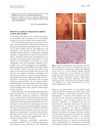
June 2010 in “Journal of The American Academy of Dermatology” This paper reports a single case of lichenoid cutaneous sarcoidosis that was unresponsive to standard treatments but showed marked improvement with the administration of oral tranilast.
93 citations
,
July 2006 in “Journal of Investigative Dermatology” This study describes the expression patterns of type I inner root sheath keratin proteins K25–K28 in human hair follicles, highlighting their distinct distribution within different layers.

This study introduced a new laser-only method called EKA for acne treatment, which is reported to be safe, painless, and heat-free, showing promising results for both acne and scar repair in initial sessions without combining with LED light.
5 citations
,
January 2014 in “Indian Journal of Nephrology” This case report describes a 30-year-old woman with systemic lupus erythematosus who was successfully treated for recurrent hypokalemic periodic quadriparesis after being diagnosed with distal tubular acidosis.
This report presents a rare case of lichen spinulosus in a 52-year-old woman, featuring hyperkeratotic follicular papules and a dense lymphohistiocytic infiltrate in affected skin areas.
 February 2023 in “Military Medical Science Letters”
 This study concluded that both pure-PRP and leukocyte-PRP injections significantly reduced serum CD 68 levels in knee osteoarthritis patients, with pure-PRP being more effective than leukocyte-PRP.
 July 2025 in “SKIN The Journal of Cutaneous Medicine”
 This study reported that ritlecitinib was generally well tolerated over 72 months in patients aged 12 and older with alopecia areata, with adverse events like headache and nasopharyngitis observed, and safety outcomes consistent with previous studies.
 291 citations
,
April 2010 in “Gastroenterology”
291 citations
,
April 2010 in “Gastroenterology” This study identified Lgr5 and Lgr6 as receptors expressed by small populations of stem cells in various adult organs, with Lgr5+ve cells forming long-lived organoids in certain mouse models.
11 citations
,
July 2022 in “Frontiers in Immunology” This study identified four immune-related signaling molecules (LGR5, PTN, JAG1, and DKK1) associated with keloid, suggesting their potential role in its pathogenesis and as targets for new treatments.
 January 2024 in “American journal of clinical dermatology”
 This study reports that ritlecitinib, when used for up to 24 months in patients aged 12 and older with alopecia areata, has an acceptable safety profile, with a similar proportion of adverse events in both ritlecitinib and placebo groups in the placebo-controlled cohort.
 September 2024 in “Journal of the American Academy of Dermatology”
 In this case report, a 53-year-old woman with Little-Graham-Piccardi-Lassueur-Syndrome responded well to a treatment regimen of hydroxychloroquine, methotrexate, and other therapies, effectively halting the progression of this rare dermatosis characterized by alopecia and hyperkeratotic eruptions.
519 citations
,
February 2020 in “Inflammation and Regeneration” This review discusses the diverse roles of the RANKL/RANK/OPG system in bone metabolism, the immune system, and other biological processes, emphasizing its relevance in the field of osteoimmunology, but reports no new results.
1 citations
,
September 2023 in “Journal of the American Academy of Dermatology” In this study, patients with alopecia areata who didn't initially respond to ritlecitinib at Week 24 showed improved response rates by Week 48, with up to 34% achieving better hair regrowth outcomes.
June 2025 in “International Journal of Molecular Sciences” This review compiles current research on the role of long non-coding RNAs in regulating muscle growth and regeneration processes, particularly their influence on Duchenne muscular dystrophy, and reports no new clinical results.
36 citations
,
March 2014 in “Annals of the Rheumatic Diseases” This study found that activating liver X receptors with an agonist reduced skin fibrosis in experimental models, particularly in inflammation-driven conditions, by inhibiting macrophage infiltration and interleukin-6 release.
July 2020 in “Research Square (Research Square)” This study reported distinct expression patterns and potential functions of lncRNAs during the hair follicle cycle in yaks, suggesting insights into lncRNA roles and conservation between yak and cashmere goat.
42 citations
,
December 2011 in “The journal of immunology/The Journal of immunology” In this study, transgenic mice with Rank expression in hair follicles showed excessive lymph node growth, which could be normalized by neutralizing the overproduced RANKL, underscoring its role in immune system regulation.
November 2024 in “SKIN The Journal of Cutaneous Medicine” This study found that daily treatment with ritlecitinib 50 mg over 24 months reduced the number of patients in the highest categories of scalp hair loss, with improvements seen in patient responses over time.
1 citations
,
November 2025 in “American Journal of Clinical Dermatology” This study reports that long-term treatment with ritlecitinib is generally well tolerated for up to approximately five years in patients aged 12 and older with alopecia areata, with the safety profile aligning with previous data from the ALLEGRO clinical trials.
13 citations
,
October 2020 in “BMC Genomics” This study revealed specific patterns and potential functions of long non-coding RNAs during the hair follicle cycle of yaks, offering insights into their sequence conservation between yaks and cashmere goats.
 37 citations
,
September 2018 in “Journal of the American Academy of Dermatology”
37 citations
,
September 2018 in “Journal of the American Academy of Dermatology” This letter reports a series of cases where the use of ruxolitinib at a lower dose than previously studied led to hair regrowth in patients with severe alopecia areata.
1 citations
,
September 2023 in “Journal of the American Academy of Dermatology” This study reported that most patients with alopecia areata who responded to ritlecitinib treatment by achieving a SALT score ≤20, SALT score ≤10, or improvements in eyebrow and eyelash assessments at Week 24 maintained their responses through Week 48.
 September 2020 in “Research Square (Research Square)”
 This study reported the expression patterns and potential functions of long non-coding RNAs in the hair follicle cycle of yak, with insights into their sequence conservation between yak and cashmere goat.
130 citations
,
April 2003 in “Journal of Investigative Dermatology” This study reports the cloning and expression details of two new human type II keratins, K6irs3 and K6irs4, in the hair follicle's inner root sheath, suggesting a distinct functional role related to hair structure.
June 2022 in “Zenodo (CERN European Organization for Nuclear Research)” This promotional content discusses Locerin as a hair growth supplement but reports no research findings; readers are encouraged to explore their own conclusions.
 32 citations
,
September 2015 in “Dermatology”
32 citations
,
September 2015 in “Dermatology” This study describes a newly recognized skin reaction associated with dasatinib, nilotinib, and ponatinib, marked by a lichenoid exanthem with severe pruritus that may necessitate discontinuation of therapy.