 6 citations
,
June 2018 in “Journal of pediatric endocrinology & metabolism/Journal of pediatric endocrinology and metabolism”
6 citations
,
June 2018 in “Journal of pediatric endocrinology & metabolism/Journal of pediatric endocrinology and metabolism” In this study, eight patients with hereditary vitamin D-resistant rickets who share a specific VDR mutation showed improved clinical symptoms except alopecia after up to 11 years of treatment.
 1 citations
,
November 2024 in “Cutis”
1 citations
,
November 2024 in “Cutis” PLLA injections can cause hair loss and skin issues.
June 2015 in “Annals of the Rheumatic Diseases” This clinical case report describes a 44-year-old male whose initial diagnosis of rheumatoid arthritis progressed over a decade to include systemic lupus erythematosus and Sjögren's Syndrome, highlighting the complexity of managing multiple autoimmune syndromes.
3 citations
,
January 2011 in “生物医学研究杂志:英文版” In this study, a novel heterozygous transition mutation in the KRT86 gene was identified, which may be pathogenic for monilethrix in a Chinese family.
 May 2014 in “Clinical and Experimental Dermatology”
 A 70-year-old woman with a rare skin condition improved after treatment with topical steroids and acitretin.
March 2023 in “SKIN The Journal of Cutaneous Medicine” This study observed that most patients with alopecia areata experienced sustained scalp hair regrowth after 48 weeks of ritlecitinib treatment, with safety consistent with prior findings.
January 2026 in “International Journal of Rheumatic Diseases” This study explored the intersection of art and medicine, specifically examining the depiction of the malar rash associated with lupus in historical paintings. The authors suggest that this approach, known as iconodiagnosis, can enhance medical education and understanding of disease manifestations through visual arts.
 3 citations
,
October 2021 in “Brain Sciences”
3 citations
,
October 2021 in “Brain Sciences” This review hypothesizes that risperidone long-acting injectable may be linked to bullous pemphigoid in a bipolar patient, though current studies report mixed results.
June 2026 in “British Journal of Dermatology” In this study, real-world data of 31 patients using ritlecitinib for severe alopecia areata showed that 51% achieved significant hair regrowth after one year, with no serious adverse events reported, emphasizing the importance of considering treatment duration for response.
2 citations
,
June 2024 in “Dermatology” This study found that patients receiving active ritlecitinib doses reported greater satisfaction with hair growth compared to placebo, with high agreement observed between clinician evaluations of scalp hair improvement and patient satisfaction through week 48.
13 citations
,
February 2025 in “Journal of the European Academy of Dermatology and Venereology” Ritlecitinib shows promise for treating alopecia areata, especially with early and extended treatment.
 1 citations
,
October 2023 in “Skin research and technology”
1 citations
,
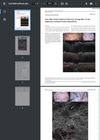
October 2023 in “Skin research and technology” This study found that line-field confocal optical coherence tomography effectively visualized key diagnostic features of classic lichen planopilaris in real time, suggesting its potential as a valuable diagnostic tool.
June 2025 in “British Journal of Dermatology” This reported case of lichen planopilaris in siblings suggests a potential genetic predisposition, supporting the hypothesis of inherited susceptibility in this condition.
40 citations
,
February 1946 in “Canadian Journal of Research/Canadian journal of research” This study observed that the hair loss in homozygous rhino mice is associated with widening of the hair canal due to hyperkeratosis, leading to insufficient support for hair anchoring.
 3 citations
,
May 2020 in “bioRxiv (Cold Spring Harbor Laboratory)”
3 citations
,
May 2020 in “bioRxiv (Cold Spring Harbor Laboratory)” In this study, researchers identified loss of function variants in the HR gene as likely causes of the distinct roaning hair coat seen in lykoi cats.
3 citations
,
September 2013 in “Journal of the American Academy of Dermatology” This report details two patients with Hutchinson-Gilford Progeria syndrome who exhibited generalized shiny skin in infancy and had a novel mutation in the LMNA gene.
 May 2025 in “International Medical Case Reports Journal”
 This case report highlights lichen planus pigmentosus in a 60-year-old man, which was linked to previously undetected hepatitis C infection and liver cirrhosis, suggesting a need for hepatitis C testing in patients with similar dermatological manifestations.
November 2020 in “Journal of the American Academy of Dermatology” Intense pulsed light with radiofrequency showed mixed results in improving quality of life for hidradenitis suppurativa patients, with no clinical improvements.
July 2021 in “Authorea (Authorea)” This article discusses Graham-Little Piccardi Lassueur Syndrome, a rare variant of Lichen planopilaris, but reports no clinical findings or results.
 January 2012 in “Human health handbooks”
 This review discusses the application of low-level light therapy for hair loss treatment, particularly androgenetic alopecia, and reports no new clinical results; the authors suggest consideration of light source characteristics and potential pros and cons.
13 citations
,
March 2008 in “Journal of the European Academy of Dermatology and Venereology” This article reports a case of linear lichen planus developing along the lines of Blaschko during intramuscular triamcinolone acetonide therapy for alopecia areata multiplex.
 1 citations
,
July 2025 in “SKIN The Journal of Cutaneous Medicine”
1 citations
,
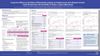
July 2025 in “SKIN The Journal of Cutaneous Medicine” In this study, ritlecitinib 50-mg showed clinically meaningful efficacy, with improvements in the Severity of Alopecia Tool score observed in patients with alopecia areata over a 3-year period, demonstrating long-term benefit in both clinician- and patient-reported outcomes.

This study explored a mother and daughter with loose anagen hair syndrome linked to wooly hair, identifying an intronic variant in the KRT71 gene that affects hair keratin splicing, thus broadening the spectrum of KRT71-related disorders.
 January 2018 in “bioRxiv (Cold Spring Harbor Laboratory)”
 This study identified a new cis-regulatory element in the mouse Hr gene that influences its expression in skin and brain cells, highlighting a complex molecular network involved in hair follicle formation.
 291 citations
,
January 2014 in “The Scientific World Journal”
291 citations
,
January 2014 in “The Scientific World Journal” Lichen Planus is a less common condition affecting skin and mucous membranes, with various types and associated risk factors, challenging to diagnose, significantly impacts life quality, and may have a risk of cancerous changes in oral lesions.
 12 citations
,
January 2015 in “Indian Journal of Dermatology, Venereology and Leprology”
12 citations
,
January 2015 in “Indian Journal of Dermatology, Venereology and Leprology” This case report describes a 67-year-old woman with frontal fibrosing alopecia and her daughter with lichen planopilaris, noting identical HLA D types which suggest a phenotypical link between these conditions.
 5 citations
,
November 2014 in “Hair transplant forum international”
5 citations
,
November 2014 in “Hair transplant forum international” This article introduces a series on low level laser light therapy, focusing on its science, regulatory aspects, and controlled trial methodologies, but reports no new clinical results.
 January 2026 in “International Journal of Dermatology Research”
 This case report discusses a young girl with loose anagen hair syndrome, highlighting the importance of recognizing the condition early to avoid misdiagnosis and unnecessary treatments, and noting her spontaneous improvement with conservative management.
This case study reports that a 35-year-old woman developed nonscarring alopecia following the cosmetic use of poly-L-lactic acid on her face and hairline.
1 citations
,
October 2025 in “PLoS ONE” In this study, researchers found that overexpression of LncRNA RP11-818O24.3 in hair follicle stem cells promotes their proliferation, self-renewal, and differentiation while inhibiting apoptosis through the FGF2-mediated PI3K/AKT signaling pathway, suggesting potential therapeutic applications for hair loss treatment.