 February 2023 in “Journal of dermatology”
 This letter reports the first known Japanese case of autosomal recessive woolly hair/hypotrichosis with compound heterozygous mutations in the LIPH gene.
 3 citations
,
February 2020 in “The journal of gene medicine”
3 citations
,
February 2020 in “The journal of gene medicine” This study found a recurrent nonsense mutation in the HR gene linked to atrichia with papular lesions in two Kashmiri families, suggesting whole exome sequencing as an efficient method for diagnosis and genetic counseling.
 17 citations
,
October 2006 in “Molecular and Cellular Endocrinology”
17 citations
,
October 2006 in “Molecular and Cellular Endocrinology” This study found that the L457(3.43)R mutation in the human luteinizing hormone receptor increases phosphodiesterase activity, reducing hormonal response despite elevated basal cAMP levels.
 6 citations
,
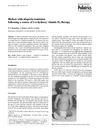
August 1989 in “European journal of pediatrics”
6 citations
,
August 1989 in “European journal of pediatrics” This case study describes a child with rickets and alopecia who responded to a small dose of 1-a-hydroxyvitamin D3, but her alopecia remained unchanged despite treatment.
48 citations
,
July 2023 in “Pediatric Dermatology” This study found that among adolescents with alopecia areata and significant hair loss, treatment with ritlecitinib resulted in greater hair regrowth and self-reported improvement compared to placebo over 48 weeks, with common side effects including headache, acne, and nasopharyngitis.
 2 citations
,
June 2024 in “Frontiers in Plant Science”
2 citations
,
June 2024 in “Frontiers in Plant Science” This study found that RALF peptides, through liquid-liquid phase separation, form condensates with pectin and other proteins, playing a pivotal role in plant development and stress response regulation.
October 1990 in “Pediatric Research” This case report details a severe instance of VDR-II where intravenous calcium infusions, administered nightly, successfully improved clinical, radiological, and biochemical signs of rickets without alopecia despite ineffective calcitriol therapy.
 7 citations
,
June 2011 in “Movement Disorders”
7 citations
,
June 2011 in “Movement Disorders” A specific gene mutation is linked to a hereditary form of dystonia that responds well to certain medications.
 March 2024 in “Poster presentations”
 This case report describes a 43-year-old woman diagnosed with both Kikuchi-Fujimoto disease and systemic lupus erythematosus, who showed clinical improvement after treatment with glucocorticoids and hydroxychloroquine, highlighting the rare coexistence of these conditions and the ongoing uncertainty about the precise cause of Kikuchi-Fujimoto disease.
46 citations
,
December 1992 in “The Journal of Steroid Biochemistry and Molecular Biology” In this study, researchers observed that testicular 17β-hydroxysteroid dehydrogenase deficiency in an inbred Arab population in Israel leads to genital ambiguity at birth and progressive virilization after puberty.
This case report concludes that the most likely diagnosis for the patient's symptoms is secondary syphilis with neurological involvement.
1 citations
,
September 2024 in “Journal of the American Academy of Dermatology” Farudodstat may effectively treat alopecia areata without harmful side effects.
 35 citations
,
April 2014 in “American Journal of Medical Genetics”
35 citations
,
April 2014 in “American Journal of Medical Genetics” The study reported a significant genotype–phenotype correlation in prepubescent males with XLHED, particularly in the severity of skin and hair manifestations between those with different EDA mutations.
2 citations
,
June 2013 in “Journal of Clinical Pathology” This article reviews the role of LMNA gene mutations, particularly in Hutchinson–Gilford progeria syndrome, but does not report new experimental findings.
 1 citations
,
June 2021 in “Cureus”
1 citations
,
June 2021 in “Cureus” This case report describes the first known instance of hereditary choreiform disorder associated with and aggravated by systemic lupus erythematosus, highlighting the need for vigilance in diagnosing co-existing autoimmune conditions.
March 2026 in “World Rabbit Science” This study found that overexpression and knockdown of DKK4 influence genes involved in hair follicle growth and development in Angora rabbits and identified specific SNPs in DKK4 associated with wool quality, notably showing that the TT/GG haplotype combination relates to higher fibre diameters.
This article reviews the role of the hairless protein in hair cycling and gene regulation, noting the need for further understanding of its JmjC domain and subcellular localization roles.
 July 2023 in “Clinical, cosmetic and investigational dermatology”
 In this study, reflectance confocal microscopy was used to diagnose periorificial dermatitis, revealing specific skin changes such as hair follicle dilatation, increased vascular density, and inflammation, which help distinguish it from similar conditions.
 9 citations
,
March 2018 in “European journal of dermatology/EJD. European journal of dermatology”
9 citations
,
March 2018 in “European journal of dermatology/EJD. European journal of dermatology” This study in a Pakistani family identified a novel ST14 gene variant as the likely genetic cause of autosomal recessive ichthyosis with hypotrichosis syndrome.
 15 citations
,
May 2013 in “American Journal of Medical Genetics - Part A”
15 citations
,
May 2013 in “American Journal of Medical Genetics - Part A” People with X-linked hypohidrotic ectodermal dysplasia have no sweat ducts and less, thinner hair.
13 citations
,
June 2006 in “Fertility and Sterility” This research identified nonclassic 21-hydroxylase deficiency as the most common genetic autosomal recessive disorder in humans, particularly among certain ethnic groups, and found that treatment effectively reverses symptoms within months.
November 2023 in “Вопросы современной педиатрии” This study reported that genetic testing is crucial for accurately diagnosing hypotrichosis, especially in cases with subtle symptoms or coexisting severe atopic dermatitis, as demonstrated in a young girl with a DSG4 gene mutation.
January 2022 in “Faculty of 1000 Research Ltd” This case report documents digital gangrene as an unusual early sign of late-onset systemic lupus erythematosus in a 56-year-old man, which improved with rituximab treatment.
3 citations
,
January 2013 in “Dermatology” This study identified novel compound heterozygous mutations in the hairless gene among a non-consanguineous Chinese family with congenital atrichia, illustrating phenotypic variations due to founder or modifier genes.
 4 citations
,
April 2016 in “Journal of The American Academy of Dermatology”
4 citations
,
April 2016 in “Journal of The American Academy of Dermatology” This case report details the first known instance of interferon-induced lichen planus in a seronegative HCV patient with metastatic renal cell carcinoma.
 3 citations
,
January 1992 in “Clinical Pediatric Endocrinology”
3 citations
,
January 1992 in “Clinical Pediatric Endocrinology” This study observed wide clinical diversity among five patients with the same VDR gene mutation causing vitamin D-dependent rickets type II, suggesting involvement of a nuclear accessory factor and a nongenomic action of the vitamin.
 178 citations
,
October 2001 in “Genes & Development”
178 citations
,
October 2001 in “Genes & Development” This study found that the mammalian hairless gene encodes a corepressor protein that interacts with thyroid hormone receptors, providing insights into hair loss syndromes in humans and mice.
5 citations
,
January 2002 in “European journal of pediatrics” "D-CHRAMPS syndrome" is a newly identified condition with multiple severe symptoms.
60 citations
,
March 2006 in “Journal of Medical Genetics” This study identified a homozygous missense mutation in the KRTHB5 gene linked to pure hair–nail ectodermal dysplasias in a large consanguineous Pakistani family, providing new insights into the condition's molecular pathogenesis.
2 citations
,
November 2004 in “Blood” In this study, researchers reported that the Pinkie mutation in mice, affecting RXRa activity, leads to skewed Th1 development and suggests RXRa's role in Th2 differentiation, impacting immune responses.