 July 2025 in “The Journal of Dermatology”
 This study identified common and unexpected adverse events associated with ritlecitinib in real-world use, providing insights into its safety profile for treating severe alopecia areata.
3 citations
,
October 2019 in “EMBO molecular medicine” This study reports that the nuclear receptor co-repressor 1 (NCoR1) inhibits cardiac hypertrophy by stabilizing the MEF2 and class II HDACs complex, potentially offering a target for new therapies.
19 citations
,
May 2010 in “Surface and interface analysis” This study found that a conditioner treatment using 18-MEA combined with a specific cationic surfactant effectively restored hydrophobicity and reduced friction on damaged hair surfaces.
4 citations
,
January 2011 in “European journal of dermatology/EJD. European journal of dermatology” This article provides an overview of lipedematous scalp, a rare condition characterized by a thickened scalp without hair loss, and emphasizes the need for further research due to limited case reports.
February 2026 in “International Journal of Dermatology” In a single-center study, adolescents with moderate-to-severe alopecia areata treated with ritlecitinib 50 mg daily for 24 weeks showed significant hair regrowth, with 27.3% achieving near-complete regrowth and 45.5% substantial improvement, without serious safety concerns, according to these researchers.
 105 citations
,
January 2010 in “Mediators of Inflammation”
105 citations
,
January 2010 in “Mediators of Inflammation” This article reviews the role of skin surface lipid in mediating environmental stressors and discusses potential therapeutic interventions, reporting no new experimental findings.
 12 citations
,
January 2009 in “Journal of Oleo Science”
12 citations
,
January 2009 in “Journal of Oleo Science” The researchers reported that sterol surfactants with a bulky planar structure effectively solubilized ultraviolet ray absorbers, offering a stable solution more efficiently than other surfactants.
 26 citations
,
March 2014 in “International journal of pharmaceutics”
26 citations
,
March 2014 in “International journal of pharmaceutics” This study confirmed that the novel solid lipid microparticle formulation of adapalene demonstrated follicular penetration potential and targeted particle erosion in sebum in in vitro tests.
May 2025 in “Dermatology Reports” In this case study from King Fahad University Hospital, an 11-month-old Saudi boy with a history of short, non-growing hair was diagnosed with autosomal recessive woolly hair/hypotrichosis, attributed to a homozygous mutation in the LIPH gene.
82 citations
,
November 1985 in “Archives of Dermatology” This case report describes a black male newborn who developed bullae that healed with hypopigmentation, linked to collagenolysis and RER vacuoles potentially containing proteolytic enzymes.
 May 2021 in “Our Dermatology Online”
 This report details a rare case of lipedematous alopecia with classical symptoms, including scalp swelling and patchy hair loss in a 40-year-old woman.
3 citations
,
October 2020 in “UNC Libraries” This article discusses the SLICC's revision and validation of the ACR SLE classification criteria to enhance clinical relevance and integrate recent immunological insights, but does not report new clinical results.
September 2017 in “Journal of Investigative Dermatology” LRIG1 protein affects hair growth by regulating skin receptors, leading to hair loss when overexpressed.
September 2018 in “Translational andrology and urology” This study explored the effects of MOTILIPERM on infertility in a rat model with varicocele and oxidative stress, reporting its potential therapeutic efficacy.
 15 citations
,
January 2024 in “The AAPS Journal”
15 citations
,
January 2024 in “The AAPS Journal” This study demonstrates that bioequivalence for proposed 50-mg ritlecitinib capsules versus clinical 100-mg capsules can be supported using a PBPK model-based biowaiver, achieving over 90% probability of success.
This article reviews different generations of synthetic retinoids for dermatological use, discussing their efficacy and significant side effects, but reports no new clinical results.
4 citations
,
March 2025 in “The Journal of Dermatology” This study found that in Asian patients aged 12 and older with alopecia areata and significant hair loss, ritlecitinib showed clinical efficacy in improving hair regrowth and eyebrow and eyelash scores over 48 weeks, with an acceptable safety profile observed throughout.
7 citations
,
February 2019 in “Veterinary medicine and science” This study reports the first identification of the deleterious NIPAL 4 variant, associated with autosomal recessive congenital ichthyosis, in an American Bully and describes its clinical management and follow-up.
January 2026 in “Dermatologic Therapy” In this prospective study, ritlecitinib effectively reduced hair loss in patients with severe alopecia areata, with 43.3% of participants achieving a 20 or lower SALT score by week 24, and showed a good midterm safety profile.
 May 2023 in “Research Square (Research Square)”
 This study identified 18 significant metabolites and two enriched metabolic pathways, necroptosis and ABC transporters, in serum samples of acne patients with and without insulin resistance, potentially aiding in the clinical diagnosis and drug development for these patients.
 32 citations
,
June 2003 in “The American Journal of Dermatopathology”
32 citations
,
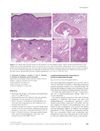
June 2003 in “The American Journal of Dermatopathology” This report describes the third known case of lipedematous scalp in a 51-year-old woman, marked by progressive thickening of the scalp without hair loss, and notes its association with early meningitis symptoms.
 1 citations
,
February 2009 in “Clinical and Experimental Dermatology”
1 citations
,
February 2009 in “Clinical and Experimental Dermatology” This study reports an improvement in lymphomatoid papulosis type A in a 52-year-old patient who concurrently used hormone-replacement therapy.
November 2025 in “SKIN The Journal of Cutaneous Medicine” In this study, nearly one-third of patients with severe alopecia areata treated with ritlecitinib achieved complete scalp hair regrowth at least once over three years, and most maintained regrowth or stayed at low hair loss levels subsequently.
July 2026 in “Journal of Investigative Dermatology” This study introduces a novel pro-drug formulation of all-trans retinoic acid that reduces skin inflammation and achieves sustained drug release over several days compared to traditional methods.
34 citations
,
July 2020 in “American journal of human genetics” This study identified mutations in the SREBF1 gene that impair SREBP1 function, potentially contributing to IFAP syndrome by affecting skin, hair, and eye development.
October 2025 in “Biomolecules” This study found that prolonged intermittent fasting in diet-induced obese mice led to increased levels of inositol monophosphates in white adipose tissue, improved insulin sensitivity, and reduced body weight and fat mass, suggesting a novel metabolic adaptation mechanism.
January 2015 in “International Journal of Nanomedicine” In this animal study, the researchers found that administering anionic lipid nanoemulsions called squarticles increased survival rates and mitigated the adverse effects of amitriptyline overdose in rats.
October 2022 in “Clinical Cosmetic and Investigational Dermatology” This case report describes Rumpel-Leede phenomenon in a patient without underlying conditions, occurring after pneumatic compression for venous thromboembolism prophylaxis, with spontaneous resolution upon stopping compression.
 8 citations
,
April 2022 in “The journal of investigative dermatology/Journal of investigative dermatology”
8 citations
,
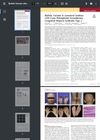
April 2022 in “The journal of investigative dermatology/Journal of investigative dermatology” This study identified biallelic variants in the LSS gene as a possible genetic cause of palmoplantar keratoderma-congenital alopecia syndrome type 2, highlighting the role of cholesterol synthesis in skin cornification.