5 citations
,
April 1984 in “Archives of Dermatology” This article reviews the characteristics, causes, and types of porphyria cutanea tarda but presents no new findings, focusing instead on existing knowledge about the disorder.
 1 citations
,
June 2022 in “Zagazig Veterinary Journal/Zagazig Veterinary Journal (Online)”
1 citations
,
June 2022 in “Zagazig Veterinary Journal/Zagazig Veterinary Journal (Online)” This study found that mange was the most common cause of alopecia in dogs, with cases being more prevalent during the summer and among dogs less than one year old.
March 2025 in “Egyptian Journal of Animal Health” This study observed that supplementing buffalo calves with a mineral mixture alone or combined with Nigella sativa seeds improved skin conditions and hematobiochemical parameters in calves suffering from parakeratosis, which is primarily due to zinc deficiency.

This study found that blood cell count derived parameters were similar across non-cicatricial alopecia groups but showed general differences when compared to psoriasis and hidradenitis suppurativa. Among patients with alopecia areata, modulating platelet number and volume may serve as a therapeutic marker.
 December 2018 in “International Journal of Research -GRANTHAALAYAH”
 This study reports that pulsed biomagnetic fields may play a role in the deformation of red blood cells by facilitating cross-talk between RBCs and human hairs in vitro.
4 citations
,
December 2018 in “International Journal of Research -GRANTHAALAYAH” This study reports that in vitro experiments suggest a new biomagnetic cross-talk between red blood cells and human hair could be a factor in red blood cell deformation.
4 citations
,
December 2018 in “Zenodo (CERN European Organization for Nuclear Research)” This study reports that in vitro experiments suggest biomagnetic cross-talk between red blood cells and human hairs as a potential factor influencing RBC deformation.
15 citations
,
January 2015 in “Stem cells international” This study found that erythrocytes can be generated from human hair follicle mesenchymal stem cells with OCT4 expression, potentially serving as an alternative source for transfusions.
 1 citations
,
November 2019 in “Damanhour Journal of Veterinary Sciences”
1 citations
,
November 2019 in “Damanhour Journal of Veterinary Sciences” This study observed that mixed breed cows with alopecia, ill-thrift, and infertility had significant decreases in serum copper, zinc, calcium, inorganic phosphorus, and magnesium, alongside signs of anemia.
 January 2025 in “Open Veterinary Journal”
 This study found that sheep with deficiencies in zinc, copper, and vitamin A exhibited symptoms like weight loss, skin disorders, and abnormal hematological and antioxidant enzyme levels compared to healthy sheep, suggesting that dietary supplementation of these nutrients could prevent these health issues.
 7 citations
,
December 2021 in “Annals of Phytomedicine An International Journal”
7 citations
,
December 2021 in “Annals of Phytomedicine An International Journal” This study observed that silver nanoparticles synthesized using Laurus nobilis leaf extracts significantly inhibited protein denaturation and membrane stabilization in vitro, suggesting potential as a basis for novel antiarthritic drugs.
 June 2017 in “Journal of clinical and investigative dermatology”
 This article reviews the genetic associations between MTHFR mutations, homocysteine levels, and autoimmune diseases, without reporting new experimental results.
 7 citations
,
November 2018 in “International Journal of Research -GRANTHAALAYAH”
7 citations
,
November 2018 in “International Journal of Research -GRANTHAALAYAH” This study introduces a tabletop technique demonstrating that endogenous biomagnetic fields from human hair can induce red blood cells agglutination and Rouleaux formations.
 3 citations
,
April 2012 in “Internal and Emergency Medicine”
3 citations
,
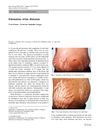
April 2012 in “Internal and Emergency Medicine” In this case report, a 14-year-old girl with nephrotic syndrome developed large edematous striae distensae due to high-dose steroid use and rapid body size increase from edema fluid accumulation.
 76 citations
,
December 2018 in “Aesthetic Plastic Surgery”
76 citations
,
December 2018 in “Aesthetic Plastic Surgery” This review discusses various aesthetic and regenerative applications of platelet-rich plasma and concludes that it has potential as a safe cosmetic intervention but requires further studies to understand its clinical effects.
 38 citations
,
December 2012 in “Journal of Cutaneous Pathology”
38 citations
,
December 2012 in “Journal of Cutaneous Pathology” This review discusses the significance of elastic tissue staining in dermatopathology, particularly for diagnosing primary elastic tissue disorders and other skin conditions, but reports no new clinical results.
 22 citations
,
December 2003 in “Veterinary clinical pathology”
22 citations
,
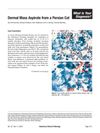
December 2003 in “Veterinary clinical pathology” This case study reported a diagnosis of dermatophytic pseudomycetoma in a Persian cat with dermal nodules, highlighting potential heritable predisposition and suggesting systemic antifungal therapy for fair prognosis.
 18 citations
,
June 1998 in “Circulation”
18 citations
,
June 1998 in “Circulation” This letter discusses how outdated measurement technology may obscure evidence of essential fatty acid deficiency in low-fat diet patients, potentially leading to undiagnosed EFA insufficiencies related to heart disease.
 13 citations
,
September 2011 in “International Urology and Nephrology”
13 citations
,
September 2011 in “International Urology and Nephrology”  7 citations
,
August 2020 in “Journal of The American Academy of Dermatology”
7 citations
,
August 2020 in “Journal of The American Academy of Dermatology” This letter comments on a randomized controlled trial by Shapiro et al that found no significant benefits of platelet-rich plasma compared to placebo for male androgenetic alopecia, highlighting issues with PRP protocol variations.
 6 citations
,
January 2014 in “American Journal of Medical Case Reports”
6 citations
,
January 2014 in “American Journal of Medical Case Reports” This case report highlights a 17-year-old girl with overlapping features of thrombotic thrombocytopenic purpura and systemic lupus erythematosus, emphasizing the critical importance of early diagnosis and intensive therapy including plasma exchange.
 2 citations
,
January 2012 in “Hair therapy & transplantation”
2 citations
,
January 2012 in “Hair therapy & transplantation” This study found no significant link between iron metabolism, including serum ferritin and hemoglobin levels, and telogen effluvium in women under 40 years old.
 1 citations
,
November 2019 in “Damanhour Journal of Veterinary Sciences”
1 citations
,
November 2019 in “Damanhour Journal of Veterinary Sciences” This study found that cows with alopecia, ill-thrift, and infertility exhibited significant decreases in serum copper, zinc, calcium, inorganic phosphorus, magnesium, and hematological measures, indicating moderate microcytic, hypochromic anemia.
 May 2025 in “International Journal of Science and Research (IJSR)”
 In this case report, azathioprine induced sudden hair loss and pancytopenia in a 42-year-old female patient, but discontinuing the drug and providing supportive care resulted in complete recovery and hair regrowth within 2.5 months.
 March 2023 in “International Journal of Science and Research (IJSR)”
 This article discusses iron deficiency anemia, its health implications, and the effectiveness of oral iron supplements in treatment, but reports no new clinical findings.
 November 2021 in “International Journal for Research in Applied Science and Engineering Technology”
 This review discusses the various applications of lyophilized platelet-rich plasma in treating different diseases and reports no new clinical results.
 July 2021 in “PARIPEX INDIAN JOURNAL OF RESEARCH”
 This study aims to evaluate the effectiveness of platelet-rich plasma as a sole treatment for alopecia areata, but it reports no new results.

This case report documents a 44-year-old female with Down's syndrome who was diagnosed with both rheumatoid arthritis and gouty arthritis, highlighting her specific clinical presentation and treatment regimen.
 March 2019 in “Open Access Journal of Science”
 This study at Bahauddin Zakariya University aimed to explore any potential link between hair growth and blood group, but no new results are reported in this abstract.
 November 2018 in “The European research journal”
 In this study, researchers found that patients with alopecia areata who had nail involvement or a history of autoimmune disease showed significantly higher red cell distribution width levels.