 26 citations
,
December 2020 in “Nature metabolism”
26 citations
,
December 2020 in “Nature metabolism” Martin-Perez et al. show that rapamycin's beneficial effects in a mouse model of Leigh syndrome are linked to the downregulation of protein kinase C.
24 citations
,
January 2023 in “Cancer Research” This study suggests that activating AMPK to phosphorylate ZDHHC13 may enhance MC1R function and reduce melanoma risk in individuals with red hair.
324 citations
,
May 2002 in “Oncogene” 26 citations
,
May 2007 in “Differentiation” This study suggests that Foxn1 acts as a brake on PKC signaling in keratinocytes, thereby modulating the stages of differentiation by controlling PKC activity.
March 2026 in “Wound Repair and Regeneration” In this study, researchers used a mouse model to demonstrate that expression of MARCKSL1 in dendritic cells plays a crucial role in modulating fibrotic responses and scar formation during wound healing, suggesting that targeting this expression could offer new therapeutic strategies for scar prevention.
29 citations
,
June 2015 in “Kidney International” This study developed a kidney-specific knockout mouse model lacking the Flcn gene, which recapitulates human Birt-Hogg-Dubé kidney tumorigenesis and shows that mTOR pathway inhibition with rapamycin can suppress tumor growth.
 28 citations
,
July 2007 in “Development”
28 citations
,
July 2007 in “Development” In this study, inactivating the TAF4 subunit of transcription factor TFIID in mouse epidermis disrupted gene expression linked to skin and hair function, and increased tumor risk.
135 citations
,
October 1999 in “Journal of Cell Science” This study found that overexpression of PKCα in mouse epidermis increases expression of specific proinflammatory mediators and induces inflammation but does not significantly affect epidermal differentiation, proliferation, or tumor promotion with TPA.
 1 citations
,
March 2023 in “Science Translational Medicine”
1 citations
,
March 2023 in “Science Translational Medicine” The researchers reported that targeting glycoprotein 130's signaling site in animal models promoted tissue regeneration and reduced osteoarthritis progression through anti-inflammatory and protective effects.
 5 citations
,
February 2019 in “bioRxiv (Cold Spring Harbor Laboratory)”
5 citations
,
February 2019 in “bioRxiv (Cold Spring Harbor Laboratory)” This study found that in a mouse model of Leigh syndrome, rapamycin alters brain proteome and may extend survival by targeting protein kinase C.
4 citations
,
November 2024 in “Journal of Advanced Research” In this study, the researchers reported that NMMHC IIA dissociates from PAR1 and activates the CREB3/ARF4 pathway, worsening thrombin-induced blood-brain barrier damage, suggesting it as a potential therapeutic target for blood-brain barrier-related diseases.
35 citations
,
June 2012 in “PloS one” This study suggests that Keratin 15 expression in stratified epithelia may be regulated by two distinct mechanisms involving PKC/AP-1 pathway for differentiation and FOXM1 for basal cells, challenging its reliability as a sole stem cell marker.
 April 2019 in “Journal of Investigative Dermatology”
 This study identifies a mechanism where dsRNA activates TLR3 to induce RA production, promoting hair follicle regeneration in mice and suggesting a potential role in human tissue regeneration.
 1066 citations
,
March 2010 in “Nature Reviews Molecular Cell Biology”
1066 citations
,
March 2010 in “Nature Reviews Molecular Cell Biology” This review discusses the potential regulation of signal transduction pathways by microRNAs in animal cells, aiming to identify biological processes that may be influenced by miRNA-mediated regulation, but it reports no new experimental outcomes.
 5 citations
,
August 2019 in “iScience”
5 citations
,
August 2019 in “iScience” In this study, Trf1 genetic deletion in mice, including those with cancer-prone mutations, was shown to not affect overall viability and cause only mild effects, while being necessary for tumor formation, suggesting a potential therapeutic window for Trf1 as an anti-cancer target.
 133 citations
,
May 2016 in “Cell Host & Microbe”
133 citations
,
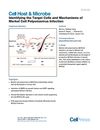
May 2016 in “Cell Host & Microbe” In this study, human dermal fibroblasts were identified as natural host cells that support productive Merkel cell polyomavirus infection, and the MEK antagonist trametinib was introduced as an effective inhibitor to control the virus.
September 2017 in “Journal of Investigative Dermatology” LRIG1 protein affects hair growth by regulating skin receptors, leading to hair loss when overexpressed.
 April 2023 in “Journal of Investigative Dermatology”
 This study suggests that the mTOR signaling pathway may play a role in the pathophysiology of radiation dermatitis, with expression patterns of S6K1 protein differing from those in normal and inflamed skin.
 4 citations
,
January 2001 in “Archives of Biochemistry and Biophysics”
4 citations
,
January 2001 in “Archives of Biochemistry and Biophysics” This study found that TPA induces apoptosis in pig renal epithelial cells by affecting cell cycle proteins, and activated ras can prevent this process.
612 citations
,
February 2004 in “Nature” This study found that the OXI1 gene in Arabidopsis thaliana is vital for activating key protein kinases and is necessary for oxidative burst signal responses like pathogen resistance and root hair growth.
 January 2022 in “bioRxiv (Cold Spring Harbor Laboratory)”
 This study found that inhibiting the gp130 Y814 signaling module promotes tissue regeneration and may prevent pathological outcomes after injury in animal models.
321 citations
,
January 2012 in “Cell stem cell” This study identified TGF-β2 as a crucial signal in hair follicle stem cell regeneration, highlighting its role in counteracting BMP signaling to promote tissue regeneration.
18 citations
,
January 2009 in “Experimental Dermatology” This study proposes that mammalian target of rapamycin (mTOR) may connect various signaling pathways in hair follicle tumor formation, offering a potential unified model for understanding these tumors.
 March 2013 in “Molecular & Cellular Toxicology/Molecular & cellular toxicology”
 In this study, exposure to m-Aminophenol in human keratinocytes altered the expression of thousands of genes involved in inflammation and stress responses, suggesting potential biomarkers for MAP-induced skin toxicity.
20 citations
,
January 2017 in “Experimental Dermatology” In this study, deleting the Igf1 receptor in specific skin cells of mice affected hair follicle cycling but not overall skin health, suggesting Igf1r's role in hair cycle regulation through Bmp-4 activation.
 December 2020 in “Innovation in aging”
 This study suggests that inhibiting PKC, similar to rapamycin treatment, can extend lifespan and reduce neurological symptoms and inflammation in mice with mitochondrial dysfunction, potentially involving the mTORC2 pathway.
 21 citations
,
February 2017 in “PLoS ONE”
21 citations
,
February 2017 in “PLoS ONE” This study found that RhoA influences embryonic stem cell proliferation through the PKN1-cyclin D1 pathway in vitro, suggesting RhoA as a potential target for wound healing therapies.
14 citations
,
August 2014 in “The FASEB Journal” This study found that the catalytically inactive serine protease CAP1/Prss8 can still induce skin disorders in mice and is subject to inhibition by nexin-1, independent of its catalytic activity.
August 2019 in “Carolina Digital Repository (University of North Carolina at Chapel Hill)” This study indicates that MAGE-11 modulates androgen receptor transcriptional activity through F-box interactions, independent of the activation function 2 pathway, revealing a novel mechanism for androgen receptor regulation.
 3 citations
,
December 2020 in “bioRxiv (Cold Spring Harbor Laboratory)”
3 citations
,
December 2020 in “bioRxiv (Cold Spring Harbor Laboratory)” In this study, researchers found that inhibiting YAP signaling in skin wounds leads to regenerative repair with active Trps1 and Wnt signaling, contrasting the typical fibrotic scarring process.