 February 2026 in “Molecular Imaging and Radionuclide Therapy”
 In this study, male patients treated with 150 mCi of radioactive iodine showed no negative impact on fertility, but long-term studies with larger groups are needed to further assess hormonal effects and sperm health after this treatment.
1 citations
,
May 2021 in “Thyroid Research and Practice” This study found that low-dose radioactive iodine therapy for hyperthyroidism and thyroid cancer produced short-term adverse effects like loss of taste, xerostomia, and hair loss, which were self-limiting.
5 citations
,
January 1964 in “Naunyn-Schmiedeberg s Archives of Pharmacology” Iodine is absorbed by hair just below the skin surface.
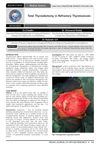 March 2016 in “Indian Journal Of Applied Research”
 This report presents a case of refractory thyrotoxicosis where the patient required a total thyroidectomy after resistance to conventional treatments including antithyroid drugs and radioactive iodine.
35 citations
,
June 2015 in “Pediatrics in Review” This article discusses hyperthyroidism in children, highlighting Graves' disease as the most common cause, and underscores the importance of timely diagnosis and intervention to mitigate morbidity; no new clinical results are reported.
1 citations
,
January 2022 in “Open Journal of Endocrine and Metabolic Diseases” This case report describes a 70-year-old woman with pituitary resistance to thyroid hormone (PRTH) misdiagnosed as Graves disease, highlighting diagnostic challenges in managing this rare disorder.
 1 citations
,
January 2006 in “Elsevier eBooks”
1 citations
,
January 2006 in “Elsevier eBooks” Cats lose fur due to various reasons, including allergies, infections, genetics, hormones, diet, cancer, stress, and some conditions are treatable while others are not.
October 2025 in “Journal of the Endocrine Society” This case study reported that a 40-year-old woman with Graves' disease developed severe thrombocytopenia after starting methimazole, suggesting a rare but serious risk of methimazole-induced immune thrombocytopenia and underscoring the need for close monitoring.
April 2025 in “Cermin Dunia Kedokteran” This review on Graves' disease explains its major role in causing hyperthyroidism, details genetic, environmental, and immunological risk factors, diagnoses, treatment options like anti-thyroid medications, and highlights potential complications such as ophthalmopathy and cardiovascular issues, noting prognosis varies by age.
 October 2024 in “Journal of the Endocrine Society”
 This case report discusses a Korean woman who experienced recurrent episodes of painless thyroiditis over 22 years, highlighting the challenges in management due to a lack of established guidelines.
October 2024 in “Journal of the Endocrine Society” This case report highlights that a patient with resistance to thyroid hormone was misdiagnosed as having Graves’ disease, leading to unnecessary radioactive iodine treatment.
 January 2023 in “Radiation and Risk Bulletin of the National Radiation and Epidemiological Registry”
 In this study, heifers exposed to thyroid irradiation up to 30 Gy showed changes in thyroid hormone levels but tended toward recovery, without affecting immunity or productivity.
This article discusses the health care process for patients with hyperthyroidism, emphasizing the critical role of nurses in educating patients and their families, but reports no new clinical findings.
 April 2020 in “Journal of the Endocrine Society”
 This case report describes the first known instance of a patient with myotonic dystrophy presenting with type I diabetes, Hashimoto’s thyroiditis, and follicular variant papillary thyroid cancer, suggesting a potential link between these conditions.
November 2022 in “Journal of the Endocrine Society” This case study suggests that marijuana use may be associated with low TSH levels without causing thyroid dysfunction in humans.
 22 citations
,
June 2005 in “Clinical Oncology”
22 citations
,
June 2005 in “Clinical Oncology” This case report documents an instance of symptomatic hypothyroidism developing in a patient with papillary thyroid carcinoma after beginning treatment with orlistat.
 October 2024 in “Journal of the Endocrine Society”
 This case report describes a rare conversion from Hashimoto's thyroiditis to Graves' disease in a 23-year-old male, requiring a shift from levothyroxine to methimazole and eventually radioactive iodine therapy.
 2 citations
,
July 2007 in “Cancer biology & therapy”
2 citations
,
July 2007 in “Cancer biology & therapy” This study found that 86% of patients with follicular non-Hodgkin's lymphoma were alive and nearly two-thirds remained in complete remission eight years after initial treatment with the radioimmunotherapy drug Bexxar.
August 2011 in “Journal of the Chinese Medical Association” This paper discusses radiation exposure management following the Fukushima nuclear disaster, emphasizing stable iodine prophylaxis for high-risk populations and the need for public education, without presenting new clinical findings.
39 citations
,
June 2019 in “Frontiers in Endocrinology” This study reported that while both sorafenib and lenvatinib may require dose modifications due to adverse events in treating advanced or metastatic thyroid cancers, key differences in side effect profiles were observed.
4 citations
,
March 1989 in “PubMed” This article discusses the side effects of radiation therapy on specific body areas and offers guidance on patient management, but it introduces no new results.
December 1963 in “Bulletin of Experimental Biology and Medicine” Radioiodine-131 significantly accumulates in skin and hair.
1 citations
,
January 2018 in “Indian Journal of Dermatology/Indian journal of dermatology” This report describes cases of transient thyrotoxicosis potentially linked to oral retinoid treatment, suggesting a possible mechanism involving increased iodine uptake by thyroid cells.
 3 citations
,
March 1932 in “Journal of the American Medical Association”
3 citations
,
March 1932 in “Journal of the American Medical Association” This article reviews the historical recognition of radioactive poisoning in luminous dial painting, detailing its symptoms and cessation of dangerous practices, but reports no new clinical results.
13 citations
,
January 2014 in “Journal of Veterinary Internal Medicine” This case study reports an instance of adult-onset primary hypothyroidism with goiter in a cat, suggesting potential causes such as dietary iodine imbalance, chronic exposure to thyrotoxic substances, or a congenital form with late manifestation.
January 2020 in “Emergency Medicine News” This article discusses the clinical features, diagnosis, and management of acute radiation syndrome, using a case of a boy exposed to radioactive material in the desert, but reports no new research findings.
 22 citations
,
March 1932 in “Journal of the American Medical Association”
22 citations
,
March 1932 in “Journal of the American Medical Association” This report describes eleven cases of thallium poisoning in individuals who consumed tortillas made from barley mixed with thallium sulphate, leading to symptoms including tingling, abdominal pain, vomiting, and limb weakness.

This study observed that intramuscular injection of sodium 131iodide at doses of up to 1 mCi can successfully induce hypothyroidism in rats without significantly damaging muscle or nearby tissues, despite concerns of adverse effects.
 2 citations
,
March 2005 in “Cancer biology & therapy”
2 citations
,
March 2005 in “Cancer biology & therapy” This study found that 95% of untreated advanced-stage follicular lymphoma patients responded to a single course of the Bexxar regimen, with 75% achieving complete remission and remaining disease-free for years.
 1 citations
,
February 2023
1 citations
,
February 2023 This study found a high prevalence of thyrotoxicosis among females in Gujranwala, Pakistan, particularly noting typical symptoms such as goiter, sweating, and menstrual irregularities.