 80 citations
,
April 2011 in “Plant physiology”
80 citations
,
April 2011 in “Plant physiology” This study suggests that the GPX-PDE1 and GPX-PDE2 genes in white lupin enhance root hair development and contribute to Pi limitation acclimation by facilitating glycerophosphodiester degradation.
2 citations
,
March 2025 in “Industrial Crops and Products” This study found that peach kernel oil extracted via supercritical fluid extraction had higher quality and antioxidant properties than oil obtained by other methods, effectively protecting human hair follicle keratinocytes from oxidative damage.
12 citations
,
January 2014 in “Journal of international medical research” This study found that, among patients with NSCLC after EGFR-TKI failure, pemetrexed is as effective as docetaxel but has fewer side effects, suggesting it may be a suitable salvage chemotherapy option.
19 citations
,
October 1996 in “International Journal of Dermatology” This study concluded that pseudopelade is an autosomal dominant condition, distinct from other forms of alopecia, characterized by atrophic hair follicle loss and notable familial association.
188 citations
,
June 1998 in “Molecular cell” This study found that mimicking the XPD point mutation in mice resulted in trichothiodystrophy-like symptoms, supporting the role of basal transcription and DNA repair defects in the disease.

This case series observed that patients with persistent post-COVID-19 symptoms reported considerable improvement after using icosapent ethyl, suggesting potential therapeutic success warranting further research.
1 citations
,
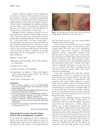
January 2022 in “Clinical Cases in Dermatology” This case report describes a 22-year-old Asian man with erosive pustular dermatosis of the scalp, whose lesions improved after treatment with topical tacrolimus and oral isotretinoin.
 3 citations
,
May 2011 in “Journal of the American Academy of Dermatology”
3 citations
,
May 2011 in “Journal of the American Academy of Dermatology” This case report describes a 54-year-old woman who developed hypertrichosis around a leg ulcer while using PGE1 ointment, suggesting a potential side effect of the treatment.
1 citations
,
June 2023 in “Journal of Patchouli and Essential Oil Products” This literature review suggests that patchouli essential oil may help reduce eczema symptoms in infants and young children due to its anti-inflammatory, antimicrobial, and antioxidant properties, though it highlights the need for further standardized studies to confirm optimal use and safety.
 15 citations
,
September 2018 in “Dermatologic therapy”
15 citations
,
September 2018 in “Dermatologic therapy” In this study, the use of two emollients significantly reduced itching severity in individuals with xerotic eczema, starting 30 minutes post-application, and improved skin moisture and lipid content over 14 days, while demonstrating good tolerance with few adverse events.
 April 2023 in “Journal of Investigative Dermatology”
 In this study, researchers found that the protein eIF4E is crucial for keratinocyte proliferation in psoriasis, suggesting it as a potential treatment target for the condition.
 1 citations
,
April 2025 in “Clinical Cosmetic and Investigational Dermatology”
1 citations
,
April 2025 in “Clinical Cosmetic and Investigational Dermatology” This study reports two cases of erlotinib-induced erosive pustular dermatosis of the scalp in patients with non-small cell lung cancer, emphasizing the need for dermatological monitoring during EGFR inhibitor therapy.
 2 citations
,
December 2017 in “Skin appendage disorders”
2 citations
,
December 2017 in “Skin appendage disorders” An elderly man's non-healing scalp lesion was successfully treated with a strong topical steroid.
 109 citations
,
October 2007 in “American Journal of Human Genetics”
109 citations
,
October 2007 in “American Journal of Human Genetics” This study found that postnatal treatment with recombinant EDA normalized adult teeth, improved sweating, and restored normal lacrimation in dogs with XLHED, suggesting its potential as a treatment for the condition.
13 citations
,
December 1977 in “Journal of Toxicology and Environmental Health” This study found that exposure to heated phenyl glycidyl ether vapor caused alopecia and skin lesions in rats but not in dogs.
8 citations
,
January 2019 in “JAAD Case Reports” This article describes erosive pustular dermatosis of the scalp, emphasizing its chronic nature, potential complications, and the lack of specific diagnostic findings, but reports no new clinical results.
 December 2023 in “American journal of medical genetics. Part A”
 In this study, researchers identified compound heterozygous variants in the MBTPS1 gene associated with ectodermal dysplasia features in a 14-year-old female, broadening the known disorder spectrum linked to these genetic mutations.
78 citations
,
May 2019 in “Frontiers in Cellular and Infection Microbiology” This study found that the antimicrobial peptide DPK-060 effectively reduced bacterial counts of Staphylococcus aureus and was safe for topical use in preclinical models, although nanocarrier encapsulation did not enhance its efficacy.
 December 2007 in “Röntgenpraxis”
 This review discusses various treatments for androgenic alopecia, highlighting FDA-approved options and other commonly used therapies, but reports no new clinical results.
24 citations
,
August 2019 in “Journal of the American Academy of Dermatology” Teledermatology reduces unnecessary in-person visits and improves care.
35 citations
,
February 1993 in “International Journal of Dermatology” This report describes two cases where pemphigus lesions developed at sites of cosmetic procedures, suggesting these treatments might trigger the disease and should be distinguished from other post-surgery complications.
13 citations
,
February 2024 in “Clinical Cosmetic and Investigational Dermatology” This study demonstrated that intradermal treatment with a medical device using Polynucleotides High Purification Technology (PN HPT) significantly improved skin surface, firmness, pigmentation, and radiance in 30 Asian subjects, with benefits lasting up to six months and no adverse events reported.
1 citations
,
January 2025 in “Regenerative Biomaterials” In this study, researchers found that exosomes derived from Pinctada martensii mucus can effectively inhibit melanin production in melanoma cells and zebrafish without adverse effects, potentially offering a promising therapeutic strategy for treating pigmentary disorders by modulating the NF-κB signaling pathway.
 April 2019 in “The journal of investigative dermatology/Journal of investigative dermatology”
 This study demonstrates that extracellular ATP induced by UV radiation promotes melanin production in human melanocytes, suggesting ATP-induced purinergic signaling may influence skin pigmentation.
January 2022 in “eJournal Kedokteran Indonesia” In this cross-sectional study, researchers found no significant difference in effectiveness between paclitaxel-carboplatin and pemetrexed-carboplatin for treating pulmonary adenocarcinoma with negative EGFR mutations, but paclitaxel-carboplatin was more cost-effective and associated with more frequent severe haematological toxicities.
November 2005 in “CRC Press eBooks” This article reviews the development and challenges of skin penetration enhancers, highlighting their limitations in compatibility and safety, and reports no new clinical findings.

This chapter reviews the structure, pharmacokinetics, and clinical applications of PEGylated liposomes and reports no new research findings.
 31 citations
,
August 2005 in “The American Journal of Dermatopathology”
31 citations
,
August 2005 in “The American Journal of Dermatopathology” This study investigated the histopathology of ectodermal dysplasia/skin fragility syndrome, identifying specific skin and hair abnormalities associated with PKP1 gene mutations in two young female patients.
June 2026 in “Virtual and Physical Prototyping” This study introduced a high-viscosity epoxy photoresist to enhance the fabrication of complex microstructures with monolithic integration and mechanical stability, enabling advancements in two-photon 3D printing for creating functional micro-mechanical devices.

The document corrects a mistake by stating that pimecrolimus, not tacrolimus, is the drug that concentrates in the skin.