 February 2026 in “Trials”
 The Exfoliate-Dissolve-Repair skincare approach may effectively treat keratosis pilaris and reduce the need for corticosteroids.
 63 citations
,
February 2013 in “Human cell”
63 citations
,
February 2013 in “Human cell” In this study using an animal model, researchers found that PEGL-DOX, unlike DOX, causes Hand-Foot Syndrome due to reactive oxygen species interacting with skin tissue, leading to skin-specific inflammatory responses.

This study reported that pentoxifylline-loaded liposomes, optimized using a statistical design method, achieved a maximum encapsulation efficiency of 84.23% and a controlled 72-hour drug release, potentially improving therapeutic delivery of the drug with limited bioavailability.
7 citations
,
January 2020 in “Dermatology online journal” In this case report, adult-onset porokeratotic eccrine ostial and dermal duct nevus improved with topical tazarotene treatment, as evidenced by dermatoscopic images.
1 citations
,
January 2013 in “Annals of Dermatology” This case report describes an 11-year-old girl with eosinophilic pustular folliculitis that showed significant improvement with naproxen after being unresponsive to other treatments.
This study found that combining intralesional PTX and corticosteroids may enhance treatment outcomes for alopecia areata, with PTX showing better long-term effects compared to corticosteroids alone.
18 citations
,
January 2018 in “BMC dermatology” This paper describes a case of epidermolysis bullosa simplex with muscular dystrophy associated with a novel PLEC mutation and diffuse alopecia, highlighting a potential genetic link that remains uncertain.
1 citations
,
July 2024 in “Journal of Investigative Dermatology” Plaquenil can cause a severe skin reaction called AGEP, requiring prompt diagnosis and treatment.
 2 citations
,
January 2020 in “BioMed Research International”
2 citations
,
January 2020 in “BioMed Research International” This study found that Phaeodactylum tricornutum extract enhanced hair follicle cell proliferation, indicated by increased keratin and ERK1/2 signaling, suggesting its potential for hair care applications.
April 2026 in “UNC Libraries” This case report describes a 49-year-old woman with metastatic adrenocortical carcinoma in the liver who experienced an abscopal effect after pulse electric field ablation, with PET/CT imaging showing complete resolution of three untreated lesions two months post-treatment.
 7 citations
,
September 2017 in “Pharmacoepidemiology and Drug Safety”
7 citations
,
September 2017 in “Pharmacoepidemiology and Drug Safety” This study observed a strong overall reduction in the use of CPA/EE in the Netherlands, despite similar proportions of users with acne or other hyperandrogenic conditions before and after the referral procedure.
9 citations
,
July 2022 in “Journal of Clinical Oncology” This study found that oral paclitaxel combined with encequidar improved tumor response rates compared to intravenous paclitaxel in women with metastatic breast cancer, while also reducing neuropathy but increasing certain gastrointestinal and neutropenic side effects.
August 2004 in “Veterinary Dermatology” This case report describes a Brittany spaniel that developed erythema multiforme possibly linked to cephalexin and then pemphigus foliaceus, which improved with prednisolone without relapse for four years.
November 2025 in “JDDG Journal der Deutschen Dermatologischen Gesellschaft” This study documented a case of an 11-month-old with PKU who developed acrodermatitis enteropathica-like symptoms due to severe phenylalanine deficiency, requiring dietary adjustment to restore phenylalanine levels.
 April 2026 in “bioRxiv (Cold Spring Harbor Laboratory)”
 This study introduced hydrogel microneedles loaded with palladium nanoparticles, which utilize the inherent cytotoxicity of polyethyleneimine to enhance the effectiveness of doxorubicin in treating melanoma, achieving a tumor inhibition rate of up to 98% in a murine model.
5 citations
,
July 1996 in “Journal of Cutaneous Medicine and Surgery” This study explains that while trichothiodystrophy and xeroderma pigmentosum share genetic defects, TTD patients primarily exhibit issues in transcription initiation, not the increased skin cancer risk seen in XP.
21 citations
,
September 2019 in “Journal of the American Academy of Dermatology” Ixekizumab effectively treats generalized pustular psoriasis.
 20 citations
,
October 2003 in “The Journal of Dermatology”
20 citations
,
October 2003 in “The Journal of Dermatology” This study observed that while dexamethasone-cyclophosphamide pulse therapy is relatively free from hypertension and diabetes compared to conventional steroids in pemphigus patients, it frequently causes generalized weakness and flushing.
November 2024 in “Journal of Investigative Dermatology” Blocking the JAK/STAT pathway may help reduce skin sensitivity in Xeroderma pigmentosum.
August 2024 in “Postgraduate Medical Journal” A rare skin reaction from cancer treatment was successfully managed with topical treatments and antihistamines.
 17 citations
,
January 2010 in “Acta Dermato Venereologica”
17 citations
,
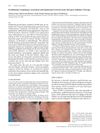
January 2010 in “Acta Dermato Venereologica” This report details a case of a 43-year-old woman developing yellowish papular eruptions alongside typical acneiform skin reactions on her cheeks and chest following a switch from cetuximab to panitumumab treatment.
 March 2026 in “Preprints.org”
 In this study, plerixafor was found to enhance melanogenesis and promote repigmentation by engaging a β-arrestin–β-catenin–MITF signaling axis in melanocytes, and showed effectiveness in restoring depigmentation in a murine model without causing systemic toxicity.
March 2026 in “Experimental Dermatology” This study developed an in vitro model using NTERT keratinocytes expressing AEC-related TP63 mutations, which replicated skin defects observed in AEC patients and offers a valuable tool for understanding the disorder and developing new treatments.
April 2026 in “International Journal of Engineering Research and Science & Technology” This study reports that an Explainable AI-based hair health prediction system using a novel hybrid model outperformed traditional machine learning methods, achieving high accuracy in predicting key factors and providing personalized recommendations.
16 citations
,
March 2023 in “Gels” This study found that paeonol-loaded liposomal gels demonstrated antioxidant effects and relieved inflammation in AD-like mice, suggesting potential benefits for treating atopic dermatitis.
45 citations
,
June 2003 in “Journal of Investigative Dermatology Symposium Proceedings” This review discusses various in vitro and in vivo models for studying hair follicle function, noting their potential in developing new treatments for hair disorders but reports no new results.
3 citations
,
January 2012 in “Journal of Investigative Dermatology” Inhibiting PGD2 and using dermal papilla cells may improve skin and hair regeneration.
November 2025 in “Journal of Investigative Dermatology” January 2012 in “Journal of Investigative Dermatology” The document presented various studies on hair and cutaneous development, revealing insights into hair biology and potential therapeutic targets for hair-related conditions. Key findings included the role of stem cells and their niches in hair regeneration, the impact of TACE/ADAM17 depletion on alopecia, and the expression of somatostatin in hair follicles. Research on genetic factors, such as CYLD mutants and P-cadherin, highlighted their importance in hair growth and pigmentation. Studies on hair aging identified genes involved in hair loss in women over 40. Additionally, the potential of keratinocyte precursors from iPS cells for hair follicle regeneration and the effectiveness of a parathyroid hormone analog in reversing chemotherapy-induced alopecia were explored. The document also discussed the role of cholesterol biosynthesis in cicatricial alopecia, the necessity of Wnt signaling for hair follicle initiation, and the effects of ATP-sensitive potassium channel blockers on hair growth. These findings collectively advanced the understanding of hair growth, alopecia treatment, and skin regeneration.
 January 2018 in “Springer eBooks”
 PDE inhibitors, especially PDE4 inhibitors like apremilast, are effective for certain inflammatory skin conditions but have side effects and can be costly.