January 2011 in “The Chinese Journal of Dermatovenereology” This study found that shorter GGN repeat lengths (≤23) in the androgen receptor gene are associated with androgenetic alopecia among Chinese males, whereas two specific SNPs studied were not present in this population.
March 2026 in “Journal of Enzyme Inhibition and Medicinal Chemistry” This review examines the development and challenges of using PROTACs, a targeted protein degradation strategy, to treat cancer by degrading specific proteins like PARPs and GPX4, highlighting issues such as target diversification and bioavailability.
 2 citations
,
March 2022 in “Portuguese Journal of Nephrology & Hypertension”
2 citations
,
March 2022 in “Portuguese Journal of Nephrology & Hypertension” This manuscript describes two case reports of preterm newborns with a rare homozygous mutation in the epidermal growth factor receptor, leading to severe health issues and early mortality despite supportive care.
March 2026 in “Journal of Investigative Dermatology” This study found that GPT-4o demonstrated high concordance with in-person and image-based provider assessments in generating SALT scores for alopecia areata, suggesting its potential as an adjunct tool in clinical practice for automating these assessments.
4 citations
,
May 2022 in “Genes & Diseases” 150 citations
,
June 1999 in “Oncogene” April 2019 in “The journal of investigative dermatology/Journal of investigative dermatology” In this study, the researchers introduced a mutation in mice to mimic Olmsted syndrome and found that the mutation caused hair loss due to impaired keratinocyte differentiation and depletion of hair follicle stem cells.
52 citations
,
September 2012 in “Oncogene” 380 citations
,
March 2000 in “Proceedings of the National Academy of Sciences” This study demonstrates that mice with ectopic expression of the human GLI-1 gene in their skin developed tumors resembling human basal cell carcinoma, suggesting that GLI-1 is central to tumor development without additional p53 or Ha ras mutations.
 July 2013 in “Science-business Exchange”
 In this study, Sept4 knockout mice showed improved wound healing and hair follicle regeneration compared to wild-type controls, suggesting potential therapeutic uses for SEPT4 inhibition.
 68 citations
,
November 2012 in “Journal of Investigative Dermatology”
68 citations
,
November 2012 in “Journal of Investigative Dermatology” This study found that PGD2 inhibits hair follicle regeneration in mice through the Gpr44 receptor, suggesting that blocking PGD2 or Gpr44 may enhance skin regeneration after wounds.
25 citations
,
March 2004 in “Regulatory Toxicology and Pharmacology” Using testosterone-stimulated weanling rats can effectively replace castrated rats for anti-androgen testing, reducing animal stress.
May 2019 in “CINECA IRIS Institutial Research Information System (University of Genoa)” This study found that patients with the MITF p.E318K variant are more likely to develop multiple primary melanomas and dysplastic nevi with uncommon dermoscopic patterns compared to non-carriers.
 28 citations
,
August 2014 in “Journal of Assisted Reproduction and Genetics”
28 citations
,
August 2014 in “Journal of Assisted Reproduction and Genetics” This study found that the VEGF +405G/C polymorphism may be an inheritable risk factor for polycystic ovary syndrome in south Indian women.
 301 citations
,
May 1998 in “Genes & Development”
301 citations
,
May 1998 in “Genes & Development” Ets2 gene is crucial for placental development in mice.
3 citations
,
December 2013 in “Balkan Journal of Medical Genetics” This case report highlights the use of microarray analysis to identify cryptic chromosomal rearrangements in a young woman with intellectual disability and multiple congenital anomalies.
 January 2013 in “International Journal of Trichology”
 This case report highlights the discovery of a novel TRPS1 gene mutation in a 17-year-old with TRPS type I, underscoring the diagnostic importance of hair symptoms in congenital hair diseases.
8 citations
,
June 1981 in “Clinica Chimica Acta”  11 citations
,
September 2011 in “Biochemical journal”
11 citations
,
September 2011 in “Biochemical journal” This study found that neurotrophin-4 regulates Cav3.2 T-current expression in D-hair neurons via TrkB receptor activation, highlighting its role in mechanosensitive function.
10 citations
,
March 2022 in “Frontiers in Oncology” This study found that the overexpression of the lncRNA HOTTIP in glioma cells increased resistance to the chemotherapy drug temozolomide, suggesting a key role for miR-10b and EMT processes in this resistance.
82 citations
,
July 2012 in “Brain pathology” This study found that LGR5 may play a significant role in maintaining brain cancer stem-like cells and is associated with glioma progression and poor outcomes.
January 2025 in “EXPERIMENTAL ANIMALS” This study found that gamma-ray exposure on the day of fertilization or the day after increased genome editing efficiency in pregnant mice using the i-GONAD method, potentially aiding in the creation of diverse experimental animal models.
 28 citations
,
March 2010 in “British Journal of Dermatology”
28 citations
,
March 2010 in “British Journal of Dermatology” This abstract contains only supplementary material information and reports no new research findings.
141 citations
,
May 2007 in “Cancer Research” This study found that CD34 is necessary for TPA-induced activation of hair follicle stem cells and tumor formation in mice, with CD34 knockout mice showing delayed and reduced tumor development compared to wild-types.
211 citations
,
February 1994 in “Proceedings of the National Academy of Sciences” This study found that overexpression of parathyroid hormone-related peptide in transgenic mice skin disrupted normal hair follicle development, suggesting a role for the peptide in the early stages of follicle formation.
 5 citations
,
January 2021 in “iScience”
5 citations
,
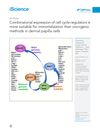
January 2021 in “iScience” Using a combination of specific cell cycle regulators is better for safely keeping hair root cells alive indefinitely compared to cancer-related methods.
 18 citations
,
January 2008 in “Journal of The American Academy of Dermatology”
18 citations
,
January 2008 in “Journal of The American Academy of Dermatology” This study found that the proteins GDNF, NTN, GFRα-1, GFRα-2, and c-Ret are differentially expressed during various stages of the human hair follicle cycle, with potential implications for hair biology.
This study identified CXXC5 as a key mediator of hair loss induced by PGD2 and DHT via suppression of the Wnt/β-catenin pathway, with implications for potential therapeutic targets.
24 citations
,
November 1997 in “Journal of Biological Chemistry” This study found that genes encoding mouse high-glycine/tyrosine proteins show distinct spatial and temporal expression patterns in hair follicles, suggesting diverse protein distribution during hair growth cycles.
February 2022 in “The Nurse Practitioner” This article provides an introduction to gender-affirming hormone therapy for transgender and gender-nonbinary patients, designed as a continuing education activity, but does not report new clinical results.