 January 2024 in “Pharmaceutical medicine”
 In this study, most surveyed physicians were aware of the meningioma risk linked to cyproterone acetate monotherapy, but many did not recall receiving updated safety communications.
 December 2006 in “Lancet Oncology”
 In men aged 40–60 years with androgenic alopecia, this study found that 1 mg/day finasteride reduced serum PSA concentrations by 40-50% after 48 weeks compared to placebo.
November 2024 in “Journal of Investigative Dermatology” Polygenic Score can help predict severe psoriasis and psoriatic arthritis.
29 citations
,
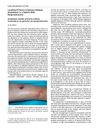
July 2008 in “British Journal of Dermatology” This case report examines a patient with myasthenia gravis, invasive thymoma, and paraneoplastic pemphigus associated with alopecia areata, notably without the usual mucosal involvement.
 3 citations
,
March 2012 in “Actas Dermo-Sifiliográficas”
3 citations
,
March 2012 in “Actas Dermo-Sifiliográficas” An elderly man with skin amyloidosis and abnormal blood proteins was monitored without finding widespread disease after 18 months.
May 2024 in “LA Referencia (Red Federada de Repositorios Institucionales de Publicaciones Científicas)” This study investigated genetic and epigenetic markers for prostate cancer, reporting that certain genotype combinations may influence cancer risk or protection and identifying GSTP1 promoter methylation as a strong prognostic and diagnostic marker linked to tumor aggressiveness.
 19 citations
,
October 2018 in “PLOS ONE”
19 citations
,
October 2018 in “PLOS ONE” This study found that 5-alpha-reductase inhibitor monotherapy for symptomatic benign prostatic hyperplasia showed some clinical benefit over placebo but was linked to a higher incidence of sexual side effects.
 April 2012 in “The Journal of Urology”
 This study modeled how differences in trial settings and protocols, such as biopsy compliance and control arm screening, can explain the varying prostate cancer mortality reductions observed in the ERSPC and PLCO trials.
 September 2019 in “Journal of Investigative Dermatology”
 This qualitative study found that healthcare professionals view psychosocial needs as a major reason for offering therapeutic education and self-management support for psoriasis, but efficacy remains uncertain.
 September 2010 in “European Urology Supplements”
 Opioid use may lower PSA levels, suggesting a possible role in prostate cancer control; PSA testing is useful for detecting prostate cancer; serum triglycerides are not linked to prostate cancer risk; and higher urethral PSA levels may be associated with local hormone activity.
July 2022 in “European Journal of Dermatology” In this study, researchers found that patients with psoriasis had a higher probability of achieving and maintaining a clinical response using brodalumab compared to ustekinumab over 52 weeks, as measured by a multistate modelling approach based on absolute PASI scores.
9 citations
,
August 2011 in “The World Journal of Men s Health” This study concluded that administering 5-alpha reductase inhibitors before photoselective vaporization of the prostate increased hemoglobin change, lasing time, and energy required during the procedure compared to controls.
 January 2006 in “Actas Urológicas Españolas”
 This retrospective study observed no significant difference in the prevalence of incidental prostate cancer between suprapubic prostatectomy and transurethral prostate resection groups, with most tumors being well differentiated and early-stage.
 36 citations
,
July 2014 in “Neuromuscular Disorders”
36 citations
,
July 2014 in “Neuromuscular Disorders” This study investigated a patient with spinal and bulbar muscular atrophy who had 68 CAG repeats, revealing early onset and unique symptoms not previously documented in the condition.

This study found that patients with psoriasis have a significantly higher prevalence of autoimmune diseases and other physical and mental comorbidities compared to those without the condition.
 47 citations
,
March 2017 in “Clinical, cosmetic and investigational dermatology”
47 citations
,
March 2017 in “Clinical, cosmetic and investigational dermatology” This review discusses the link between Parkinson's disease and dermatological disorders, highlighting that skin biomarkers may aid in the diagnosis of Parkinson's, but it reports no new clinical results.
1 citations
,
September 2025 in “Archivio Italiano di Urologia e Andrologia” In this study, the combination of Serenoa repens extract with Phenolmicin P3 and Bosexil suppositories significantly improved lower urinary tract symptoms and decreased PSA levels in patients with benign prostatic obstruction-related symptoms.

This study found that CPA-loaded nanoparticles, particularly SLN formulations, increased CPA epidermal penetration compared to a conventional cream and may reduce side effects in treating androgen-dependent conditions.
 April 2012 in “Journal of the American Academy of Dermatology”
 This study found that psoriasis patients had a significantly higher prevalence of autoimmune diseases and other comorbidities compared to those without psoriasis.
 11 citations
,
March 2014 in “Journal of The European Academy of Dermatology and Venereology”
11 citations
,
March 2014 in “Journal of The European Academy of Dermatology and Venereology” In this study, researchers found that androgen receptor gene polymorphism is associated with higher androgenetic alopecia grades and PSA levels in men with benign prostatic hyperplasia, but not with prostate cancer.
 5 citations
,
January 2010 in “Acta Chirurgica Iugoslavica”
5 citations
,
January 2010 in “Acta Chirurgica Iugoslavica” In this study, higher urethral prostate-specific antigen (urPSA) levels in men after radical prostatectomy were associated with higher androgenic alopecia scores and higher postoperative PSA.
1 citations
,
January 2010 in “Acta Chirurgica Latviensis” In this study, researchers found that psoriasis patients with untreated lesions showed increased activation of defensins, matrix metalloproteinases, and neuropeptides, which may be stimulated by specific inflammation pathways.
 August 2008 in “Current Opinion in Internal Medicine”
 This review discusses significant developments in prostate cancer risk assessment, diagnosis, and treatment, but reports no new clinical results; the authors emphasize the evolving importance of prognostic factors and treatment implications.
March 2013 in “Faculty Opinions – Post-Publication Peer Review of the Biomedical Literature” This study found that screening for prostate cancer did not significantly reduce prostate cancer-specific mortality in a meta-analysis of five randomized controlled trials, although one trial reported a benefit in a specific age subgroup.
 September 2010 in “European Urology Supplements”
 PSA testing is a reliable method for detecting prostate cancer, and opioids may lower PSA levels, but triglycerides don't affect prostate cancer risk.
46 citations
,
January 2005 in “PubMed” This paper discusses risk factors and prevention strategies for acute urinary retention secondary to benign prostatic hyperplasia, emphasizing the role of PSA levels and the benefits of medications like finasteride and alpha-blockers, but reports no new clinical results.

This study found that patients with psoriasis had a significantly higher prevalence of autoimmune diseases and other comorbidities compared to individuals without psoriasis.
 1 citations
,
September 2023 in “Rheumatology advances in practice”
1 citations
,
September 2023 in “Rheumatology advances in practice” This case report describes a 42-year-old woman with rheumatoid arthritis who developed extensive impetiginized pityriasis amiantacea potentially linked to her anti-TNF-α therapy with golimumab. Discontinuing the drug and other treatments led to significant clinical improvement within a month.
 31 citations
,
September 2015 in “BJUI”
31 citations
,
September 2015 in “BJUI” This study found that men aged 50 and older with clinical benign prostatic hyperplasia have a significantly higher prevalence of metabolic syndrome than those without the condition in the UK primary care population.
 1 citations
,
July 2017 in “The Journal of Urology”
1 citations
,
July 2017 in “The Journal of Urology” In this study, low dose finasteride or dutasteride treatment was found to reduce prostate specific antigen levels in men with androgenetic alopecia, though levels sometimes remained stable or increased in those with low baseline PSA.